

Classic Greek Salad (Horiatiki)
Introduction
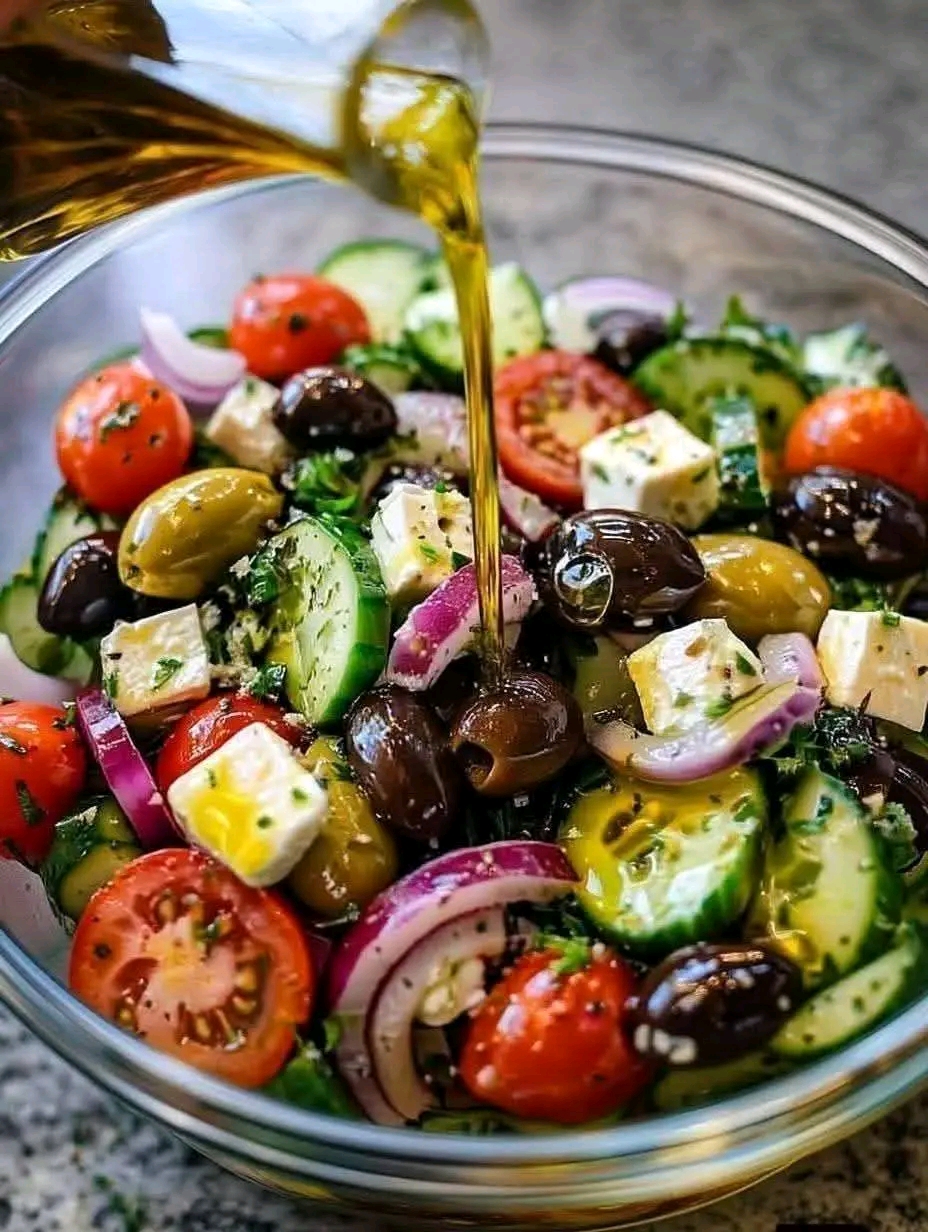
Classic Greek Salad, traditionally known as Horiatiki Salata, is one of the simplest and most refreshing Mediterranean salads. It combines ripe tomatoes, crisp cucumber, green pepper, red onion, Kalamata olives, and creamy feta cheese with a generous drizzle of extra-virgin olive oil.
Unlike many modern salads, an authentic Greek salad traditionally does not rely on lettuce. The beauty comes from using fresh vegetables, good-quality feta, olives, olive oil, and herbs. It can be served as a light lunch, a side dish, or alongside grilled meat, fish, bread, or other Mediterranean favorites.
The recipe below makes approximately 4 generous servings.
Nutritional Information
Approximate nutrition per serving:
- Calories: 300–350 kcal
- Protein: 8–10 g
- Carbohydrates: 15–18 g
- Fat: 24–28 g
- Fiber: 4–5 g
- Sugar: 7–9 g
- Sodium: varies depending on the feta and olives
The nutritional values will change depending on how much olive oil, feta, and olives are used.
Why It Is Nutritious
The vegetables provide vitamins, minerals, antioxidants, and fiber. Tomatoes are particularly rich in lycopene, while olive oil provides monounsaturated fats. Feta contributes protein and calcium, and olives add flavor and healthy fats.
Ingredients
For the Salad
- 4 large ripe tomatoes
- 2 medium cucumbers
- 1 green bell pepper
- 1 small red onion
- 150–200 g Greek feta cheese
- 100 g Kalamata olives
- 1–2 tablespoons fresh oregano, preferably Greek oregano
- Freshly ground black pepper, to taste
- A small pinch of salt, if needed
For the Dressing
- 5 tablespoons extra-virgin olive oil
- 1–2 tablespoons red wine vinegar
- 1 teaspoon dried oregano
- ½ teaspoon Dijon mustard, optional
- 1 small garlic clove, finely grated or minced, optional
- Freshly ground black pepper
- A small pinch of salt
Optional Garnishes
- A few fresh oregano leaves
- Extra Kalamata olives
- A little additional feta
- A drizzle of extra-virgin olive oil
Method
1. Prepare the Tomatoes
Wash the tomatoes thoroughly and pat them dry.
Cut them into large wedges or chunky pieces. Avoid cutting them too small because a traditional Greek salad is rustic and substantial.
Place the tomatoes into a large serving bowl.
Tip: If your tomatoes are very juicy, don’t throw away all the tomato juice. That flavorful liquid combines beautifully with olive oil and vinegar at the bottom of the bowl.
2. Prepare the Cucumbers
Wash the cucumbers.
You can peel them completely, partially, or leave the skin on depending on your preference.
Cut them into thick slices or half-moons.
Add them to the tomatoes.
For an especially rustic presentation, keep the cucumber pieces relatively large.
3. Prepare the Green Pepper
Remove the stem and seeds from the green bell pepper.
Slice it into thin rings or strips.
The green pepper adds a slightly bitter, fresh flavor that contrasts beautifully with the sweet tomatoes and creamy feta.
Add it to the bowl.
4. Slice the Red Onion
Peel the red onion and slice it very thinly.
Separate the slices into individual pieces before adding them to the salad.
Optional trick
If you prefer a milder onion flavor, place the sliced onion in cold water for approximately 5–10 minutes, then drain it thoroughly.
This takes away some of the sharpness while keeping the onion crisp.
Preparing the Dressing
In a small bowl, combine:
- Extra-virgin olive oil
- Red wine vinegar
- Dried oregano
- Black pepper
- Optional Dijon mustard
- Optional garlic
- A small amount of salt
Whisk everything together until lightly combined.
You don’t need to create a thick, creamy dressing. Greek salad is traditionally about allowing the olive oil and vegetable juices to come together naturally.
Bringing the Salad Together
Add the Kalamata olives to the vegetables.
Pour the dressing over the salad.
Add oregano and gently toss everything together.
Be careful not to crush the tomatoes.
Taste the salad before adding additional salt because feta and Kalamata olives can already be quite salty.
The Feta Cheese
This is one of the most important parts.
Instead of crumbling all the feta into tiny pieces, place a large slab or several thick pieces of feta on top of the salad.
Drizzle the feta with a little extra-virgin olive oil and sprinkle with dried oregano.
This creates the classic Greek appearance and allows people to break off pieces of feta as they eat.
Formation and Presentation
For the most beautiful presentation, build the salad in layers.
Bottom Layer
Start with:
- Tomatoes
- Cucumbers
Middle Layer
Add:
- Green pepper
- Red onion
- Kalamata olives
Top Layer
Finish with:
- Large pieces of feta
- Dried oregano
- Freshly ground black pepper
- Extra-virgin olive oil
The result should look colorful, rustic, generous, and natural.
Don’t worry about making every vegetable perfectly uniform. Greek salad is supposed to have a country-style, homemade appearance.
History of Greek Salad
Greek salad has its roots in the traditional food culture of Greece and the broader Mediterranean.
The Greek word Horiatiki can be translated roughly as “village-style” or “peasant-style.” The name reflects the rustic character of the dish.
Traditional Greek cooking has long emphasized fresh seasonal ingredients rather than complicated preparation. Tomatoes, cucumbers, peppers, onions, olives, olive oil, and herbs are staples of Mediterranean food culture.
The modern Greek salad became especially recognizable through the combination of these ingredients with feta cheese and oregano.
One interesting characteristic is that the traditional version generally doesn’t contain lettuce. Many restaurant versions outside Greece add lettuce, but classic Horiatiki focuses on the chunky vegetables, olives, feta, and olive oil.
How the Salad Was Formed
The basic philosophy behind Greek salad is wonderfully simple:
Fresh vegetables + good olive oil + feta + olives + herbs = an incredible salad.
The dish doesn’t need complicated cooking techniques.
There is no need to roast the vegetables, boil anything, or prepare a complicated sauce.
Instead, the flavor comes from the quality of the ingredients.
The Tomatoes
They provide sweetness, acidity, moisture, and the foundation of the salad.
The Cucumbers
They bring crunch and freshness.
The Green Pepper
It contributes a mild bitterness and vegetal flavor.
The Red Onion
It provides sharpness and sweetness.
Kalamata Olives
They contribute a deep, salty, fruity flavor.
Feta
Creamy, salty, tangy feta brings richness and balances the fresh vegetables.
Olive Oil
The olive oil ties everything together and carries the flavors of the herbs and vegetables.
Oregano
Oregano gives the salad its unmistakable Mediterranean character.
Important Method: Don’t Overmix
One of the most common mistakes is aggressively tossing Greek salad.
The tomatoes can become crushed and the feta can disappear into the dressing.
Instead:
- Add the vegetables to a bowl.
- Add the olives.
- Pour over the olive oil and vinegar.
- Toss gently.
- Add the feta on top.
- Finish with oregano and another drizzle of olive oil.
This keeps the salad attractive and rustic.
Another Method: The Traditional Rustic Style
For an even simpler approach, skip whisking the dressing separately.
Place the vegetables and olives in the serving bowl.
Then add:
- Extra-virgin olive oil
- Red wine vinegar
- Dried oregano
- Black pepper
Gently mix.
Place the feta on top.
This method allows the tomato juices to mix naturally with the olive oil and vinegar, creating a delicious dressing at the bottom of the bowl.
Serving Suggestions
Classic Greek salad is incredibly versatile.
Serve it with:
- Grilled chicken
- Grilled lamb
- Grilled beef
- Roasted potatoes
- Grilled fish
- Shrimp
- Warm pita bread
- Crusty bread
- Rice
- Grilled vegetables
- Tzatziki
- Hummus
It can also be served as part of a larger Mediterranean-style meal.
What Makes a Great Greek Salad?
1. Use Ripe Tomatoes
The tomatoes are one of the most important ingredients. If they’re bland, the entire salad will taste bland.
2. Use Good Olive Oil
Extra-virgin olive oil makes a huge difference because there is no heavy dressing hiding its flavor.
3. Don’t Overdo the Vinegar
The salad should be fresh and balanced rather than overwhelmingly acidic.
4. Choose Good Feta
A good feta should be creamy, tangy, salty, and slightly crumbly.
5. Don’t Add Too Many Ingredients
Classic Greek salad doesn’t need dozens of toppings.
Keep the ingredient list focused.
6. Don’t Forget the Oregano
Oregano gives the salad its characteristic Mediterranean aroma.
Greek Salad Lovers
This salad is perfect for people who love:
- Fresh vegetables
- Mediterranean cuisine
- Feta cheese
- Kalamata olives
- Olive oil
- Light lunches
- Healthy side dishes
- Simple homemade meals
- Rustic recipes
- Summer cooking
It is especially enjoyable during warm weather because it requires virtually no cooking.
Make-Ahead Method
If you want to prepare the salad ahead of time, don’t completely assemble it immediately.
Prepare the vegetables and store them separately or together in the refrigerator.
Keep the feta, dressing, and oregano separate.
When you’re ready to serve:
- Take the vegetables from the refrigerator.
- Add the olives.
- Add the dressing.
- Toss gently.
- Place feta on top.
- Finish with oregano.
- Serve immediately.
This helps preserve the crunch of the vegetables.
Storage
Leftover Greek salad can be refrigerated in an airtight container.
For the best texture, consume it within 1–2 days.
Keep in mind that tomatoes and cucumbers release water as they sit, so the salad will gradually become softer.
If you know you’ll have leftovers, keep the dressing separate until serving.
Variations
Greek Salad With Chickpeas
Add cooked chickpeas for extra fiber and plant-based protein.
Greek Salad With Chicken
Top the salad with grilled chicken breast for a more substantial meal.
Greek Salad With Tuna
Add drained tuna for an easy high-protein lunch.
Greek Salad With Avocado
Avocado isn’t traditional, but it can add a creamy texture and extra richness.
Greek Salad With Grilled Shrimp
Grilled shrimp pairs beautifully with the salty feta and fresh vegetables.
Common Mistakes to Avoid
Too much dressing:
Greek salad should taste fresh, not oily.
Too much vinegar:
A little acidity is enough.
Tiny vegetable pieces:
Large, rustic chunks are better.
Crumbling the feta too finely:
Large pieces or a slab of feta create a more traditional presentation.
Adding lettuce:
If you’re making classic Horiatiki, lettuce isn’t necessary.
Over-salting:
Remember that feta and olives already provide plenty of salt.
Using unripe tomatoes:
Fresh, ripe tomatoes make an enormous difference.
Conclusion
Classic Greek Salad is proof that a recipe doesn’t need complicated techniques or a long ingredient list to be extraordinary.
With ripe tomatoes, crisp cucumber, green pepper, red onion, Kalamata olives, authentic feta, oregano, red wine vinegar, and excellent extra-virgin olive oil, you can create a fresh Mediterranean dish full of contrasting flavors and textures.
Its simplicity is its greatest strength. The sweetness of the tomatoes, refreshing cucumber, sharp onion, salty olives, creamy feta, aromatic oregano, and fruity olive oil come together into one beautifully balanced dish.
Whether served beside grilled meat, enjoyed with warm bread, or eaten by itself as a light lunch, Classic Greek Salad is a timeless favorite for anyone who loves fresh, simple Mediterranean food.