

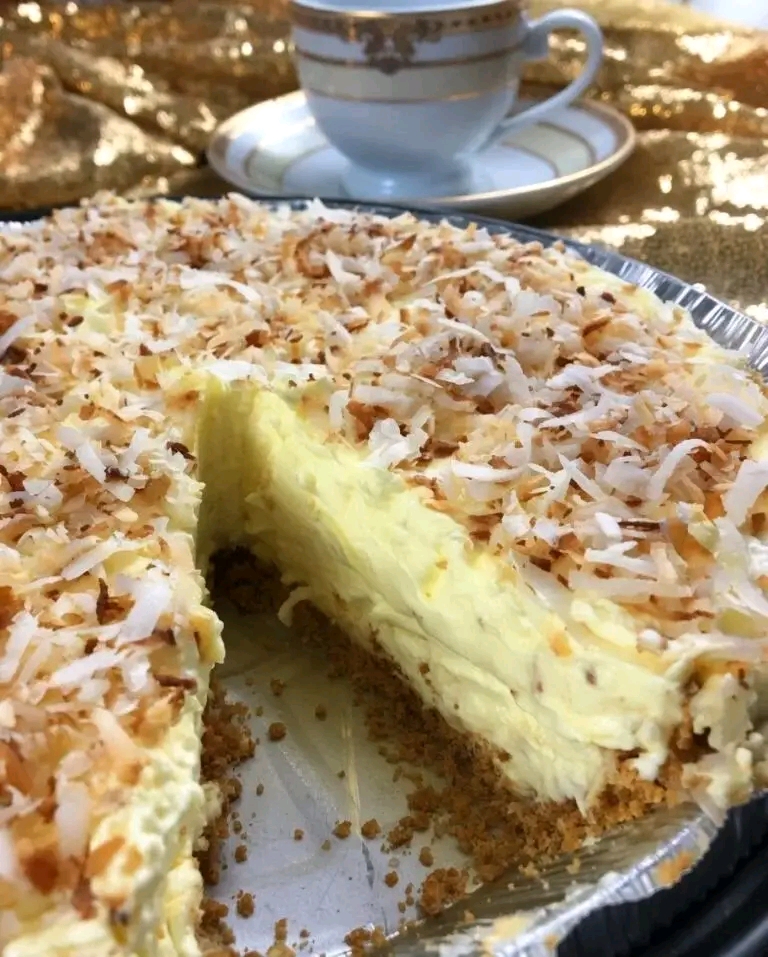
Sugar-Free Coconut Cream Pie
Introduction
Sugar-free coconut cream pie is a rich, creamy dessert that delivers all the indulgence of a classic pie without added sugar. With a buttery crust, silky coconut filling, and light whipped topping, this version is perfect for those following low-sugar or diabetic-friendly diets while still craving something satisfying and elegant.
Nutritional Information (approx. per slice)
- Calories: 220–300 kcal
- Carbohydrates: 10–18 g
- Fiber: 2–4 g
- Protein: 5–7 g
- Fat: 18–24 g
- Sugar: 0–3 g (depending on ingredients used)
- Glycemic impact: Low
Ingredients
For the crust (low-carb option):
- 1 ½ cups almond flour
- ¼ cup melted butter
- 2 tbsp erythritol (or preferred sugar-free sweetener)
- ½ tsp vanilla extract
For the coconut filling:
- 1 can coconut milk (full-fat)
- 1 cup unsweetened almond milk
- 3 egg yolks
- ⅓ cup erythritol or monk fruit sweetener
- 3 tbsp cornstarch (or xanthan gum for lower carbs)
- 1 cup unsweetened shredded coconut
- 1 tsp vanilla extract
- Pinch of salt
For the topping:
- 1 cup heavy whipping cream
- 2 tbsp powdered erythritol
- ½ tsp vanilla extract
Instructions
1. Prepare the crust
Preheat oven to 180°C (350°F). Mix almond flour, melted butter, sweetener, and vanilla until combined. Press into a pie dish evenly. Bake for 10–12 minutes until lightly golden. Let cool completely.
2. Make the filling
In a saucepan, heat coconut milk and almond milk over medium heat. In a bowl, whisk egg yolks with sweetener and cornstarch. Slowly pour warm milk into the egg mixture while whisking (to temper). Return everything to the saucepan and cook on low heat, stirring constantly until thickened.
3. Add coconut flavor
Remove from heat and stir in shredded coconut, vanilla, and salt. Let the filling cool slightly.
4. Assemble
Pour the filling into the cooled crust. Smooth the top and refrigerate for at least 3–4 hours until set.
5. Prepare topping
Whip heavy cream with powdered sweetener and vanilla until soft peaks form. Spread over the chilled pie.
Methods & Tips
- Tempering eggs prevents curdling and ensures a smooth filling.
- Stir constantly while cooking the custard to avoid lumps.
- Chill thoroughly for the best texture and slicing.
- Use xanthan gum instead of cornstarch for a lower-carb version.
History
Coconut cream pie is a classic dessert that became popular in the United States during the 19th and 20th centuries, especially as canned coconut products became widely available. Traditionally made with sugar and dairy, modern versions now include sugar-free adaptations to suit health-conscious diets while maintaining the original creamy texture and tropical flavor.
Formation & Presentation
Serve chilled, sliced neatly. Garnish with extra shredded coconut or lightly toasted coconut flakes. For a refined look, pipe whipped cream on top and add a sprinkle of coconut.
Why People Love It
- Rich and creamy without added sugar
- Perfect balance of coconut flavor
- Suitable for low-carb and diabetic-friendly diets
- Elegant dessert for special occasions
Variations (For All “Lovers”)
Coconut lovers: Add coconut extract for a stronger flavor.
Crunch lovers: Mix toasted coconut into the crust.
Chocolate lovers: Add a sugar-free chocolate layer at the base.
Dairy-free lovers: Use coconut cream instead of heavy cream for topping.
Conclusion
Sugar-free coconut cream pie proves that you don’t need sugar to enjoy a luxurious dessert. With its smooth filling, crisp crust, and light topping, it offers a satisfying experience while keeping carbs and sugar under control.