

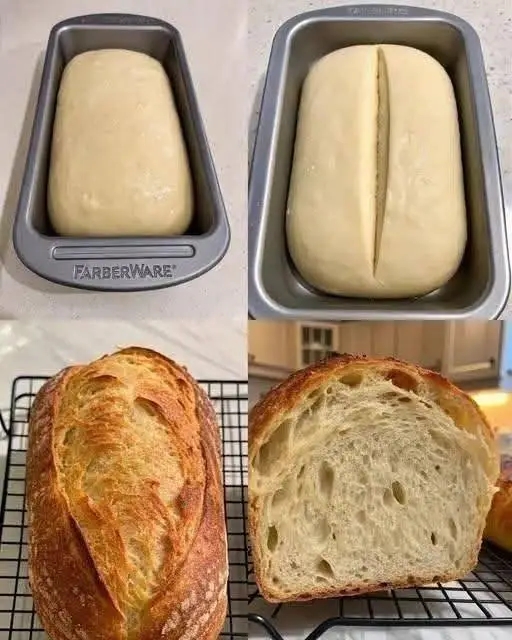
Sourdough Sandwich Bread
Introduction
Sourdough Sandwich Bread is the perfect combination of traditional artisan baking and the soft texture of classic sandwich bread. Unlike rustic sourdough boules with thick crusts and open crumbs, this loaf is designed to be tender, sliceable, and ideal for sandwiches, toast, French toast, grilled cheese, and everyday meals. Thanks to natural fermentation, it develops a rich flavor, excellent keeping quality, and improved digestibility while remaining soft enough for the whole family to enjoy.
Whether you’re an experienced sourdough baker or just beginning your journey with a sourdough starter, this recipe creates a flavorful loaf with a light crumb and a beautifully golden crust.
History
Sourdough is one of the oldest forms of bread in the world, dating back more than 5,000 years to ancient Egypt, where naturally occurring wild yeast and beneficial bacteria were used to ferment dough. Before commercial yeast was invented in the 19th century, nearly all bread relied on natural sourdough fermentation.
As baking evolved, softer sandwich loaves became increasingly popular, especially in the 20th century. Bakers began adapting traditional sourdough recipes by enriching the dough with milk, butter, and a small amount of sweetener, resulting in the modern Sourdough Sandwich Bread—a loaf that combines the nutritional benefits and flavor of sourdough with the softness of everyday sandwich bread.
Why You’ll Love This Recipe
- Naturally fermented for outstanding flavor.
- Soft, fluffy crumb perfect for sandwiches.
- Stays fresh for several days.
- No commercial yeast required.
- Great for toast and grilled sandwiches.
- Easy to slice.
- Excellent for meal prep.
- Family-friendly.
- Freezes beautifully.
- Rich in wholesome ingredients.
Nutritional Information
Approximate per slice (based on 14 slices)
- Calories: 165
- Protein: 6 g
- Carbohydrates: 30 g
- Fat: 3.5 g
- Saturated Fat: 2 g
- Fiber: 2 g
- Sugar: 2 g
- Sodium: 210 mg
- Calcium: 5% DV
- Iron: 10% DV
- Potassium: 90 mg
Ingredients
For the Dough
- 1 cup (240 g) active sourdough starter
- 3¾ cups (450 g) bread flour
- ¾ cup (180 ml) warm whole milk
- 2 tablespoons unsalted butter, softened
- 2 tablespoons honey
- 1½ teaspoons salt
- 1 tablespoon olive oil
Optional Egg Wash
- 1 egg
- 1 tablespoon milk
Optional Topping
- Sesame seeds
- Oats
- Poppy seeds
Equipment
- 9×5-inch loaf pan
- Large mixing bowl
- Dough scraper
- Kitchen scale (recommended)
- Bench scraper
- Plastic wrap or clean towel
- Cooling rack
- Sharp bread knife
Instructions
Step 1: Feed the Starter
Feed your sourdough starter 4–8 hours before baking until it is active, bubbly, and has doubled in size.
Step 2: Mix the Dough
In a large bowl combine:
- Active sourdough starter
- Warm milk
- Honey
- Butter
- Olive oil
Mix until mostly combined.
Add:
- Bread flour
- Salt
Mix until a shaggy dough forms.
Step 3: Knead
Knead by hand for 10–12 minutes or with a stand mixer for 8–10 minutes until the dough becomes smooth, elastic, and slightly tacky.
Step 4: First Rise (Bulk Fermentation)
Place the dough in a lightly oiled bowl.
Cover.
Allow it to rise at room temperature for 4–8 hours, depending on the temperature of your kitchen, until it increases noticeably in volume.
Step 5: Shape the Dough
Turn the dough onto a lightly floured surface.
Flatten into a rectangle.
Roll tightly into a loaf.
Pinch the seam closed.
Place seam-side down into a greased loaf pan.
Step 6: Final Proof
Cover loosely.
Allow the dough to rise for 2–4 hours until it crowns about 1 inch above the rim of the pan.
Step 7: Bake
Preheat oven to 375°F (190°C).
Brush with egg wash if desired.
Bake for 35–40 minutes until the loaf is golden brown and sounds hollow when tapped.
The internal temperature should reach 200–205°F (93–96°C).
Step 8: Cool
Remove from the pan immediately.
Cool completely on a wire rack before slicing to preserve the loaf’s texture.
Baking Methods
Traditional Method
Bake directly in a loaf pan for a soft crust and even shape.
Overnight Fermentation
After shaping, refrigerate the loaf overnight. Bake the next day after allowing it to come closer to room temperature. This develops a deeper sourdough flavor.
Dutch Oven Method
Bake in a Dutch oven for a thicker crust and more oven spring, though the loaf will have a more rustic shape.
Bread Machine Method
Use the machine for mixing and kneading only, then proof and bake in a conventional oven for the best results.
Tips for Success
- Use a strong, active sourdough starter.
- Weigh ingredients for the most accurate results.
- Avoid adding too much flour; the dough should remain slightly tacky.
- Allow enough time for fermentation, as sourdough rises more slowly than yeast dough.
- Cool completely before slicing to prevent a gummy crumb.
- Store in a bread bag or airtight container to keep it fresh.
Variations
Whole Wheat Sourdough Sandwich Bread
Replace up to half of the bread flour with whole wheat flour for a heartier loaf.
Honey Oat Sourdough
Add rolled oats to the dough and sprinkle extra oats on top.
Seeded Sourdough
Mix sunflower, pumpkin, flax, and sesame seeds into the dough for added crunch and nutrition.
Herb Sourdough
Incorporate dried rosemary, thyme, oregano, or garlic powder for a savory loaf.
Cinnamon Raisin Sourdough
Add raisins and cinnamon for a lightly sweet breakfast bread.
Cheese Sourdough
Fold shredded cheddar, Parmesan, or mozzarella into the dough before shaping.
Storage
- Room Temperature: Store in an airtight container or bread bag for up to 4 days.
- Refrigerator: Up to 1 week (though refrigeration may dry the bread slightly).
- Freezer: Slice and freeze for up to 3 months. Toast slices directly from frozen for convenience.
Serving Suggestions
This bread is delicious served with:
- Butter and fruit jam
- Peanut butter and bananas
- Avocado and eggs
- Turkey, ham, or chicken sandwiches
- Grilled cheese
- Tuna salad
- Egg salad
- French toast
- Garlic butter
- Homemade soups and stews
Why People Love Sourdough Sandwich Bread
Bread lovers appreciate Sourdough Sandwich Bread because it combines the tangy, complex flavor of naturally fermented sourdough with the soft texture expected from a classic sandwich loaf. It slices neatly, stays fresh longer than many commercial breads, and works equally well for breakfast, lunch, snacks, or dinner. Its homemade taste and wholesome ingredients make it a favorite among families and baking enthusiasts alike.
Conclusion
Sourdough Sandwich Bread is a timeless loaf that blends ancient baking traditions with modern convenience. Its naturally fermented dough produces exceptional flavor, a tender crumb, and lasting freshness, making it an excellent choice for everyday meals. Whether used for sandwiches, toast, or simply enjoyed warm with butter, this homemade bread offers comfort, nutrition, and satisfaction in every slice. Once you’ve baked it from scratch, it’s likely to become a staple in your kitchen and a recipe you’ll return to for years to come.