

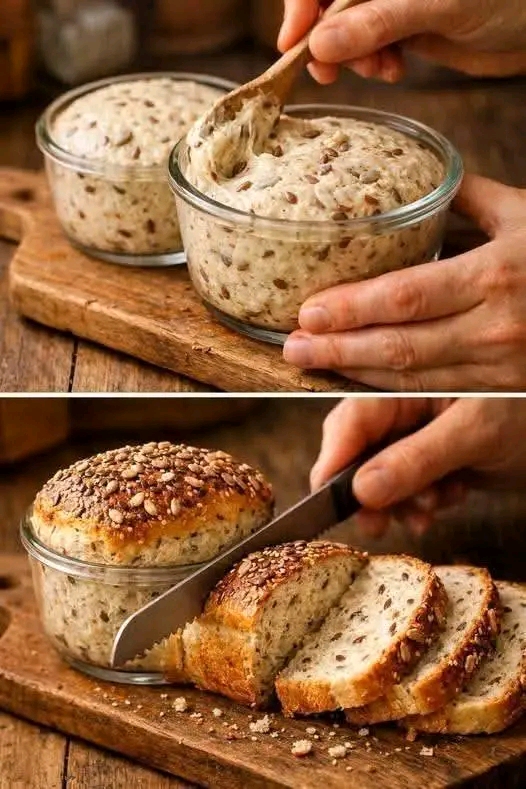
Seeded No-Knead Jar Bread
Introduction
Seeded No-Knead Jar Bread is a rustic artisan-style bread made with minimal effort and maximum flavor. Unlike traditional bread recipes that require extensive kneading, this version relies on time and natural gluten development to create a chewy interior and a beautifully crisp crust. Prepared in a jar or bowl and left to rise slowly, the dough develops complex flavors and an airy texture. The addition of mixed seeds brings extra nutrition, crunch, and a nutty taste that makes every slice delicious.
This bread is perfect for breakfast, sandwiches, soups, or simply enjoying with butter and honey. It is beginner-friendly and requires only a handful of pantry ingredients.
History of No-Knead Bread
No-knead bread gained worldwide popularity in the early 2000s when bakers demonstrated that long fermentation could replace traditional kneading. The technique traces its roots to old European peasant breads, where dough was often mixed and left to rise for extended periods.
Seeded bread itself has ancient origins, dating back thousands of years when grains and seeds such as flax, sesame, and sunflower were added to bread for flavor and nourishment. Combining these traditions results in a modern loaf that is both wholesome and easy to prepare.
Yield
- 1 medium artisan loaf
- 10–12 slices
Preparation Time
- Mixing: 10 minutes
- First rise: 12–18 hours
- Second rise: 1–2 hours
- Baking: 40–45 minutes
Total Time: Approximately 15–20 hours (mostly inactive)
Ingredients
Dry Ingredients
- 3 cups (375 g) bread flour
- 1 teaspoon salt
- ½ teaspoon instant yeast
Seeds
- 2 tablespoons sunflower seeds
- 1 tablespoon sesame seeds
- 1 tablespoon flaxseeds
- 1 tablespoon pumpkin seeds
Wet Ingredients
- 1½ cups (360 ml) warm water
Optional Topping
- Additional mixed seeds for garnish
- Oats for a rustic appearance
Equipment
- Large glass jar or mixing bowl
- Wooden spoon
- Dutch oven or covered baking pot
- Parchment paper
Nutritional Information
Approximate per slice (12 slices):
| Nutrient | Amount |
|---|---|
| Calories | 140 |
| Protein | 5 g |
| Carbohydrates | 25 g |
| Fat | 3 g |
| Fiber | 3 g |
| Sugar | 1 g |
| Sodium | 190 mg |
Nutritional values vary according to ingredients used.
Instructions
Step 1: Mix the Dough
- In a large jar or bowl, combine flour, salt, yeast, and all seeds.
- Pour in the warm water.
- Stir with a spoon until a shaggy dough forms.
- Cover loosely with a lid or plastic wrap.
Step 2: Long Fermentation
- Leave the dough at room temperature for 12–18 hours.
- The dough should become bubbly and nearly double in size.
- This slow rise develops flavor and structure without kneading.
Step 3: Shape the Dough
- Lightly flour a work surface.
- Turn out the dough carefully.
- Fold the edges toward the center several times.
- Shape into a rough round loaf.
Step 4: Second Rise
- Place dough on parchment paper.
- Cover with a towel.
- Allow to rise for 1–2 hours.
Step 5: Preheat the Dutch Oven
- Place the Dutch oven in the oven.
- Heat to 230°C (450°F).
- Let the pot preheat for at least 30 minutes.
Step 6: Bake
- Carefully place the dough with parchment into the hot pot.
- Sprinkle extra seeds on top.
- Cover and bake for 30 minutes.
- Remove the lid and bake another 10–15 minutes until golden brown.
Step 7: Cool
- Transfer bread to a cooling rack.
- Allow to cool completely before slicing.
Methods
Traditional Method
Bake in a Dutch oven to trap steam and create a bakery-style crust.
Glass Jar Fermentation Method
Allow dough to rise directly in a large glass jar, making it easy to monitor fermentation.
Cold Fermentation Method
After mixing, refrigerate the dough for up to 48 hours for even deeper flavor development.
Whole Grain Variation
Replace 25–50% of the bread flour with whole wheat flour for a heartier loaf.
Formation and Bread Science
The magic of no-knead bread comes from hydration and fermentation:
- Water activates the gluten proteins.
- Time naturally develops the gluten network.
- Yeast produces carbon dioxide, creating air pockets.
- Steam trapped during baking forms a crisp crust.
- Seeds add texture, nutrients, and flavor complexity.
This natural process creates artisan-quality bread without intensive kneading.
Serving Suggestions
- Toasted with butter
- Served alongside soups and stews
- Used for gourmet sandwiches
- Topped with avocado and eggs
- Paired with cheese boards
- Served with olive oil and balsamic vinegar
Why Bread Lovers Adore This Recipe
Bread enthusiasts love this loaf because:
- It requires no kneading.
- The crust is wonderfully crunchy.
- The interior stays soft and airy.
- Seeds provide extra nutrition.
- It tastes like artisan bakery bread.
- The recipe is highly forgiving and beginner-friendly.
Additional Methods Loved by Bakers
Overnight Method
Mix before bed and bake the next day.
High-Seed Method
Double the seeds for extra crunch and nutrition.
Herb Method
Add rosemary, thyme, or oregano to the dough.
Honey Seed Bread Method
Mix in 1 tablespoon honey for a slightly sweeter loaf.
Multigrain Method
Incorporate oats, rye flour, or spelt flour for a more complex flavor.
Conclusion
Seeded No-Knead Jar Bread is one of the simplest ways to create bakery-quality artisan bread at home. The long fermentation develops exceptional flavor while requiring very little hands-on work. Packed with nutritious seeds, a crisp crust, and a tender crumb, this bread is perfect for everyday meals and special occasions alike. Whether you’re a beginner baker or an experienced bread enthusiast, this recipe delivers impressive results with minimal effort and maximum satisfaction. 🍞🌻✨