

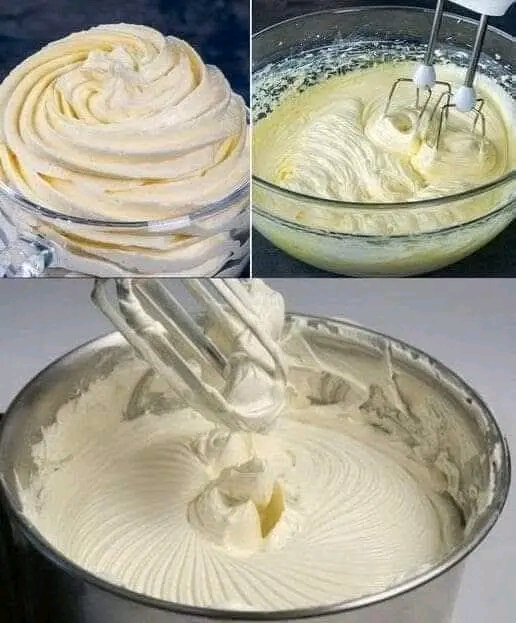
Secret-Velvet Vanilla Pastry Cream (Crème Pâtissière)
Introduction
Pastry cream, or crème pâtissière, is one of the great foundations of French pastry. It is a rich, silky custard traditionally made from milk, egg yolks, sugar and a starch such as cornstarch. It is used in éclairs, cream puffs, fruit tarts, mille-feuille, cakes, donuts and countless other pastries.
The real secret isn’t simply the ingredients—it is how you combine and cook them. Tempering the egg yolks prevents scrambling, cooking the starch properly creates a stable cream, and straining the finished custard gives it an exceptionally smooth texture.
This version is designed to be thick enough for piping, smooth enough for filling, glossy enough for desserts, and intensely vanilla-forward.
The Secret
The most important secrets are:
- Use whole milk for a richer texture.
- Whisk the sugar and cornstarch together first so the starch doesn’t form lumps.
- Temper the eggs slowly with hot milk.
- Don’t stop whisking while cooking.
- Let the cream actually reach a proper boil so the cornstarch fully activates.
- Cook briefly after thickening to eliminate the raw starch taste.
- Strain the cream before chilling.
- Add cold butter at the end for extra richness and shine.
- Press plastic wrap directly against the surface to prevent a skin.
- Re-whisk after chilling to restore that luxurious, silky consistency.
Ingredients
For about 3 cups of pastry cream
- 2 ½ cups (600 ml) whole milk
- ½ cup (100 g) granulated sugar
- ¼ cup (30 g) cornstarch
- 6 large egg yolks
- 2 tablespoons (28 g) unsalted butter
- 2 teaspoons pure vanilla extract
- 1 vanilla bean, optional but highly recommended
- ¼ teaspoon salt
Optional flavor boosters
For an even more sophisticated pastry cream, you can add:
- 1 teaspoon vanilla bean paste
- Finely grated zest of ½ lemon
- Finely grated zest of ½ orange
- ½ teaspoon almond extract
- 1 tablespoon honey for a softer sweetness
Secret tip: If you have a vanilla bean, use both the seeds and the pod. Infusing the milk with the pod gives the cream a deeper vanilla aroma.
Nutritional Information
Approximate values will vary depending on the exact milk, butter and sugar used.
Per approximately ½ cup serving:
- Calories: about 230–250 kcal
- Protein: about 5 g
- Carbohydrates: about 30–32 g
- Fat: about 10–11 g
- Sugars: about 23–25 g
- Sodium: about 70–100 mg
This is a dessert filling, so it is naturally relatively rich in sugar and fat.
Preparation Time
Preparation: 15–20 minutes
Cooking: 8–12 minutes
Chilling: At least 2–4 hours
Total: Approximately 3–4 hours including chilling
The cream can be prepared a day ahead, which is often convenient when making cakes or pastries. Properly covered pastry cream can generally be refrigerated for several days; King Arthur recommends up to 5 days.
Method 1 — Classic French Method
Step 1: Prepare the vanilla milk
Pour the milk into a medium saucepan.
If using a vanilla bean, slice it lengthwise and scrape out the seeds.
Add:
- Vanilla seeds
- Vanilla pod
- About half of the sugar
- Salt
Place over medium heat.
Warm until the milk becomes steaming and small bubbles begin appearing around the edges.
Do not aggressively boil the milk at this stage.
Remove from the heat and allow it to sit for about 5–10 minutes.
This little infusion gives the vanilla time to penetrate the milk.
Step 2: Prepare the egg mixture
In a large bowl, combine:
- Egg yolks
- Remaining sugar
- Cornstarch
Whisk vigorously.
The mixture should become smooth, pale and slightly thickened.
Make sure there are no visible lumps of cornstarch.
Step 3: The Secret Tempering Technique
This is one of the most important stages.
Slowly pour approximately ½ cup of the hot milk into the egg mixture while whisking constantly.
Do not pour the milk all at once.
Keep whisking.
The goal is to gradually raise the temperature of the egg mixture without cooking the yolks.
This process is called tempering and is essential for preventing scrambled eggs.
Gradually add more hot milk while continuing to whisk.
Step 4: Return everything to the saucepan
Pour the tempered mixture back into the saucepan.
Place it over medium heat.
Now comes the part where patience matters.
Whisk constantly, especially around the bottom and corners of the pan.
At first, the mixture will appear thin.
Then it will suddenly begin to thicken.
Keep whisking.
Step 5: The Secret Boiling Point
Once the pastry cream becomes thick and large bubbles begin breaking through the surface, continue cooking while whisking for approximately 1 minute.
This is important.
Cornstarch needs sufficient heat to fully gelatinize and stabilize the cream. Professional recipes likewise instruct cooks to bring pastry cream to a boil and continue cooking briefly afterward.
Don’t panic when it suddenly becomes very thick.
That’s exactly what you want.
Step 6: Add the butter
Remove the saucepan from the heat.
Add the butter a little at a time.
Whisk until completely incorporated.
The butter gives the pastry cream:
- Richness
- Gloss
- Smoothness
- A luxurious mouthfeel
Step 7: Add the vanilla
Remove the vanilla bean if you used one.
Add the vanilla extract or vanilla bean paste.
Whisk thoroughly.
Taste carefully.
If necessary, add a tiny pinch more salt.
Salt doesn’t make the cream taste salty—it helps balance the sweetness and intensify the vanilla.
Step 8: Strain the cream
Place a fine-mesh sieve over a clean bowl.
Pour the hot pastry cream through the sieve.
Use a spatula to gently push it through.
This step catches:
- Tiny cooked egg particles
- Vanilla pod pieces
- Cornstarch lumps
- Any accidental bits of cooked custard
The result is a noticeably smoother pastry cream. Straining is also recommended in several professional-style recipes.
Step 9: Chill correctly
Immediately cover the surface of the pastry cream with plastic wrap.
The plastic should touch the actual surface of the cream.
This prevents air from reaching the surface and forming an unpleasant skin.
Allow it to cool briefly, then refrigerate.
Chill for at least 2–4 hours, preferably overnight when convenient.
Step 10: The Final Secret — Re-whisk
When you’re ready to use the pastry cream, remove it from the refrigerator.
It will be firm.
Don’t use it immediately.
Whisk it vigorously for approximately 30–60 seconds.
It will transform from a firm custard into a smooth, glossy, pipeable cream.
This final whisking step is one of the easiest ways to make homemade pastry cream look much more professional.
Method 2 — Ultra-Silky Pastry Cream
If you’re making pastry cream for a wedding cake, fruit tart, éclairs or professional-looking dessert, use this variation.
After cooking:
- Remove from the heat.
- Add butter.
- Add vanilla.
- Immediately strain.
- Press plastic wrap onto the surface.
- Chill completely.
- Whisk until silky before piping.
The cream should be smooth enough to pass easily through a piping bag.
Method 3 — Diplomat Cream
Want something lighter?
Transform your pastry cream into crème diplomate.
After the pastry cream has completely chilled, whisk it until smooth.
Prepare softly whipped cream separately.
Fold whipped cream gently into the pastry cream.
This creates a lighter, airier filling that works beautifully in:
- Cream puffs
- Éclairs
- Layer cakes
- Fruit tarts
- Choux pastries
King Arthur also recommends folding whipped cream into pastry cream for a lighter filling.
Method 4 — Chocolate Pastry Cream
For a chocolate version, prepare the basic pastry cream.
Once it is removed from the heat, add approximately:
- 100 g finely chopped dark chocolate
Whisk until completely melted.
The result is a rich chocolate crème pâtissière perfect for éclairs and cakes.
Method 5 — Lemon Pastry Cream
Add:
- Finely grated zest of 1 lemon
- 1–2 teaspoons fresh lemon juice
For best results, infuse the lemon zest into the warm milk before tempering.
This creates a bright pastry cream that pairs beautifully with:
- Strawberries
- Blueberries
- Raspberries
- Shortcrust pastry
- Sponge cake
Formation and Texture
A perfect pastry cream should have several characteristics.
Appearance
It should be:
- Pale yellow
- Glossy
- Smooth
- Free from lumps
Texture
It should be:
- Thick
- Creamy
- Spoonable
- Pipeable
- Soft enough to spread
Flavor
The ideal flavor is:
creamy + vanilla-rich + gently sweet + buttery + slightly salty
It should taste like vanilla custard rather than simply sugar and milk.
Common Mistakes
1. Scrambled eggs
Cause: Adding hot milk too quickly.
Solution: Temper gradually while whisking constantly.
2. Lumpy pastry cream
Cause: Cornstarch wasn’t dispersed properly or the mixture wasn’t whisked sufficiently.
Solution: Whisk sugar and cornstarch together before adding the yolks, then strain the finished cream.
3. Pastry cream is too thin
Cause: It wasn’t heated enough or wasn’t brought to a proper boil.
Solution: Return it to the saucepan and cook while whisking until properly thickened.
4. Pastry cream tastes starchy
Cause: The cornstarch wasn’t cooked long enough.
Solution: Once the cream reaches a full boil and thickens, continue cooking briefly while whisking.
5. Skin forms on top
Cause: The cream was chilled uncovered.
Solution: Press plastic wrap directly onto the surface.
6. Cream is too firm after refrigeration
Don’t worry.
Pastry cream naturally becomes considerably firmer as it cools.
Simply whisk it thoroughly before using.
History
Crème pâtissière is one of the fundamental preparations of French pastry and became an essential component of the classical pastry tradition.
Its importance comes from its versatility. The same basic custard can become the filling for éclairs, cream puffs, fruit tarts, mille-feuille and layered desserts.
Although recipes vary between pastry chefs, the basic architecture remains remarkably consistent:
milk + eggs + sugar + starch + flavoring + careful cooking.
Professional baking texts also treat pastry cream as one of the fundamental creams used throughout pastry production.
Lovers of Pastry Cream
Pastry cream lovers usually appreciate it because it sits perfectly between several textures.
It isn’t simply pudding.
It isn’t whipped cream.
It isn’t custard sauce.
It has a unique combination of richness, structure and creaminess.
Vanilla pastry cream is especially loved because it can be used with almost anything:
- Fresh strawberries
- Bananas
- Peaches
- Raspberries
- Blueberries
- Chocolate
- Caramel
- Coffee
- Pistachios
- Almonds
- Coconut
- Citrus
Best Ways to Use It
Éclairs
Pipe chilled pastry cream into baked choux shells and finish with chocolate glaze.
Cream Puffs
Fill profiteroles with vanilla pastry cream and dust with powdered sugar.
Fruit Tart
Spread pastry cream inside a baked tart shell and cover with beautiful fresh fruit.
Mille-Feuille
Layer crisp puff pastry with pastry cream and finish with powdered sugar or icing.
Cake Filling
Use between layers of vanilla sponge cake with fresh strawberries.
Donuts
Inject chilled pastry cream into freshly fried or baked donuts.
Napoleon
Layer puff pastry and pastry cream for a classic French-style dessert.
Professional Baker’s Secret
If you want your pastry cream to have a restaurant-quality texture, don’t judge it while it’s still hot.
The hot cream will look softer than the final product.
Once refrigerated, the starch structure develops and the cream becomes significantly firmer. After chilling, whisking restores its smoothness and makes it easier to pipe.
The complete transformation is:
Hot → thick → chilled → firm → re-whisked → silky and glossy.
That final stage is the secret many home cooks skip.
Storage
Keep pastry cream covered in the refrigerator.
For best quality, use it within several days; some tested recipes recommend up to 5 days when properly refrigerated.
Do not leave it sitting at room temperature for extended periods because it contains milk and eggs.
Final Conclusion
A truly excellent pastry cream doesn’t require complicated ingredients.
The magic comes from technique.
Use good vanilla, temper the eggs carefully, cook the cornstarch properly, whisk continuously, strain the finished cream and chill it with plastic wrap touching the surface.
Then comes the final secret:
Whisk it again after chilling.
That’s when the pastry cream becomes smooth, glossy, creamy and beautifully pipeable.
Whether you’re filling an éclair, building a fruit tart, layering a cake or simply eating it with a spoon, this secret-velvet vanilla pastry cream is a classic preparation worth mastering.