

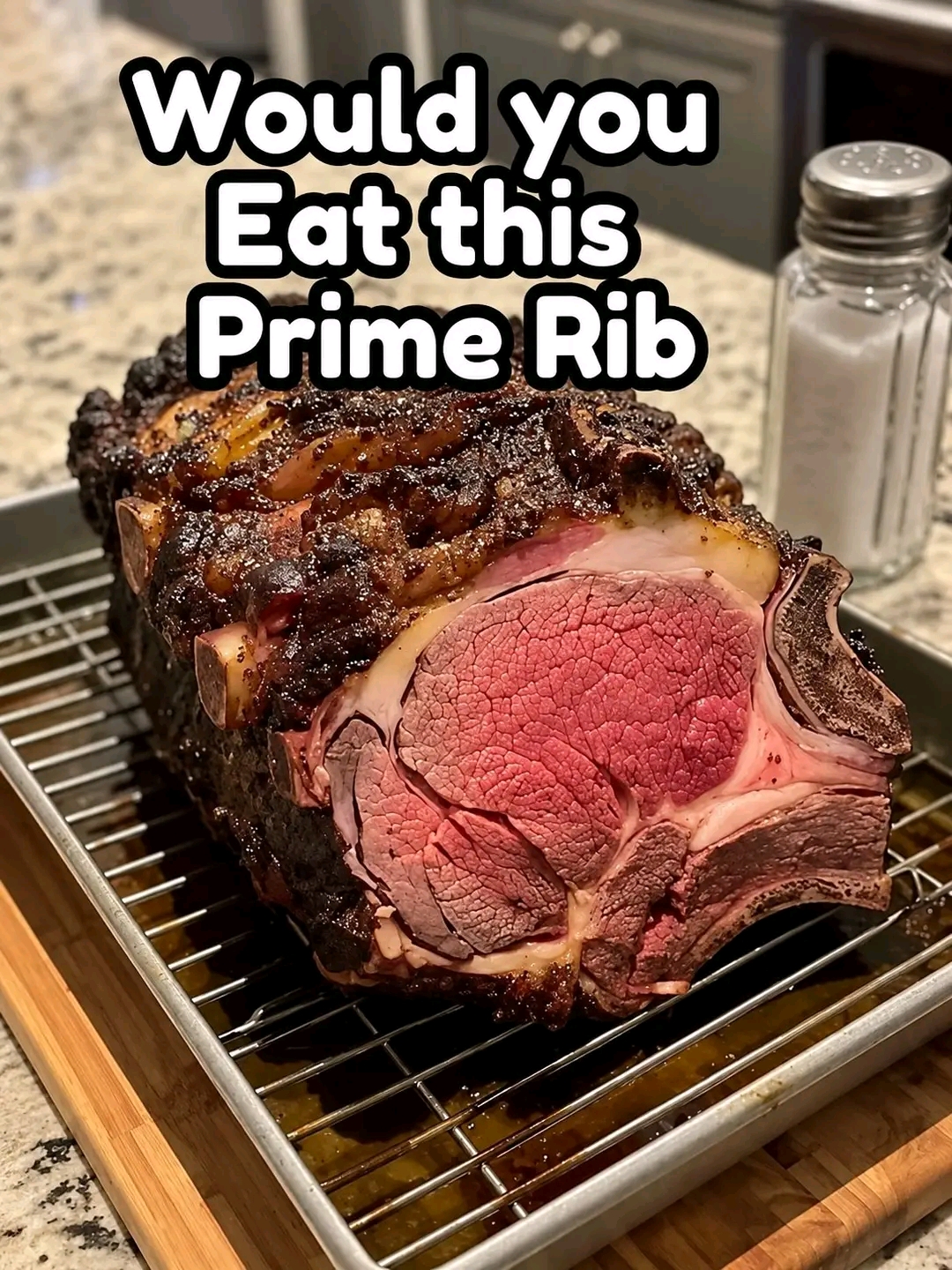
🥩 Prime Rib Recipe (Classic & Juicy)
🧾 Introduction
Prime rib is one of the most luxurious and flavorful cuts of beef, often served during special occasions and festive meals. Known for its tenderness, rich marbling, and deep beefy taste, prime rib delivers a restaurant-quality experience right at home when prepared correctly. This recipe will guide you step-by-step to achieve a perfectly roasted, juicy, and flavorful centerpiece.
🥦 Nutritional Information (per 100g, approximate)
- Calories: 250–300 kcal
- Protein: 25–28 g
- Fat: 18–22 g
- Saturated Fat: 7–9 g
- Iron: ~15% DV
- Zinc: ~30% DV
- Vitamin B12: ~40% DV
✔ High in protein
✔ Rich in essential minerals
⚠ High in fat—best enjoyed in moderation
🛒 Ingredients
- 1 prime rib roast (2–4 kg, bone-in or boneless)
- 4 cloves garlic (minced)
- 2 tablespoons olive oil
- 2 tablespoons butter (softened)
- 1 tablespoon fresh rosemary (chopped)
- 1 tablespoon fresh thyme
- 1 tablespoon coarse salt
- 1–2 teaspoons black pepper
- Optional: Dijon mustard (for crust)
👩🍳 Instructions
Step 1: Prepare the Meat
- Remove the prime rib from the fridge 1–2 hours before cooking.
- Pat dry with paper towels.
- Mix garlic, butter, olive oil, herbs, salt, and pepper.
- Rub the mixture all over the roast.
Step 2: Preheat & Sear
- Preheat oven to 220°C (425°F).
- Place roast in a roasting pan (fat side up).
- Roast for 20 minutes to create a crust.
Step 3: Slow Roast
- Reduce heat to 120°C (250°F).
- Continue roasting for about 15–20 minutes per 500g depending on desired doneness:
- Rare: 50°C internal
- Medium-rare: 55–57°C
- Medium: 60–63°C
Step 4: Resting
- Remove from oven.
- Cover loosely with foil.
- Let rest for 20–30 minutes (this keeps it juicy).
🔥 Cooking Methods & Variations
- Reverse Sear Method: Slow cook first, then finish at high heat for a perfect crust.
- Garlic Herb Crust: Add breadcrumbs and parmesan for texture.
- Smoked Prime Rib: Use a smoker for deep flavor.
- Grill Method: Cook indirectly on a grill for a smoky finish.
📜 History
Prime rib has its roots in British cuisine, where it is known as a standing rib roast. It became especially popular in the United States during the 19th century, often served in upscale hotels and restaurants. Today, it remains a symbol of celebration, especially during holidays like Christmas and family gatherings.
🧪 Formation (Why It Works)
The magic of prime rib lies in marbling—thin streaks of fat within the meat. As it cooks, the fat melts, naturally basting the meat and keeping it tender. The initial high heat creates a flavorful crust (Maillard reaction), while the slow roasting ensures even cooking throughout.
❤️ Why People Love It
- Extremely tender and juicy
- Rich, beefy flavor
- Impressive presentation for guests
- Perfect balance of crispy crust and soft interior
- Ideal for celebrations and special dinners
🍽️ Serving Ideas
- Serve with roasted potatoes and vegetables
- Pair with horseradish sauce or gravy
- Add a fresh salad for balance
- Enjoy with crusty bread
🏁 Conclusion
Prime rib is more than just a meal—it’s an experience. With the right technique, simple ingredients, and patience, you can create a restaurant-quality dish that impresses everyone at the table. Whether for a holiday or a special dinner, this classic roast never fails to deliver rich flavor and unforgettable moments.