

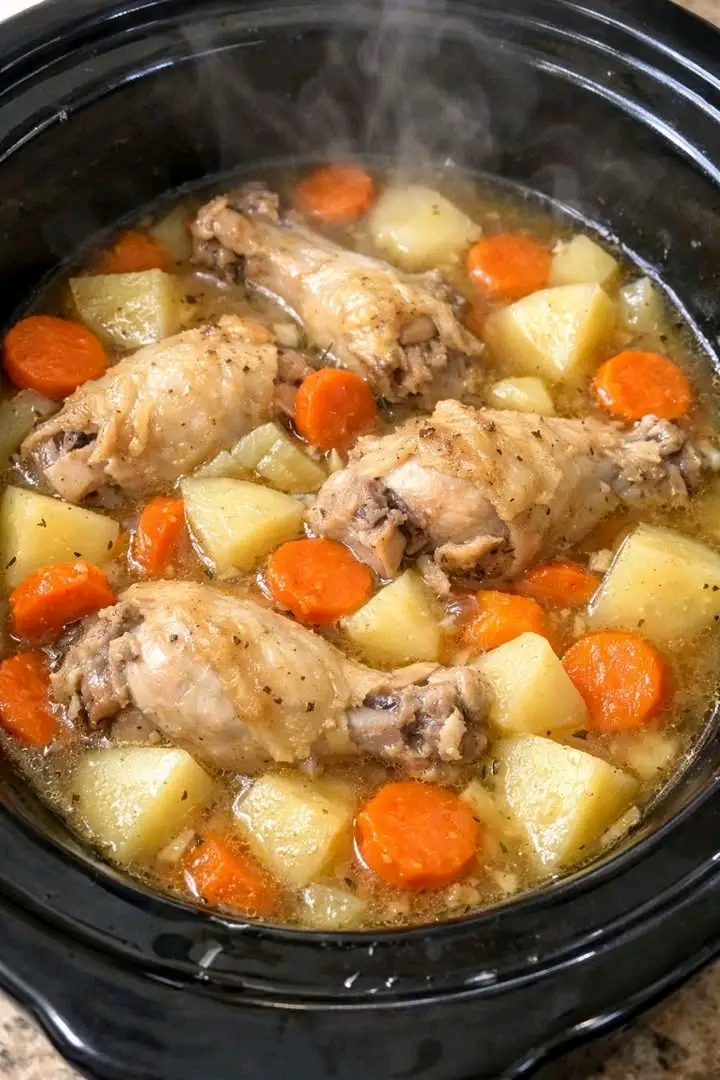
Poor Man’s Chicken Stew
Introduction
Poor Man’s Chicken Stew is the kind of meal that proves you don’t need expensive ingredients to make something deeply satisfying. It is a hearty, rustic dish made with simple chicken, potatoes, carrots, onions, broth, and everyday seasonings.
The beauty of this stew is its simplicity. A few affordable ingredients slowly cook together until the chicken becomes tender, the vegetables are soft, and the broth develops a rich, savory flavor. It is warm, filling, economical, and perfect for feeding a family.
This recipe is especially wonderful on cold evenings when you want something comforting without spending a lot of money.
A Little History
The expression “poor man’s” in traditional cooking generally refers to dishes created around inexpensive, accessible ingredients. Across many countries, families have historically relied on stews because they can transform inexpensive cuts of meat and basic vegetables into nourishing meals.
Chicken stew became popular in many home kitchens because chicken is relatively affordable, while vegetables such as potatoes, onions, and carrots can stretch the meal considerably.
The exact recipe for Poor Man’s Chicken Stew varies from family to family. Some versions are thick and gravy-like, while others are more like a traditional soup. Some cooks add tomatoes, others use milk, and some simply rely on chicken broth and flour to create a rich sauce.
The version below focuses on maximum flavor from inexpensive ingredients.
Nutritional Information
Approximate nutrition per serving, assuming 6 servings:
- Calories: 380–430 kcal
- Protein: 30–35 g
- Carbohydrates: 35–40 g
- Fat: 12–16 g
- Fiber: 5–7 g
- Sodium: approximately 650–850 mg, depending on broth
- Potassium: approximately 800–1,000 mg
Nutrition varies according to the chicken pieces, oil, broth, and portion sizes used.
Ingredients
For the Chicken Stew
- 2 lb (900 g) boneless, skinless chicken thighs
- 2 tablespoons vegetable oil or olive oil
- 1 large onion, diced
- 3 cloves garlic, minced
- 4 medium potatoes, peeled and cut into chunks
- 3 carrots, peeled and sliced
- 2 celery stalks, sliced
- 1 cup frozen peas
- 4 cups chicken broth
- 1 cup water
- 2 tablespoons all-purpose flour
- 2 tablespoons tomato paste
- 1 teaspoon salt, or to taste
- ½ teaspoon black pepper
- 1 teaspoon paprika
- 1 teaspoon dried thyme
- ½ teaspoon dried rosemary
- 1 bay leaf
- ½ teaspoon onion powder
- ½ teaspoon garlic powder
Optional Ingredients
For an even richer stew, you can add:
- 1 tablespoon Worcestershire sauce
- ½ teaspoon smoked paprika
- ½ cup mushrooms
- ½ cup corn
- ½ teaspoon chili flakes
- 1 tablespoon butter
- Fresh parsley for garnish
Why Chicken Thighs?
Chicken thighs are particularly good for this recipe because they are usually inexpensive and contain more fat than chicken breast.
That extra fat helps keep the meat juicy during the long cooking process and contributes to the flavor of the broth.
If you prefer chicken breast, you can absolutely use it, but be careful not to overcook it.
Preparation
1. Prepare the chicken
Cut the chicken thighs into medium-sized pieces.
Pat them dry with paper towels. Season with:
- Salt
- Black pepper
- Paprika
- Garlic powder
Set aside.
2. Prepare the vegetables
Peel and chop the potatoes.
Slice the carrots and celery.
Dice the onion and mince the garlic.
Keeping all the vegetables prepared before cooking makes the stew much easier to assemble.
Cooking Method
Step 1: Brown the Chicken
Place a large heavy-bottomed pot or Dutch oven over medium-high heat.
Add the oil.
When the oil is hot, add the chicken pieces in a single layer.
Cook for approximately 3–4 minutes per side, until lightly browned.
The chicken does not need to be completely cooked at this stage.
Remove the chicken from the pot and place it on a plate.
Important tip
Don’t overcrowd the pot.
If necessary, brown the chicken in two batches. Browning creates flavorful browned bits at the bottom of the pot that will later become part of the stew.
Step 2: Cook the Onion
Reduce the heat to medium.
Add the diced onion to the same pot.
Cook for approximately 4–5 minutes, stirring occasionally.
The onion should become soft and slightly golden.
Add the garlic and cook for another 30–60 seconds.
Be careful not to burn the garlic.
Step 3: Add the Tomato Paste
Add:
- 2 tablespoons tomato paste
- 1 teaspoon thyme
- ½ teaspoon rosemary
- ½ teaspoon smoked paprika, if using
Stir everything together.
Cook for about 1–2 minutes.
Cooking the tomato paste briefly gives the stew a deeper flavor.
Step 4: Make the Stew Base
Sprinkle the flour over the vegetables.
Stir continuously for about 1 minute.
The flour will coat the vegetables and help thicken the stew.
Slowly pour in the chicken broth while stirring.
Add the water.
Scrape the bottom of the pot with a wooden spoon to loosen the flavorful browned pieces.
Step 5: Add the Potatoes, Carrots, and Celery
Add:
- Potatoes
- Carrots
- Celery
- Bay leaf
Stir everything together.
Bring the mixture to a gentle boil.
Step 6: Return the Chicken
Put the browned chicken back into the pot.
Stir gently.
Reduce the heat to low.
Cover the pot partially with a lid.
Allow the stew to simmer for approximately 30–40 minutes.
The goal is a gentle simmer rather than a vigorous boil.
Step 7: Add the Peas
During the final 5–10 minutes, add the frozen peas.
Stir gently.
Continue cooking until the potatoes are tender and the chicken is completely cooked.
The chicken should reach a safe internal temperature of 165°F / 74°C.
Step 8: Thicken the Stew
At this stage, check the consistency.
If the stew is too thin:
Remove the lid and simmer for another 5–10 minutes.
If you want it significantly thicker, mix:
- 1 tablespoon flour
- 2 tablespoons cold water
into a smooth slurry.
Stir it into the stew gradually and simmer for several minutes.
Don’t add dry flour directly to the hot stew.
It can create lumps.
Step 9: Final Seasoning
Taste the stew.
Add additional:
- Salt
- Black pepper
- Paprika
- Thyme
- Worcestershire sauce
if desired.
Remove the bay leaf.
Finish with fresh chopped parsley if you have it.
The Final Formation
A perfect Poor Man’s Chicken Stew should have:
Tender chicken
The chicken should be juicy and easy to cut with a fork.
Soft vegetables
The potatoes should be tender without completely falling apart.
Thick, flavorful broth
The liquid should be somewhere between soup and gravy.
Rich savory flavor
The browned chicken, onions, garlic, broth, and herbs should combine into a comforting flavor.
Slow Cooker Method
This recipe is also excellent in a slow cooker.
Ingredients
Use the same ingredients listed above.
Method
- Brown the chicken in a skillet first.
- Add the chicken to the slow cooker.
- Add onions, garlic, potatoes, carrots, celery, tomato paste, herbs, and broth.
- Stir gently.
- Cook on LOW for approximately 6–7 hours or until the chicken and vegetables are tender.
- Add the peas during the final 20–30 minutes.
- If you want a thicker stew, use a flour or cornstarch slurry near the end.
- Taste and adjust the seasoning.
Browning the chicken first isn’t absolutely necessary, but it gives the finished stew noticeably more flavor.
Stovetop Method
For a quicker version:
- Brown chicken.
- Sauté onions and garlic.
- Add tomato paste and seasonings.
- Add flour.
- Add broth.
- Add potatoes, carrots, celery, and chicken.
- Simmer for approximately 30–40 minutes.
- Add peas near the end.
- Adjust thickness and seasoning.
- Garnish with parsley.
Total cooking time is usually around 50–60 minutes.
Poor Man’s Chicken Stew Variations
1. Creamy Chicken Stew
For a creamy version, add:
- ½ cup milk
- ½ cup heavy cream
during the final 10 minutes.
Don’t boil aggressively after adding the dairy.
2. Tomato Chicken Stew
Add:
- 1 can diced tomatoes
- Extra garlic
- ½ teaspoon Italian seasoning
This produces a more tomato-rich stew.
3. Spicy Chicken Stew
Add:
- ½ teaspoon cayenne pepper
- 1 teaspoon chili flakes
- Smoked paprika
Serve with warm bread or rice.
4. Mushroom Chicken Stew
Add 1–2 cups sliced mushrooms.
Sauté them with the onions before adding the broth.
Mushrooms add a wonderful savory quality without requiring expensive ingredients.
5. Chicken and Dumpling Style
For a more substantial meal, add simple dumplings during the final 15–20 minutes of cooking.
The dumplings absorb some of the flavorful broth and make the stew especially filling.
How to Make It Even More Economical
The entire philosophy behind this recipe is stretching inexpensive ingredients.
Here are some ways to make it even cheaper:
Use chicken thighs
They are flavorful and often less expensive than chicken breast.
Increase the vegetables
Adding more potatoes, carrots, celery, peas, or cabbage can make the stew stretch further.
Use homemade stock
Save chicken bones and vegetable scraps to make homemade broth.
Don’t throw away leftovers
Leftover cooked chicken can be transformed into this stew instead of being wasted.
Serve with bread
A simple loaf of bread can make the meal much more filling without significantly increasing the cost.
Add beans
White beans or chickpeas can add protein, fiber, and volume.
What to Serve With Poor Man’s Chicken Stew
This stew is already a complete meal, but these sides work beautifully:
- Crusty bread
- Homemade dinner rolls
- Cornbread
- Garlic bread
- Rice
- Mashed potatoes
- Simple green salad
- Steamed vegetables
- Biscuits
For the ultimate comfort-food combination, serve it with warm crusty bread and use the bread to soak up the thick gravy.
Tips for the Best Stew
Don’t rush the onions
Allowing the onions to soften and lightly brown creates a deeper flavor.
Brown the chicken
Even a few minutes of browning can dramatically improve the flavor.
Cut vegetables evenly
Try to cut the potatoes and carrots into similarly sized pieces so they cook at approximately the same rate.
Don’t boil aggressively
A gentle simmer keeps the chicken tender.
Don’t overcook the peas
Frozen peas only need a few minutes.
Let the stew rest
After cooking, allow the stew to sit for approximately 5–10 minutes before serving.
The flavors will settle, and the broth may thicken slightly.
Leftovers
Poor Man’s Chicken Stew often tastes even better the next day.
Allow leftovers to cool and refrigerate them promptly in a covered container.
The stew can generally be kept refrigerated for 3–4 days.
When reheating, warm it gently on the stovetop or in the microwave until thoroughly hot.
If it becomes too thick in the refrigerator, add a splash of chicken broth or water while reheating.
Freezer Method
This stew can also be frozen.
Allow it to cool completely before transferring it into freezer-safe containers.
Leave a little room at the top because liquids expand when frozen.
Freeze for up to approximately 2–3 months for best quality.
Thaw in the refrigerator and reheat thoroughly.
Potatoes can sometimes change texture slightly after freezing, so if you’re making a batch specifically for the freezer, consider slightly undercooking them.
The Lovers of This Recipe
Poor Man’s Chicken Stew is loved by people who appreciate:
- Simple home cooking
- Affordable meals
- One-pot recipes
- Comfort food
- Hearty family dinners
- Rustic cooking
- Meal-prep recipes
- Leftover-friendly dishes
- Cold-weather meals
It is particularly suitable for families because you can easily increase the amount of potatoes, carrots, peas, and broth to create more servings without needing a lot of additional chicken.
How to Make It Taste Expensive
Here’s the secret: layer your flavors.
Don’t simply throw everything into a pot and boil it.
Instead:
- Brown the chicken.
- Sauté the onions.
- Add garlic.
- Toast the tomato paste.
- Bloom the herbs and spices.
- Add flour.
- Deglaze with broth.
- Simmer slowly.
- Add delicate vegetables toward the end.
- Finish with fresh herbs.
These simple techniques turn inexpensive ingredients into something that tastes much more luxurious.
Budget-Friendly Meal Plan
If you’re trying to stretch the stew across several meals, serve it differently each time.
Day 1
Chicken stew with crusty bread.
Day 2
Chicken stew over rice.
Day 3
Use the remaining stew as a filling for a savory pie.
Day 4
Add extra broth and vegetables to turn leftovers into soup.
This is one reason traditional stews have remained so popular: they are practical, adaptable, and economical.
Conclusion
Poor Man’s Chicken Stew is proof that great cooking isn’t necessarily about expensive ingredients.
A few chicken thighs, potatoes, carrots, onions, broth, and simple seasonings can become a warm, satisfying meal that feels homemade and comforting.
The most important ingredients aren’t expensive spices or specialty products. They’re patience, good browning, gentle simmering, and thoughtful seasoning.
Whether you make it on the stovetop, in a slow cooker, or as a large batch for leftovers, this chicken stew is the kind of meal that brings people around the table.
Simple ingredients. Big flavor. Small budget. Big comfort.