

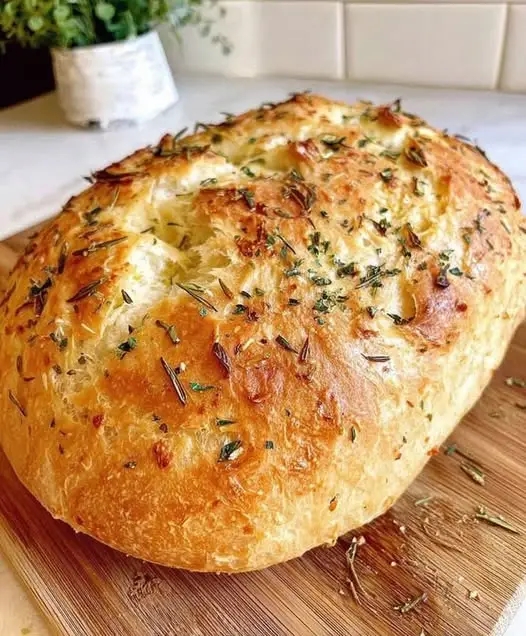
No-Knead Rosemary Garlic Bread
Introduction
No-Knead Rosemary Garlic Bread is a rustic artisan-style loaf that combines a crisp, golden crust with a soft, airy interior infused with the fragrant flavors of fresh rosemary and roasted garlic. One of the greatest advantages of this recipe is that it requires no kneading, making it perfect for beginners and experienced bakers alike. Time does most of the work, as a long, slow fermentation develops exceptional flavor, texture, and aroma.
Whether served alongside soups, salads, pasta dishes, or enjoyed warm with butter and olive oil, this homemade bread offers bakery-quality results with minimal effort. The combination of earthy rosemary and sweet roasted garlic creates a comforting loaf that’s ideal for family dinners, holiday gatherings, or everyday baking.
History
No-knead bread became especially popular in the early 2000s when artisan baking techniques were simplified for home cooks. The concept relies on a wet dough and extended fermentation rather than intensive kneading, allowing gluten to develop naturally over time.
Rosemary has been used in Mediterranean cooking for thousands of years, particularly in Italy, Greece, and southern France. Garlic, one of the world’s oldest cultivated vegetables, has long been prized for both its culinary and medicinal properties. Together, rosemary and garlic create a timeless flavor pairing that has become a staple in rustic European breads.
Why You’ll Love This Bread
- No kneading required
- Crispy artisan-style crust
- Soft, chewy interior
- Rich garlic flavor
- Aromatic fresh rosemary
- Perfect for beginners
- Excellent for sandwiches and toast
- Freezer-friendly
- Naturally fermented flavor
- Bakery-quality results at home
Nutritional Information
Per Slice (1 of 12 slices)
- Calories: 185
- Protein: 5 g
- Carbohydrates: 35 g
- Fat: 2.5 g
- Saturated Fat: 0.3 g
- Fiber: 2 g
- Sugar: 1 g
- Sodium: 280 mg
- Calcium: 2% DV
- Iron: 10% DV
Nutrition values may vary depending on ingredient brands and serving size.
Ingredients
For the Dough
- 3½ cups (440 g) bread flour
- 1½ teaspoons salt
- ½ teaspoon instant yeast
- 1½ cups (360 ml) warm water
- 2 tablespoons olive oil
Garlic
- 1 whole garlic bulb
- 1 teaspoon olive oil
Herbs
- 2 tablespoons fresh rosemary, finely chopped
- 1 teaspoon dried rosemary (optional for extra flavor)
Optional Additions
- 2 tablespoons grated Parmesan cheese
- 1 teaspoon cracked black pepper
- 1 teaspoon Italian seasoning
- Flaky sea salt for topping
- Cornmeal for dusting
Equipment Needed
- Large mixing bowl
- Wooden spoon
- Plastic wrap or kitchen towel
- Dutch oven with lid
- Parchment paper
- Cooling rack
Instructions
Step 1: Roast the Garlic
- Preheat the oven to 400°F (200°C).
- Slice the top off the garlic bulb.
- Drizzle with olive oil.
- Wrap in foil.
- Roast for 35–40 minutes until soft and caramelized.
- Cool and squeeze out the cloves into a small bowl, then mash into a paste.
Step 2: Mix the Dough
In a large bowl combine:
- Bread flour
- Salt
- Instant yeast
- Chopped rosemary
Mix well.
Add:
- Warm water
- Olive oil
- Roasted garlic paste
Stir until a sticky dough forms. Do not knead.
Step 3: First Rise
Cover the bowl with plastic wrap or a clean towel.
Allow the dough to rise at room temperature for 12–18 hours, or until doubled in size and covered with bubbles.
Step 4: Shape the Dough
Lightly flour your work surface.
Turn the dough out gently.
Fold the edges toward the center several times to form a round loaf without kneading.
Place the dough seam-side down on parchment paper.
Cover and let it rest for 30–45 minutes.
Step 5: Preheat the Dutch Oven
Place the Dutch oven with its lid into the oven.
Preheat to 450°F (230°C) for at least 30 minutes.
A thoroughly heated Dutch oven is essential for creating a crisp, bakery-style crust.
Step 6: Bake
Carefully transfer the dough (using the parchment paper) into the hot Dutch oven.
Cover with the lid.
Bake for 30 minutes.
Remove the lid and continue baking for 15–20 minutes, or until the crust is deeply golden brown and the internal temperature reaches about 205–210°F (96–99°C).
Step 7: Cool
Transfer the bread to a wire rack.
Allow it to cool for at least 1 hour before slicing to preserve its texture.
Baking Methods
Dutch Oven Method
Produces maximum oven spring, a crisp crust, and a moist crumb by trapping steam during baking.
Baking Stone Method
Bake on a preheated baking stone while placing a tray of hot water in the oven to generate steam.
Baking Sheet Method
Shape the loaf on parchment paper, place it on a baking sheet, and create steam by placing boiling water in a separate oven-safe pan.
Cast Iron Skillet Method
Bake in a preheated cast iron skillet with an inverted metal bowl covering the loaf during the first part of baking.
Expert Tips
- Use bread flour for a chewier texture.
- Weigh ingredients for the most consistent results.
- Avoid adding too much extra flour; the dough should remain sticky.
- Long fermentation develops superior flavor.
- Fresh rosemary offers the best aroma.
- Roast the garlic rather than using raw garlic for a sweeter, milder flavor.
- Let the loaf cool completely before slicing.
- Store in a paper bag to help maintain the crust.
Flavor Variations
Parmesan Rosemary Bread
Add ½ cup grated Parmesan cheese to the dough.
Garlic Herb Bread
Mix in thyme, oregano, parsley, and rosemary.
Cheddar Garlic Bread
Fold in 1 cup shredded sharp cheddar cheese before the first rise.
Olive Rosemary Bread
Add ½ cup chopped Kalamata olives.
Whole Wheat Version
Replace 1 cup of bread flour with whole wheat flour for a nuttier flavor.
Sun-Dried Tomato Rosemary Bread
Fold in chopped sun-dried tomatoes for a Mediterranean twist.
Serving Suggestions
Enjoy this bread with:
- Olive oil and balsamic vinegar
- Creamy soups
- Pasta dishes
- Grilled meats
- Roasted vegetables
- Cheese boards
- Fresh salads
- Breakfast with butter and jam
- Avocado toast
- Garlic butter
Storage
Room Temperature: Store in a paper bag or bread box for up to 3 days.
Refrigerator: Not recommended, as it can dry out the bread.
Freezer: Wrap tightly and freeze for up to 3 months. Thaw at room temperature and reheat in the oven for a freshly baked texture.
Common Mistakes to Avoid
- Using water that is too hot, which can kill the yeast.
- Cutting the fermentation time short, resulting in less flavor.
- Adding too much flour, leading to a dense loaf.
- Baking in a cold Dutch oven.
- Slicing the bread while it’s still hot.
- Using old yeast that has lost its effectiveness.
Why Bread Lovers Adore This Recipe
This bread has become a favorite among home bakers because it delivers artisan-quality results with minimal hands-on work. The long fermentation creates a beautifully open crumb and deep flavor, while the roasted garlic and rosemary fill the kitchen with an irresistible aroma. It’s versatile enough for everyday meals yet impressive enough for special occasions, making it a beloved staple for anyone who enjoys homemade bread.
Conclusion
No-Knead Rosemary Garlic Bread proves that exceptional homemade bread doesn’t require complicated techniques or hours of kneading. With simple pantry ingredients, slow fermentation, and the rich combination of roasted garlic and fragrant rosemary, you can create a rustic loaf with a crisp crust and tender interior worthy of a bakery. Whether paired with hearty meals, transformed into gourmet sandwiches, or enjoyed warm with butter, this flavorful artisan bread is sure to become a treasured recipe you’ll bake time and time again.