

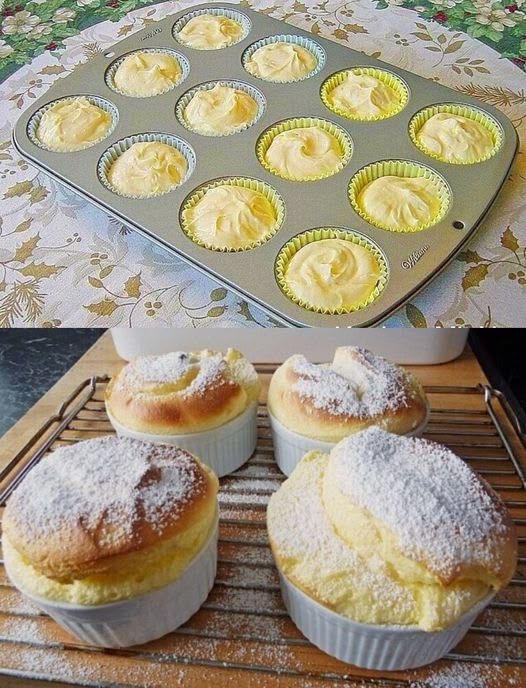
Lemon Soufflé Recipe
Introduction
A lemon soufflé is one of those desserts that looks wonderfully impressive but is actually built from a handful of simple ingredients. Light, airy, delicate, and filled with fresh citrus flavor, this classic French-inspired dessert rises dramatically in the oven before settling into a soft, tender center.
The secret is in the contrast: the outside becomes lightly golden and delicate, while the inside remains warm, fluffy, and almost custard-like. Fresh lemon zest and juice give the soufflé a bright flavor that balances the sweetness beautifully.
This recipe makes 6 individual lemon soufflés and is perfect for dinner parties, holidays, romantic dinners, or whenever you want a dessert that feels special.
Nutritional Information
Approximate nutrition per soufflé:
- Calories: 190–220 kcal
- Protein: 5 g
- Carbohydrates: 27 g
- Fat: 7–8 g
- Sugar: 20–22 g
- Fiber: 0.5–1 g
- Sodium: 70–90 mg
Nutrition varies depending on the exact ingredients and portion sizes.
Ingredients
For the Soufflé
- 4 large eggs, separated
- ½ cup granulated sugar, divided
- 2 tablespoons all-purpose flour
- 2 tablespoons unsalted butter
- ½ cup whole milk
- 2 tablespoons fresh lemon juice
- 1 tablespoon finely grated lemon zest
- 1 teaspoon vanilla extract
- 1 small pinch of salt
For Preparing the Ramekins
- 1 tablespoon softened butter
- 2–3 tablespoons granulated sugar
For Serving
- Powdered sugar
- Fresh berries
- Lemon zest
- Whipped cream, optional
- Vanilla ice cream, optional
Instructions
Step 1: Prepare the Ramekins
Preheat your oven to 375°F (190°C).
Take six small soufflé ramekins and coat the inside generously with softened butter.
Brush the butter from the bottom toward the top edges. This helps encourage the soufflé to rise upward.
Sprinkle granulated sugar inside each ramekin and rotate it until the entire interior is coated. Pour out any excess sugar.
Place the prepared ramekins on a baking sheet.
Step 2: Prepare the Lemon Base
Melt the butter in a small saucepan over medium-low heat.
Add the flour and whisk continuously for about 30–45 seconds. You don’t want the flour to brown; you’re simply creating a smooth base.
Slowly pour in the milk while whisking.
Continue cooking until the mixture becomes thick and smooth, approximately 2–3 minutes.
Remove the saucepan from the heat.
Add:
- Lemon juice
- Lemon zest
- Vanilla extract
- Remaining egg yolks
Whisk everything together until smooth.
Allow the mixture to cool slightly.
Step 3: Separate the Eggs
Place the egg whites in a completely clean, dry mixing bowl.
Make sure there is no egg yolk, grease, or water in the bowl. Even a small amount of fat can prevent the egg whites from whipping properly.
Place the four egg yolks into the lemon mixture.
The egg whites are what give the soufflé its beautiful height.
Step 4: Whip the Egg Whites
Beat the egg whites on medium speed until they become foamy.
Add the pinch of salt.
Gradually add about ¼ cup of the sugar, one spoonful at a time.
Continue beating until the whites form medium-stiff peaks.
When you lift the whisk, the peak should stand up but still have a slight softness at the tip.
Avoid overbeating the egg whites. Very dry, stiff whites can be difficult to fold into the lemon mixture.
Step 5: Combine the Mixtures
Add approximately one-third of the whipped egg whites to the lemon base.
Gently whisk them in to lighten the mixture.
Then add the remaining egg whites in two additions.
Use a spatula and fold gently from the bottom of the bowl upward.
Do not vigorously stir.
The goal is to keep as much air as possible inside the mixture.
This trapped air is what allows the soufflé to rise in the oven.
Step 6: Fill the Ramekins
Carefully divide the mixture among the prepared ramekins.
Fill each ramekin approximately ¾ full.
Run your thumb or the tip of a small knife around the inside rim of each ramekin. This creates a clean edge and can help the soufflé rise evenly.
Wipe away any mixture from the outside rim.
Step 7: Bake the Soufflés
Place the baking sheet in the center of the preheated oven.
Bake for approximately 14–18 minutes.
Do not open the oven door during the first 12 minutes.
The soufflés should rise above the rims and develop a beautiful light golden color.
The center should still have a gentle wobble.
Step 8: Serve Immediately
Soufflés wait for nobody!
Remove them from the oven and serve immediately.
Dust the tops lightly with powdered sugar.
You can add:
- Fresh raspberries
- Blueberries
- Strawberries
- Whipped cream
- Vanilla ice cream
- A little extra lemon zest
The combination of warm lemon soufflé and cold vanilla ice cream is particularly delicious.
Method
The basic method behind a successful soufflé is simple:
Prepare → Whip → Fold → Bake → Serve immediately.
The lemon base provides flavor and structure, while the whipped egg whites provide the volume.
When the soufflé enters the hot oven, the air trapped inside the whipped egg whites expands. Steam produced from the moisture in the mixture also contributes to the dramatic rise.
That is why gentle folding is so important.
If you crush too much of the air during mixing, the soufflé may not rise properly.
The History of Soufflé
The word soufflé comes from the French verb souffler, meaning “to blow” or “to puff.”
Soufflés became particularly associated with French cuisine during the eighteenth and nineteenth centuries. French chefs developed techniques for creating dishes that could dramatically expand during baking.
There are both savory and sweet soufflés.
Savory versions can contain cheese, vegetables, herbs, or seafood, while sweet versions can include chocolate, fruit, vanilla, or citrus.
Lemon became a particularly attractive flavor for sweet soufflés because its acidity and fragrance balance the richness of eggs and sugar.
Formation of the Soufflé
The formation of a soufflé is essentially a little piece of kitchen science.
Egg whites contain proteins that can trap air when beaten.
As you whip them, thousands of tiny air bubbles become surrounded by a network of egg-white proteins.
When the soufflé enters the hot oven, the air expands and water turns into steam.
Together, these forces push the mixture upward.
Meanwhile, the heat cooks and sets the proteins, helping the soufflé maintain its structure.
This is why the soufflé rises dramatically.
It is also why it eventually begins to fall once removed from the oven. As it cools, the expanding gases contract and the structure naturally settles.
Important Tips for a Perfect Lemon Soufflé
1. Use fresh lemons
Freshly squeezed lemon juice gives the soufflé a much brighter flavor than bottled lemon juice.
2. Zest before juicing
Lemons are much easier to zest while they’re still whole.
3. Don’t get yolk into the whites
Even a little yolk can interfere with whipping.
4. Don’t overmix
Fold the egg whites gently.
The goal is to preserve their air.
5. Prepare everything before whipping
Once the egg whites are whipped, you want to incorporate them into the base relatively quickly.
6. Don’t open the oven
Sudden temperature changes can cause the soufflé to collapse prematurely.
7. Serve immediately
A soufflé naturally loses some of its height after leaving the oven. That’s completely normal.
Variations
Lemon and Raspberry Soufflé
Add a few fresh raspberries to the bottom of each ramekin before adding the soufflé mixture.
The berries create a beautiful sweet-tart surprise.
Lemon Blueberry Soufflé
Serve the finished soufflé with fresh blueberries and a little powdered sugar.
Lemon Vanilla Soufflé
Increase the vanilla extract to 1½ teaspoons for a softer, sweeter flavor.
Lemon Ginger Soufflé
Add approximately ½ teaspoon of finely grated fresh ginger to the lemon base.
The ginger gives the dessert a warm, slightly spicy character.
Lemon Coconut Soufflé
Add 2 tablespoons of finely shredded unsweetened coconut to the lemon mixture.
Lemon Chocolate Soufflé
Add a small amount of finely grated white chocolate to the warm lemon base for a creamy citrus-and-chocolate combination.
Troubleshooting
Why didn’t my soufflé rise?
The most common causes are under-whipped egg whites, over-folding, an oven that isn’t hot enough, or ramekins that weren’t prepared properly.
Why did it collapse?
Some settling is completely normal. A soufflé is at its tallest immediately after coming out of the oven.
If it collapses dramatically while still inside the oven, the egg-white structure may not have been strong enough or the oven door may have been opened too early.
Why is my soufflé dense?
Usually, the egg whites lost too much air during folding.
Try using a gentle folding motion rather than stirring.
Why is the top brown but the center undercooked?
Your oven may be running too hot, or the soufflés may be positioned too close to the heating element.
Use the center rack and check your oven temperature.
Serving Ideas
For an elegant presentation, place each warm soufflé on a dessert plate.
Dust lightly with powdered sugar.
Add a few raspberries or strawberries beside it.
For an extra-special finish, serve with a spoonful of lightly whipped cream.
Another fantastic option is to make a small opening in the center and pour in a little warm lemon sauce.
You can also serve the soufflé with vanilla ice cream, creating a delicious contrast between the hot, fluffy lemon dessert and cold, creamy ice cream.
Lovers of This Recipe
This lemon soufflé is especially perfect for people who love:
- Fresh lemon desserts
- Light and airy cakes
- French-style desserts
- Citrus flavors
- Elegant dinner-party desserts
- Warm desserts
- Desserts that aren’t overly heavy
- Homemade pastries
- Sweet-and-tart flavors
It’s also a wonderful dessert for someone who loves cheesecake or lemon meringue pie but wants something lighter and more delicate.
Make-Ahead Advice
A soufflé is best baked immediately after preparation, but you can prepare the ramekins and lemon base in advance.
For the best result, prepare the lemon base several hours ahead and refrigerate it.
When you’re ready to bake, allow the base to come closer to room temperature, whip the egg whites fresh, fold everything together, and bake.
Freshly whipped egg whites provide the best volume.
Conclusion
A lemon soufflé is the perfect example of how a few simple ingredients can become something truly spectacular.
Eggs, sugar, milk, butter, flour, and fresh lemons come together to create a dessert that is simultaneously light, rich, fluffy, fragrant, sweet, and wonderfully tart.
The key is respecting the technique: whip the egg whites properly, fold gently, bake without disturbing the oven, and serve immediately.
Once you understand the method, soufflés become much less intimidating. And when that beautiful golden dessert rises above the rim of the ramekin, you’ll understand exactly why soufflé has remained one of the most beloved classic desserts in French-inspired cooking.