

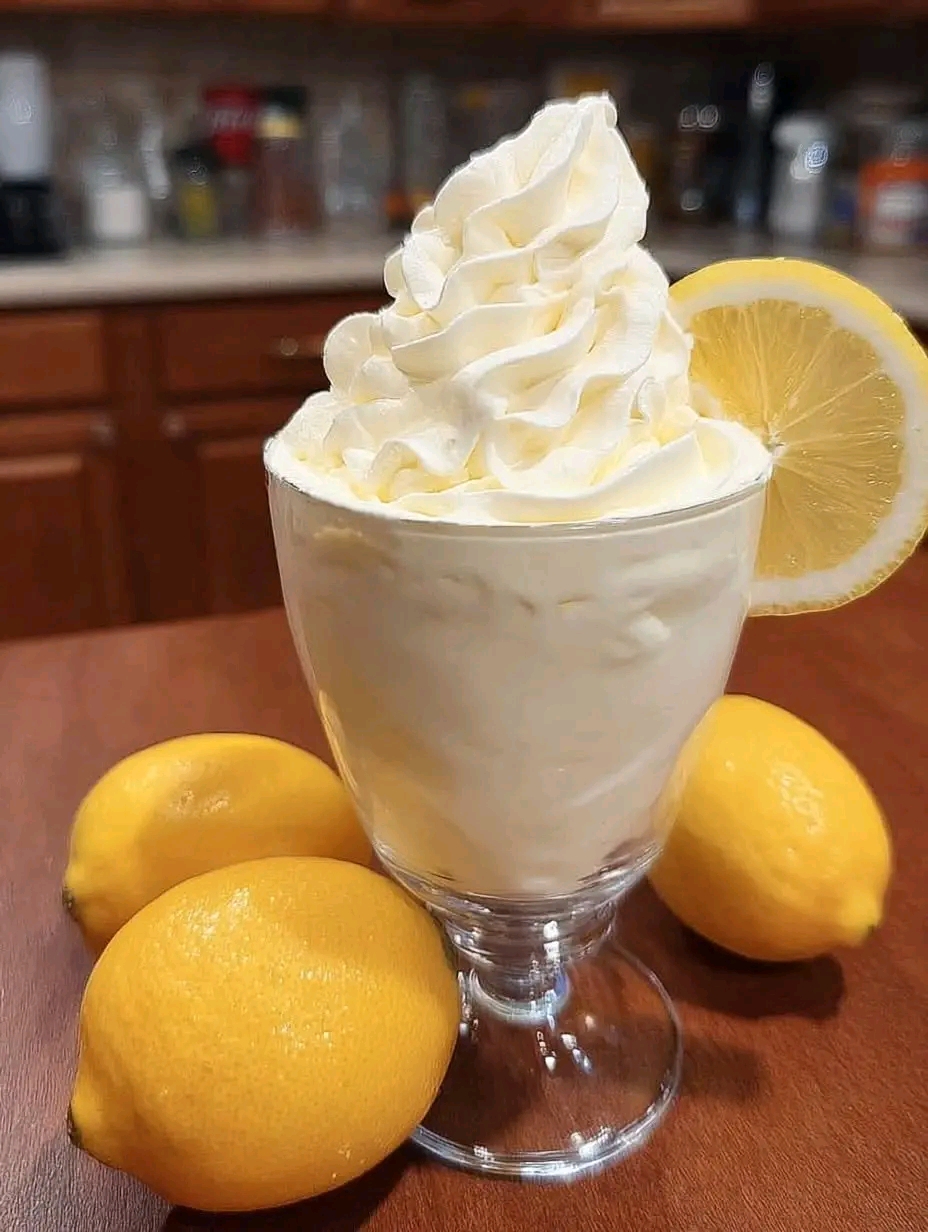
Lemon Cloud Mousse
Introduction
Lemon Cloud Mousse is a light, creamy, and wonderfully refreshing dessert with a delicate texture that almost melts in your mouth. It combines the bright flavor of fresh lemon with a smooth, airy cream base, creating the perfect balance between sweet and tangy.
The word “cloud” describes its soft, fluffy consistency. Unlike a heavy pudding or dense cheesecake, this mousse is designed to be light and airy while still being rich enough to feel like a special dessert.
It is an excellent choice for spring and summer gatherings, afternoon tea, dinner parties, birthdays, or simply when you want something refreshing after a meal.
Nutritional Information
Approximate values per serving, based on 6 servings.
- Calories: 250–300 kcal
- Protein: 3–4 g
- Carbohydrates: 22–28 g
- Fat: 17–21 g
- Sugar: 18–23 g
- Fiber: About 0.5–1 g
- Vitamin C: Some contribution from fresh lemon juice and zest
The nutritional values will vary depending on the type of cream, sugar, yogurt, and toppings used.
Ingredients
For the Lemon Mousse
- 1 cup (240 ml) heavy whipping cream, very cold
- ½ cup (100 g) granulated sugar
- 3 large egg yolks
- ½ cup (120 ml) freshly squeezed lemon juice
- 1 tablespoon finely grated lemon zest
- 1 teaspoon vanilla extract
- 1 teaspoon unflavored gelatin
- 2 tablespoons cold water
- ½ cup (120 g) Greek yogurt or mascarpone
- Pinch of salt
For the Optional Lemon Topping
- ½ cup (120 ml) heavy cream
- 1 tablespoon powdered sugar
- ½ teaspoon vanilla extract
- Finely grated lemon zest
For Garnishing
- Thin lemon slices
- Fresh lemon zest
- Small mint leaves
- Crushed shortbread cookies
- Optional white chocolate shavings
Instructions
Step 1: Prepare the Gelatin
Place the cold water in a small bowl.
Sprinkle the gelatin evenly over the water and let it sit for approximately 5 minutes. This allows the gelatin to absorb the water and soften.
Do not immediately stir it aggressively. Letting it bloom first gives you a smoother final mousse.
Step 2: Prepare the Lemon Base
In a heatproof bowl, whisk together:
- Egg yolks
- Granulated sugar
- Fresh lemon juice
- Lemon zest
- Pinch of salt
Place the bowl over a saucepan containing a small amount of gently simmering water.
The bottom of the bowl should not touch the water.
Whisk continuously for approximately 5–8 minutes, until the mixture becomes thicker and creamy.
The goal is to create a smooth lemon custard.
Step 3: Add the Gelatin
Remove the lemon mixture from the heat.
Add the bloomed gelatin and whisk until completely dissolved.
Then add the vanilla extract.
Allow the lemon mixture to cool for several minutes.
It should be warm rather than hot before you continue.
Step 4: Add Greek Yogurt or Mascarpone
Gently whisk the Greek yogurt or mascarpone into the cooled lemon mixture.
Mix until smooth and creamy.
If using mascarpone, the mousse will be richer and more luxurious.
If using Greek yogurt, the final dessert will have a slightly lighter and tangier character.
Step 5: Whip the Cream
Pour the cold heavy cream into a large mixing bowl.
Using an electric mixer, beat it until soft peaks form.
The cream should become fluffy but should not be beaten until stiff or grainy.
This whipped cream is what gives the dessert its signature “cloud” texture.
Step 6: Fold Everything Together
Add approximately one-third of the whipped cream to the lemon mixture.
Gently fold it in to loosen the mixture.
Then add the remaining whipped cream in two additions.
Use a spatula and gently fold from the bottom toward the top.
Do not vigorously stir.
The objective is to keep as much air as possible inside the whipped cream.
Step 7: Portion the Mousse
Divide the mousse between 6 small dessert glasses, ramekins, or serving cups.
Smooth the tops gently with the back of a spoon.
Cover each serving with plastic wrap or cover the tray.
Step 8: Chill
Place the mousse in the refrigerator for at least 4 hours.
For the best texture, you can refrigerate it overnight.
The mousse should become firm enough to hold its shape while remaining soft and creamy when eaten.
Optional Lemon Cream Topping
For an even more beautiful presentation, prepare a simple lemon whipped cream.
Beat together:
- ½ cup heavy cream
- 1 tablespoon powdered sugar
- ½ teaspoon vanilla
Beat until soft peaks form.
Spoon or pipe a small amount onto each mousse.
Finish with fresh lemon zest.
Methods
The Custard Method
The lemon juice, egg yolks, sugar, and zest are gently heated to form a smooth lemon custard.
This creates the strong lemon flavor that forms the foundation of the mousse.
The Gelatin Method
Gelatin gives the mousse additional structure.
Only a small amount is needed because the goal is not to create a firm jelly-like dessert. The mousse should remain delicate and creamy.
The Whipping Method
Cold heavy cream is whipped to introduce air.
This air is essential to creating the light “cloud” effect.
The Folding Method
The whipped cream is carefully folded into the lemon base.
Gentle folding prevents the air bubbles from collapsing and results in a lighter mousse.
The Chilling Method
Refrigeration allows the gelatin and cream mixture to stabilize.
The longer it chills, the more settled and spoonable the mousse becomes.
History of Lemon Mousse
Mousse is traditionally associated with French cuisine. The French word mousse means “foam,” which reflects the airy consistency that characterizes this type of dessert.
Sweet mousses became particularly popular in European cuisine as cooks developed techniques for incorporating whipped cream, beaten egg whites, chocolate, fruit, and other ingredients into light desserts.
Lemon mousse follows the same culinary idea but uses citrus to create a refreshing alternative to richer chocolate-based mousses.
The combination of lemon and cream is especially successful because the acidity of the lemon cuts through the richness of the dairy, producing a dessert that tastes bright rather than overwhelmingly sweet.
Formation of the Lemon Cloud Mousse
The texture of this dessert comes from several elements working together.
Lemon juice and zest provide acidity, fragrance, and flavor.
Egg yolks give the lemon base richness and a smooth custard-like character.
Sugar balances the natural acidity of the lemon.
Gelatin provides structure and helps the mousse maintain its shape.
Greek yogurt or mascarpone contributes creaminess and body.
Whipped cream introduces thousands of tiny air bubbles, giving the mousse its characteristic light texture.
The final result is a dessert that feels rich on the tongue but surprisingly light when eaten.
Tips for the Perfect Lemon Cloud Mousse
Use Fresh Lemons
Freshly squeezed lemon juice gives the mousse a much brighter flavor than bottled lemon juice.
Zest Before Juicing
It is easier to zest whole lemons before squeezing them.
When zesting, use only the yellow outer layer. The white pith underneath can taste bitter.
Keep Your Cream Cold
Cold heavy cream whips more easily and creates a more stable mousse.
Don’t Overwhip
Stop whipping when soft-to-medium peaks form.
Overwhipped cream can become grainy and difficult to fold into the lemon base.
Fold Gently
This is one of the most important steps.
If you stir aggressively, you will remove the air that gives the mousse its cloud-like consistency.
Don’t Rush the Chilling
Give the mousse at least four hours to set properly.
Variations
Lemon Blueberry Cloud Mousse
Add a layer of fresh blueberries or blueberry compote underneath the lemon mousse.
The sweet berries provide a beautiful contrast to the tart lemon.
Lemon Raspberry Mousse
Add fresh raspberries between the mousse layers.
Raspberry and lemon make an especially refreshing combination.
Lemon Coconut Mousse
Replace part of the Greek yogurt with coconut cream and garnish with toasted coconut.
Lemon Cheesecake Mousse
Use mascarpone or softened cream cheese instead of Greek yogurt.
Add crushed graham crackers or shortbread cookies at the bottom of each glass.
Lemon White Chocolate Mousse
Melt a small amount of white chocolate and incorporate it into the cooled lemon base.
This produces a sweeter, richer version.
Serving Ideas
For an elegant presentation, serve the mousse in small glass cups.
Create layers such as:
Crushed cookies → Lemon mousse → Lemon cream → Lemon zest
You can also add a thin lemon wheel to the side of each glass.
For a dinner party, place the glasses on a large serving tray and decorate them just before serving.
Make-Ahead Method
Lemon Cloud Mousse is an excellent make-ahead dessert.
Prepare it the day before serving and refrigerate it overnight.
Keep the mousse covered while it chills.
Add whipped cream, lemon zest, berries, or other decorations shortly before serving for the freshest appearance.
How to Store It
Store the mousse covered in the refrigerator.
It is best enjoyed within 2–3 days.
Because it contains dairy and egg yolks, keep it refrigerated and avoid leaving it at room temperature for extended periods.
Why Lovers of Lemon Desserts Will Enjoy It
Lemon lovers will appreciate the combination of fresh citrus, creamy texture, and gentle sweetness.
It has enough lemon flavor to be refreshing without becoming overwhelmingly sour.
The mousse is also versatile: it can be served plain for a simple dessert or dressed up with berries, whipped cream, cookies, mint, and lemon zest for a more elegant presentation.
Conclusion
Lemon Cloud Mousse is a beautiful dessert built around simplicity: fresh lemon, creamy ingredients, sweetness, and plenty of air.
Its biggest attraction is the contrast between bright, tangy lemon flavor and an incredibly soft, fluffy texture. The chilled mousse feels delicate and luxurious while remaining refreshing enough to enjoy after a substantial meal.
Whether you prepare it for a family dinner, a celebration, afternoon tea, or simply as a weekend treat, this lemon mousse is an easy way to bring a little brightness to the dessert table.
Final serving idea: Spoon the chilled mousse into elegant glasses, top with a small swirl of whipped cream, sprinkle with fresh lemon zest, and add a few berries or a thin lemon slice. The result is a beautiful Lemon Cloud Mousse that looks as light and refreshing as it tastes.