

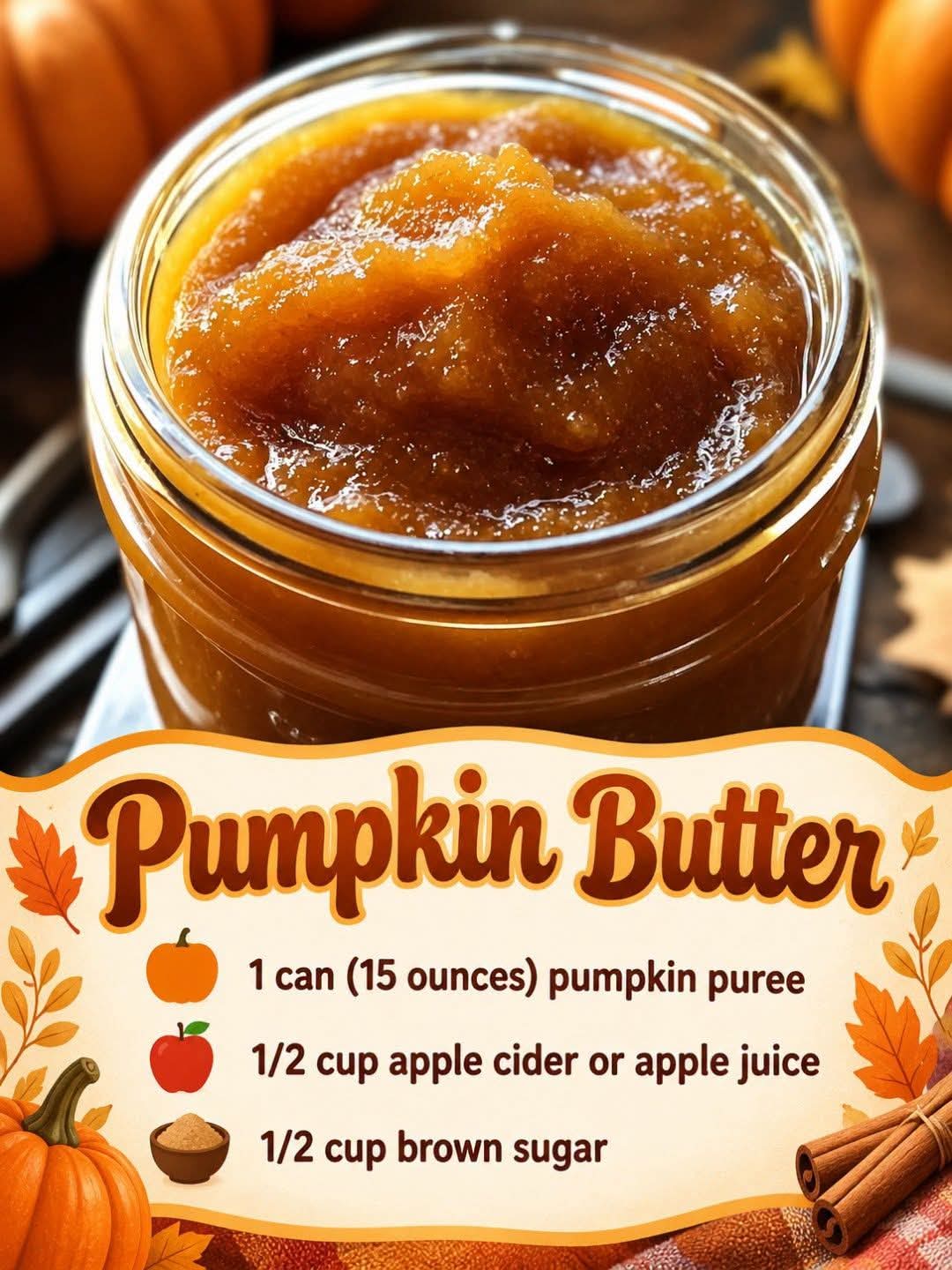
🎃 Homemade Pumpkin Butter
Introduction
Pumpkin butter is one of those cozy homemade spreads that instantly brings the flavors of autumn to the kitchen. Thick, smooth, warmly spiced, and naturally rich, it is wonderful spread over toast, biscuits, pancakes, waffles, muffins, or warm slices of homemade bread.
Despite its name, pumpkin butter contains no dairy butter. The word “butter” refers to its thick, spreadable texture. Pumpkin puree is slowly cooked with apple cider or apple juice, brown sugar, and maple syrup or honey until the mixture becomes concentrated, glossy, and full of deep autumn flavor.
This simple recipe starts with just a few ingredients, but the result tastes like something that has been simmering in a family kitchen for hours.
Ingredients
- 1 can (15 ounces) pumpkin puree
- 1/2 cup apple cider or apple juice
- 1/2 cup brown sugar
- 1/4 cup maple syrup or honey
Optional Warm Spices
For an extra flavorful pumpkin butter, you can also add:
- 1 teaspoon ground cinnamon
- 1/4 teaspoon ground nutmeg
- 1/4 teaspoon ground ginger
- 1/8 teaspoon ground cloves
- 1 teaspoon vanilla extract
- Pinch of salt
Instructions
1. Combine the Ingredients
Place the pumpkin puree, apple cider or apple juice, brown sugar, and maple syrup or honey into a medium heavy-bottomed saucepan.
If using the optional spices, add the cinnamon, nutmeg, ginger, cloves, and salt at this stage.
Stir everything together until the sugar begins to dissolve and the mixture is smooth.
2. Begin Cooking
Place the saucepan over medium heat and bring the mixture to a gentle simmer.
Once it begins bubbling, reduce the heat to low.
Pumpkin butter is best cooked slowly. Gentle cooking allows excess moisture to evaporate while the pumpkin, apple, and sweeteners become more concentrated.
3. Simmer and Stir
Cook uncovered for approximately 25–40 minutes, stirring frequently.
As the mixture thickens, it may begin to splatter. Keep the heat low and stir carefully.
The pumpkin butter is ready when it has become noticeably thicker, darker, and glossy. When you drag a spoon through the mixture, it should hold the trail for a moment rather than immediately filling in.
4. Add Vanilla
If using vanilla extract, stir it in during the final few minutes of cooking or immediately after removing the saucepan from the heat.
Taste the pumpkin butter and adjust the spices or sweetness if desired.
5. Cool
Remove the saucepan from the heat and allow the pumpkin butter to cool.
It will become even thicker as it cools, so don’t worry if it seems slightly softer while still warm.
For an especially smooth texture, blend it briefly with an immersion blender after cooking.
Cooking Method
The secret to good pumpkin butter is slow reduction.
Unlike pumpkin pie filling, pumpkin butter is not simply mixed and baked. It is gently simmered so that water evaporates and the natural pumpkin flavor becomes more concentrated.
The apple cider or apple juice adds brightness and fruitiness, while brown sugar contributes a deep caramel-like sweetness. Maple syrup or honey gives the finished spread another layer of flavor.
Stirring regularly prevents the bottom from scorching and helps the mixture cook evenly.
History of Pumpkin Butter
Pumpkin butter belongs to a long tradition of fruit and vegetable preserves made by slowly cooking produce with sweeteners and spices.
Apple butter is one of the best-known examples of this tradition. Apples were slowly cooked until their moisture evaporated and the fruit became dark, thick, and spreadable. Over time, similar techniques were adapted to other seasonal ingredients, including pumpkin.
Pumpkin became especially associated with autumn cooking in North America, where it appeared in pies, breads, cakes, soups, and preserves. Pumpkin butter combines that familiar pumpkin flavor with the technique traditionally used for apple butter.
The result is a seasonal spread that captures the flavors of fall in a jar.
Formation and Texture
The transformation happens gradually during cooking.
At first, the mixture is relatively loose because the pumpkin puree and apple juice contain considerable moisture. As it simmers, water evaporates.
The brown sugar and maple syrup or honey help create a richer consistency, while the pumpkin solids become increasingly concentrated.
The finished pumpkin butter should be:
- Thick but spreadable
- Smooth and creamy in texture
- Deeply pumpkin-flavored
- Sweet without being overly sugary
- Warmly spiced if spices are added
- Glossy and rich in appearance
How to Serve Pumpkin Butter
There are so many delicious ways to enjoy this homemade spread.
Spread it generously over:
- Toast
- English muffins
- Biscuits
- Pancakes
- Waffles
- French toast
- Oatmeal
- Warm homemade bread
- Muffins
- Scones
You can also spoon it over vanilla ice cream, swirl it into yogurt, layer it into oatmeal, or use it as a filling for cakes and pastries.
For a cozy breakfast, warm a slice of bread, spread it with pumpkin butter, and add a small drizzle of maple syrup.
Recipe Variations
Cinnamon Pumpkin Butter
Add extra cinnamon for a classic warm autumn flavor.
Maple Pumpkin Butter
Use maple syrup instead of honey for a deeper maple-and-pumpkin combination.
Honey Pumpkin Butter
Honey gives the spread a softer floral sweetness and pairs beautifully with cinnamon and ginger.
Spiced Pumpkin Butter
Add cinnamon, ginger, nutmeg, and cloves for a flavor reminiscent of pumpkin pie.
Vanilla Pumpkin Butter
A little vanilla extract rounds out the sweetness and makes the pumpkin flavor taste even richer.
Storage
Allow the pumpkin butter to cool completely before transferring it to a clean, airtight container.
Keep it refrigerated and use it within about 1 week for best quality.
For longer storage, freezing is a practical option. Divide the cooled pumpkin butter into freezer-safe containers, leaving a little room for expansion, and thaw it in the refrigerator before using.
Because this recipe is not designed as a tested shelf-stable canning recipe, it should not be stored at room temperature as a home-canned preserve.
Helpful Tips
Use pumpkin puree, not pumpkin pie filling. Pumpkin pie filling already contains sugar and spices, which would change the recipe.
Keep the heat low. Pumpkin butter can scorch easily if cooked too aggressively.
Stir often. Especially toward the end, the mixture becomes thick and needs regular stirring.
Remember that it thickens as it cools. Don’t cook it until it becomes extremely stiff in the saucepan.
Adjust the sweetness. If your apple juice is already sweet, you may prefer a slightly smaller amount of brown sugar.
Add spices gradually. You can always add more, but it is difficult to correct a mixture that has become overwhelmingly spiced.
Conclusion
Homemade Pumpkin Butter is a wonderfully simple way to turn a can of pumpkin puree into something special. With apple cider or apple juice, brown sugar, and maple syrup or honey, the pumpkin slowly transforms into a thick, flavorful spread perfect for cool mornings and cozy afternoons.
It is easy enough for an ordinary breakfast but special enough to make for holiday gatherings, brunches, bake sales, or homemade food gifts.
A warm piece of toast, a generous spoonful of pumpkin butter, and a cup of coffee or tea is all you need for a comforting taste of autumn.
❤️ For Pumpkin Butter Lovers
If you love pumpkin recipes, cozy spices, homemade spreads, and old-fashioned comfort food, this recipe is one to keep close. It is simple, versatile, and easy to customize with your favorite autumn spices.
Make a batch, let it cool, and enjoy it throughout the week on everything from toast and pancakes to muffins and warm biscuits.
Save this recipe for pumpkin season—you’ll want to make it again! 🎃🍂