

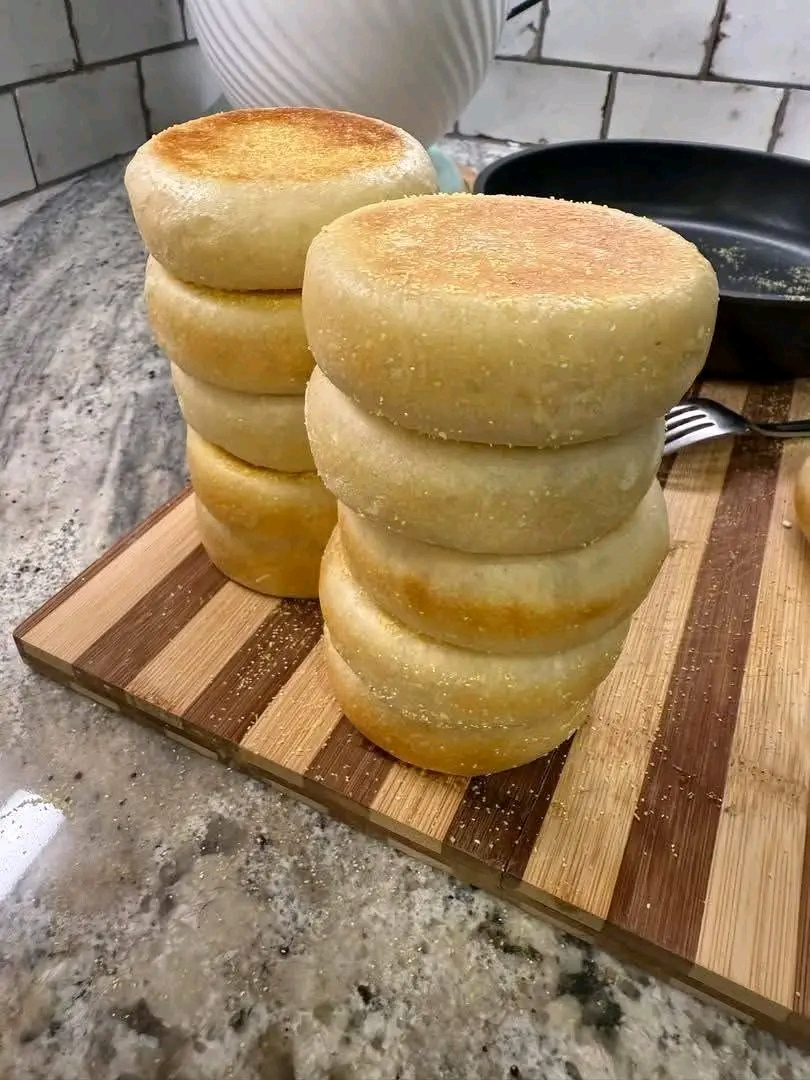
Homemade English Muffins
Introduction
Homemade English muffins are soft, chewy, and wonderfully crisp when toasted. Unlike traditional bread, they are cooked mainly on a skillet or griddle, which gives them their characteristic golden exterior and tender, airy center. They are perfect for breakfast with butter and jam, or as the base for eggs, breakfast sandwiches, or savory toppings.
This easy recipe makes classic English muffins using simple pantry ingredients, with plenty of those little nooks and crannies that catch melted butter perfectly.
Nutritional Information
Approximate nutrition per muffin (based on 10 muffins):
- Calories: 185 kcal
- Protein: 6 g
- Carbohydrates: 34 g
- Fat: 3 g
- Fiber: 1–2 g
- Sugar: 2 g
- Sodium: 280 mg
Nutrition will vary depending on the exact ingredients and portion size.
Ingredients
For the Dough
- 3 ½ cups (440 g) all-purpose flour
- 2 teaspoons instant yeast
- 1 tablespoon granulated sugar
- 1 teaspoon salt
- 1 ¼ cups (300 ml) warm milk
- 2 tablespoons unsalted butter, melted
- 1 large egg
- ½ cup (120 ml) warm water, approximately
- Cornmeal or semolina, for dusting
For Cooking
- 1–2 tablespoons butter or neutral oil, for greasing the skillet
Instructions
1. Activate the Dough
In a large mixing bowl, combine the warm milk, warm water, sugar, and yeast. Let the mixture stand for about 5 minutes until the yeast becomes slightly foamy.
If using instant yeast, you can also mix it directly with the flour, but blooming it first helps ensure good fermentation.
2. Make the Dough
Add the melted butter and egg to the milk mixture.
Gradually add the flour and salt, mixing until a soft, slightly sticky dough forms.
The dough should feel soft and elastic rather than dry. If it seems extremely sticky, add flour one tablespoon at a time.
3. Knead
Transfer the dough to a lightly floured surface.
Knead for approximately 7–10 minutes, until smooth, elastic, and slightly springy.
You can also knead it with a stand mixer fitted with a dough hook for about 5–7 minutes.
4. First Rise
Place the dough in a lightly greased bowl.
Cover it with a clean towel or plastic wrap and leave it somewhere warm for approximately 1–1½ hours, or until it has roughly doubled in size.
5. Shape the Muffins
Gently press the dough down to remove some of the excess air.
Transfer it to a lightly floured surface and divide it into 10 equal portions.
Shape each portion into a smooth ball, then gently flatten each one into a thick disk about 1–1½ cm thick.
Sprinkle a baking sheet generously with cornmeal or semolina.
Place the muffins on the sheet and lightly sprinkle the tops with more cornmeal or semolina.
6. Second Rise
Cover the shaped muffins and let them rest for approximately 30–45 minutes.
They should become noticeably puffier.
7. Cook the English Muffins
Heat a large heavy skillet or griddle over low to medium-low heat.
Lightly grease the surface with butter or oil.
Carefully place the muffins into the skillet, leaving enough space between them.
Cook for approximately 5–7 minutes per side.
The outside should become golden brown while the muffins puff up.
Avoid using high heat because the outside can brown too quickly while the center remains undercooked.
8. Check for Doneness
The muffins should feel firm but slightly springy when gently pressed.
If you’re unsure, insert a food thermometer into the center. The internal temperature should be around 190°F (88°C).
Transfer the cooked muffins to a wire rack and allow them to cool.
Method
The key to great English muffins is slow cooking and proper fermentation.
The yeast creates gas inside the dough, producing the light and airy texture. The second rise allows the shaped muffins to become fluffy before they reach the skillet.
Cooking them gently on a skillet gives the muffins their distinctive browned exterior without requiring a conventional oven.
For the classic texture, do not cut them with a knife immediately after cooking. Once completely cool, split them horizontally using a fork. This helps preserve the irregular interior structure and creates the famous little pockets, or “nooks and crannies.”
History of English Muffins
English muffins have strong connections to 19th-century British baking, particularly the traditional muffin sold by street vendors and bakers in Britain.
The modern English muffin became especially associated with breakfast in the United States, where it developed into a popular toasted bread product. Unlike American-style sweet muffins, English muffins are yeast-leavened, relatively flat, and traditionally cooked on a griddle.
Their popularity grew because they could be toasted and served with butter, preserves, eggs, cheese, or other breakfast foods.
Formation and Texture
The formation of the characteristic English muffin texture happens through several stages:
- Yeast fermentation creates carbon dioxide.
- Kneading develops gluten, giving the dough strength.
- First rising allows the dough to expand.
- Shaping and second rising creates a light, puffy structure.
- Gentle skillet cooking sets the dough while creating a golden crust.
- Fork-splitting reveals the irregular holes and nooks inside.
That combination produces the classic contrast: slightly crisp outside, soft and chewy inside.
Tips for Perfect English Muffins
- Keep the dough slightly soft rather than making it overly dry.
- Give the dough enough time to rise.
- Use low to medium-low heat when cooking.
- Don’t press down on the muffins while they’re cooking.
- Don’t overcrowd the skillet.
- Allow them to cool before splitting.
- Use a fork instead of a knife for the traditional texture.
- Toast them before serving for the best flavor and crispness.
Serving Ideas
Homemade English muffins are delicious with:
- Butter and strawberry jam
- Honey and cinnamon
- Peanut butter and banana
- Cream cheese and smoked salmon
- Fried or scrambled eggs
- Egg, cheese, and sausage breakfast sandwiches
- Avocado and poached eggs
- Ham and melted cheese
- Butter and honey
Conclusion
These homemade English muffins are a delicious way to make a classic breakfast staple from scratch. With a soft, fermented dough, gentle skillet cooking, and a little patience, you can create golden muffins with a chewy exterior and plenty of airy nooks and crannies inside.
Once toasted and topped with butter, jam, eggs, or cheese, they make a simple homemade breakfast feel extra special.
For English Muffin Lovers ❤️
If you love crispy edges, chewy centers, melted butter, and those famous little nooks and crannies, these homemade English muffins are worth making. They are simple enough for a weekend breakfast and versatile enough to enjoy sweet or savory all week long.