

🍩 Glazed Buttermilk Beignets – Light, Fluffy & Irresistibly Sweet
Introduction
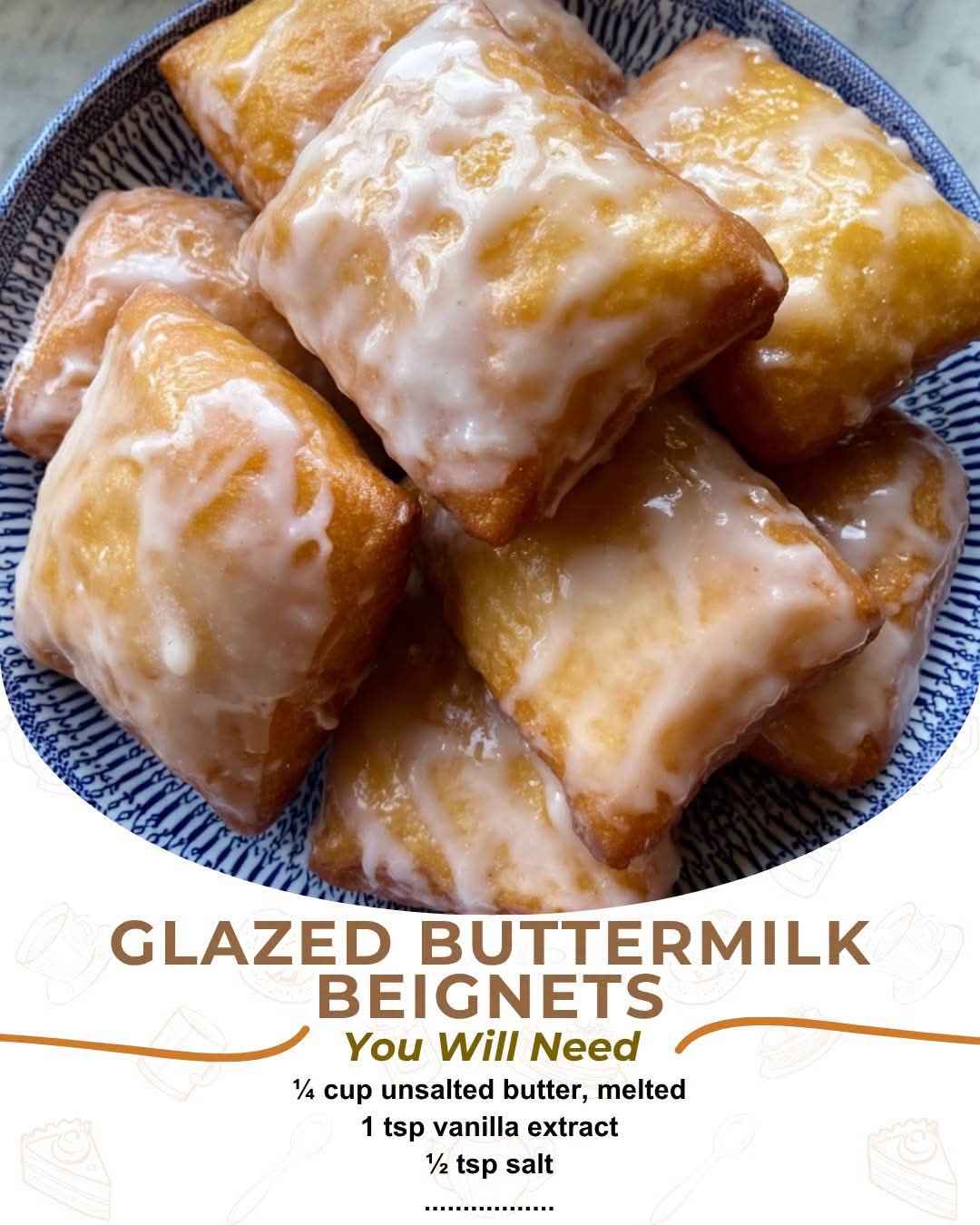
There is nothing quite like biting into a warm, freshly made beignet. These Glazed Buttermilk Beignets are beautifully golden and lightly crisp on the outside, while the inside is incredibly soft, fluffy, and pillowy. Finished with a rich, sweet vanilla glaze, they are the kind of homemade treat that can disappear from the table within minutes!
Perfect for breakfast, brunch, dessert, or a cozy weekend treat, these beignets bring the comforting feeling of a favorite bakery straight into your own kitchen. The combination of yeast, warm buttermilk, butter, and vanilla creates a tender dough with a wonderful homemade flavor.
Serve them warm with a hot cup of coffee, tea, or milk, and enjoy every sweet, fluffy bite. 😍☕🍩
🛒 Ingredients
For the Buttermilk Beignets
- 3½ cups all-purpose flour
- 2¼ teaspoons active dry yeast, or 1 standard packet
- ¼ cup warm water, about 110°F (43°C)
- ¾ cup buttermilk, slightly warmed
- ¼ cup granulated sugar
- 1 large egg, at room temperature
- ¼ cup unsalted butter, melted
- 1 teaspoon vanilla extract
- ½ teaspoon salt
- Vegetable oil, for frying
For the Rich Vanilla Glaze
- 2 cups powdered sugar
- 3 to 4 tablespoons milk or buttermilk
- 1 teaspoon vanilla extract
- 1 tablespoon melted butter, optional
- A small pinch of salt, optional
👩🍳 Preparation Method
Before beginning, prepare a clean work surface and gather all of your ingredients.
Make sure the egg is at room temperature and the buttermilk is only slightly warm. The water used for the yeast should be warm, not hot. Water that is too hot can damage the yeast.
These small details can make a big difference when creating soft, fluffy homemade beignets.
🥣 Step 1: Activate the Yeast
In a small bowl, combine:
- Warm water
- Active dry yeast
- A small amount of the sugar
Stir gently and allow the mixture to rest for approximately 5 to 10 minutes.
The yeast mixture should begin to look foamy and bubbly.
This is a sign that the yeast is active and ready to help create light, fluffy beignets.
🧈 Step 2: Prepare the Wet Ingredients
In a large mixing bowl, combine:
- Slightly warmed buttermilk
- Remaining sugar
- Room-temperature egg
- Melted butter
- Vanilla extract
Whisk until the mixture is smooth and well combined.
Add the activated yeast mixture and stir again.
🌾 Step 3: Add the Dry Ingredients
Add the flour and salt gradually.
Stir the mixture until a soft dough begins to form.
Once the dough becomes difficult to mix with a spoon, transfer it to a lightly floured surface.
✋ Step 4: Knead the Dough
Knead the dough for approximately 8 to 10 minutes.
The dough should gradually become:
- Smooth
- Soft
- Elastic
- Slightly tacky
Try not to add too much additional flour. Too much flour can make the finished beignets heavy and dry.
A soft dough helps create the light, pillowy texture that makes these treats so delicious.
⏳ Step 5: Allow the Dough to Rise
Place the dough in a lightly greased bowl.
Cover it with a clean kitchen towel or plastic wrap.
Place the bowl in a warm location.
Allow the dough to rise for approximately 1 to 1½ hours, or until it has roughly doubled in size.
The rising stage is extremely important. As the yeast works, it creates tiny air pockets throughout the dough, helping the beignets become light and fluffy.
🍩 Step 6: Roll and Shape the Beignets
Once the dough has doubled in size, gently press it down.
Transfer the dough to a lightly floured surface.
Roll the dough into a rectangle approximately ½ inch thick.
Using a sharp knife or pizza cutter, cut the dough into small squares or rectangles.
Traditional beignets are often cut into simple square shapes, giving them their classic homemade appearance.
Place the pieces on a lightly floured surface and cover them loosely.
Allow them to rest for approximately 20 to 30 minutes.
🔥 Step 7: Prepare the Oil
Pour vegetable oil into a deep, heavy pot or fryer.
Heat the oil to approximately 350°F (175°C).
Carefully monitor the temperature.
Oil that is too cool can cause the beignets to absorb too much oil. Oil that is too hot can brown the outside before the inside is fully cooked.
🍩 Step 8: Fry the Beignets
Carefully place a few pieces of dough into the hot oil.
Do not overcrowd the pot.
Fry the beignets for approximately 1 to 2 minutes per side, or until they are beautifully golden brown.
As they cook, you may notice them puffing up and becoming light.
Remove the finished beignets with a slotted spoon.
Place them on a paper towel-lined plate or a wire rack to drain excess oil.
🍯 Step 9: Prepare the Vanilla Glaze
In a medium bowl, combine:
- Powdered sugar
- Milk or buttermilk
- Vanilla extract
- Melted butter, if using
Whisk until completely smooth.
The glaze should be thick enough to coat the beignets but thin enough to drizzle beautifully.
If the glaze is too thick, add a small amount of milk.
If it is too thin, add more powdered sugar.
✨ Step 10: Glaze the Beignets
While the beignets are still slightly warm, dip each one into the vanilla glaze.
Allow the excess glaze to drip away.
Place the glazed beignets on a wire rack or serving plate.
Let the glaze set for a few minutes.
Then serve and enjoy!
🌟 The Best Method for Light and Fluffy Beignets
The secret to bakery-style beignets is simple: treat the dough gently and give it enough time to rise.
Use Fresh Yeast
Always check that your yeast is active.
A foamy yeast mixture usually means your dough is ready to rise properly.
Do Not Add Too Much Flour
A soft dough produces a softer finished beignet.
Adding excessive flour can make the dough dense.
Allow Enough Rising Time
Patience is important.
A properly risen dough creates the tiny air pockets that give beignets their famous fluffy texture.
Maintain the Correct Oil Temperature
Keeping the oil near 350°F (175°C) helps the beignets cook evenly.
Glaze While Slightly Warm
Warm beignets absorb just enough glaze to create a beautiful sweet coating without becoming soggy.
📜 A Brief History of Beignets
Beignets are a traditional type of fried dough with roots in French and European cooking. Over time, variations of fried dough became popular in many different cultures around the world.
French culinary traditions helped popularize the word beignet, which generally refers to a type of fried pastry or dough.
Beignets later became especially famous in Louisiana, where French culinary influences became an important part of local food culture. Today, many people associate square, fluffy beignets with warm cafés, powdered sugar, and the comforting atmosphere of New Orleans-style cooking.
Modern home bakers have created many delicious variations, including chocolate-filled, fruit-filled, powdered sugar, cinnamon, and glazed versions.
🧁 The Formation of the Perfect Beignet
Creating a perfect beignet happens in several stages.
Mixing
The ingredients are combined into a soft, rich dough.
Kneading
Kneading develops the structure of the dough and helps create elasticity.
First Rise
The yeast creates air pockets, making the dough lighter.
Shaping
The dough is rolled and cut into the classic beignet shape.
Resting
A short second rest helps the dough become even lighter.
Frying
The hot oil quickly transforms the dough into a golden, puffed pastry.
Glazing
The final vanilla glaze adds sweetness, shine, and irresistible flavor.
😍 Why Dessert Lovers Will Love These Beignets
These Glazed Buttermilk Beignets are perfect for anyone who loves:
- Fresh bakery treats
- Soft, fluffy pastries
- Warm homemade doughnuts
- Sweet vanilla glaze
- Weekend brunches
- Coffee shop desserts
- Comfort food
The contrast between the lightly crisp outside and the soft, tender inside makes every bite irresistible.
☕ Perfect Serving Ideas
Serve your warm beignets with:
- Hot coffee
- Cappuccino
- Latte
- Hot chocolate
- Tea
- Cold milk
For an extra special breakfast or brunch, serve them alongside fresh fruit, eggs, bacon, or a warm cup of your favorite coffee.
🍫 Delicious Flavor Variations
Cinnamon Sugar Beignets
Skip the glaze and toss the warm beignets in cinnamon and sugar.
Chocolate Glazed Beignets
Replace the vanilla glaze with a rich chocolate glaze.
Lemon Beignets
Add fresh lemon zest to the dough and lemon juice to the glaze.
Maple Glazed Beignets
Add a little maple flavoring to the glaze for a warm and comforting variation.
Powdered Sugar Beignets
For a classic style, generously coat the warm beignets with powdered sugar.
🧊 Storage Tips
Beignets are best enjoyed fresh and warm on the day they are made.
If you have leftovers, store them in an airtight container at room temperature for up to 1 day.
For the best texture, warm leftover beignets gently before serving.
You can also freeze the cooked, unglazed beignets. Allow them to cool completely before placing them in a freezer-safe container.
Glaze them after reheating for the freshest flavor.
❤️ Conclusion
These Glazed Buttermilk Beignets are a beautiful homemade treat that combines a soft, fluffy yeast dough with a lightly crisp golden exterior and a rich vanilla glaze.
They are simple enough for a cozy weekend morning yet special enough to serve at brunch, celebrations, or family gatherings.
From the moment the dough begins to rise to the moment the warm beignets are covered in sweet glaze, this recipe creates a truly comforting baking experience.
Serve them fresh, share them with the people you love, and watch them disappear from the table!
Golden on the outside, soft and pillowy on the inside, and covered in sweet vanilla glaze—these homemade beignets are pure happiness in every bite! 🍩💛☕