

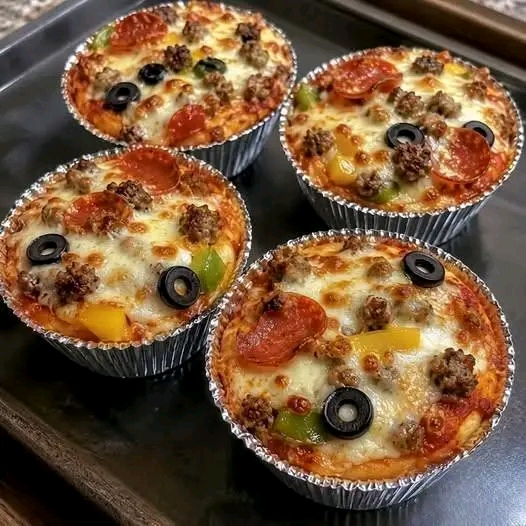
Crustless Pizza Bowls
Crustless Pizza Bowls are a fun, comforting way to enjoy all the best parts of pizza without making or baking a traditional dough crust. Instead of a flat base, the ingredients are layered directly into individual oven-safe bowls: rich pizza sauce, seasoned meat, colorful vegetables, pepperoni, mozzarella, and Italian herbs. The result is bubbly, cheesy, savory, and incredibly satisfying.
Pizza bowls have become popular as an easy alternative to traditional pizza, particularly because they are highly customizable and can be made lower in carbohydrates by leaving out the crust. Modern versions commonly use marinara or pizza sauce, meat, vegetables, and melted cheese baked together in a ramekin or small casserole dish.
🍕 Recipe at a Glance
Recipe: Crustless Pizza Bowls
Cuisine: Italian-American inspired
Servings: 4 generous bowls
Prep time: 15 minutes
Cook time: 20–25 minutes
Total time: About 40 minutes
Difficulty: Easy
Method: Stovetop + oven
Best for: Dinner, meal prep, family meals, low-carb pizza nights
Nutritional Information
Approximate nutrition per serving, assuming the recipe is divided into 4 bowls:
- Calories: 450–500 kcal
- Protein: 30–35 g
- Fat: 28–32 g
- Carbohydrates: 15–20 g
- Fiber: 3–4 g
- Sugar: 6–8 g
- Sodium: approximately 900–1,200 mg
- Calcium: approximately 250–350 mg
Nutrition will vary considerably depending on the sausage, pepperoni, cheese, and pizza sauce you choose.
For a lower-carb version, use a no-added-sugar pizza sauce and increase the vegetables while reducing or eliminating pepperoni.
Ingredients
For the Pizza Bowls
- 1 tablespoon olive oil
- 450 g Italian sausage, mild or hot
- 100 g pepperoni, sliced
- 2 cups shredded mozzarella cheese
- 1½ cups pizza sauce or marinara sauce
- 1 small yellow onion, finely diced
- 1 green bell pepper, diced
- 1 red bell pepper, diced
- 150 g mushrooms, sliced
- 2 cloves garlic, minced
- ½ teaspoon salt
- ½ teaspoon black pepper
- 1 teaspoon Italian seasoning
- ½ teaspoon dried oregano
- ½ teaspoon garlic powder
- ¼ teaspoon red pepper flakes, optional
- 2 tablespoons grated Parmesan cheese
- Fresh basil, for garnish
Optional Toppings
You can personalize each bowl with:
- Black olives
- Banana peppers
- Jalapeños
- Spinach
- Cherry tomatoes
- Extra mushrooms
- Cooked ground beef
- Cooked chicken
- Ham
- Extra pepperoni
- Parmesan
- Red onion
- Fresh basil
- Crushed red pepper
The beauty of pizza bowls is that every person can create a different combination of toppings.
Equipment
- Large skillet
- Wooden spoon or spatula
- 4 oven-safe ramekins or bowls
- Baking sheet
- Knife and cutting board
- Measuring spoons
- Cheese grater, if using freshly grated cheese
A small oven-safe ramekin works especially well for individual pizza bowls. One published single-serving version uses a 10-ounce ramekin because it keeps the ingredients layered rather than spreading them too thin.
Instructions
Step 1: Preheat the Oven
Preheat your oven to 200°C / 400°F.
Place your oven-safe bowls or ramekins on a baking sheet.
The baking sheet makes it much easier and safer to move several hot bowls into and out of the oven, while also catching any sauce or cheese that bubbles over.
Step 2: Prepare the Vegetables
Dice the onion and bell peppers.
Slice the mushrooms.
Mince the garlic.
Try to keep the vegetables relatively small so that every spoonful contains a little bit of everything.
Step 3: Cook the Sausage
Heat the olive oil in a large skillet over medium heat.
Add the Italian sausage.
Use a wooden spoon to break it into small pieces while it cooks.
Cook for approximately 6–8 minutes, stirring regularly, until the sausage is thoroughly cooked and browned.
Drain excess grease if necessary.
Step 4: Add the Vegetables
Add the onion, green pepper, red pepper, mushrooms, and garlic to the skillet.
Cook for approximately 4–5 minutes.
The vegetables should become tender but still retain a little texture.
Add:
- Italian seasoning
- Oregano
- Black pepper
- Garlic powder
- Red pepper flakes, if desired
Stir everything together.
Step 5: Add the Pizza Sauce
Pour approximately 1 cup of the pizza sauce into the skillet.
Stir the sauce into the sausage and vegetables.
Allow everything to simmer for approximately 2–3 minutes.
This helps the flavors come together and prevents the finished pizza bowls from tasting like separate ingredients simply placed on top of one another.
Step 6: Prepare the Bowls
Place a spoonful of pizza sauce into the bottom of each bowl.
Add a small amount of pepperoni.
Then divide the sausage-and-vegetable mixture between the four bowls.
Add another spoonful of pizza sauce over the top.
This layering technique creates a more pizza-like experience, with sauce, toppings, and cheese throughout the bowl rather than only on top.
Step 7: Add the Cheese
Generously cover each bowl with shredded mozzarella.
Sprinkle Parmesan over the mozzarella.
Add a few additional slices of pepperoni if desired.
Finish with a little Italian seasoning.
At this stage, the bowls should look colorful and generously topped.
Step 8: Bake
Carefully place the baking sheet in the preheated oven.
Bake for approximately 10–15 minutes.
The pizza bowls are ready when:
- The sauce is bubbling.
- The mozzarella has completely melted.
- The edges are sizzling.
- The cheese begins to turn golden brown.
For an extra-browned cheese topping, switch the oven to broil/grill for 1–2 minutes at the end.
Watch carefully because cheese can go from beautifully golden to burnt very quickly.
Step 9: Rest
Remove the bowls from the oven.
Allow them to rest for approximately 5 minutes.
This is important because the sauce and cheese will be extremely hot immediately after baking.
The short resting period also allows the layers to settle slightly, making the bowl easier to eat.
Step 10: Garnish and Serve
Finish with fresh basil.
Add a sprinkle of Parmesan and crushed red pepper if desired.
Serve immediately while the cheese is still warm, stretchy, and bubbling.
Cooking Method
The recipe uses a two-stage cooking method.
1. Stovetop Cooking
The sausage and vegetables are cooked first in a skillet.
This develops deeper flavor and removes excess moisture before the ingredients enter the bowls.
2. Oven Baking
The prepared ingredients are then layered with sauce and cheese and baked.
This final stage melts the mozzarella and creates the characteristic bubbly, browned pizza topping.
This general approach is also used in other crustless pizza bowl recipes, where meat and vegetables are cooked before being assembled with sauce and cheese and baked.
The Formation of the Pizza Bowl
The magic of the recipe comes from its layers.
Bottom Layer
Pizza sauce provides moisture and tomato flavor.
Second Layer
Pepperoni adds salty, smoky richness.
Middle Layer
Italian sausage, peppers, onions, mushrooms, and garlic provide texture and substance.
Sauce Layer
More pizza sauce brings the ingredients together.
Cheese Layer
Mozzarella melts over everything and forms a creamy, stretchy topping.
Finishing Layer
Parmesan, oregano, basil, and red pepper provide the final burst of flavor.
Instead of cutting a pizza into slices, you simply scoop through these layers with a spoon.
Why You’ll Love These Crustless Pizza Bowls
❤️ No Dough Required
There is no kneading, rising, rolling, or stretching pizza dough.
❤️ Extremely Customizable
You can make four completely different bowls from the same basic recipe.
❤️ Great for Low-Carb Eating
Removing the crust significantly reduces the carbohydrate contribution from the traditional pizza base. Many modern pizza bowl recipes specifically use the format as a low-carb or keto-friendly alternative.
❤️ Family Friendly
Put the ingredients on the table and let everyone build their own bowl.
❤️ Great for Leftovers
Cooked vegetables, leftover chicken, ground beef, sausage, and different cheeses can all find a home in this recipe.
❤️ Big Pizza Flavor
Even though there is no crust, the combination of tomato sauce, herbs, meat, pepperoni, and melted mozzarella gives you the familiar flavors of pizza.
Variations
Supreme Pizza Bowl
Add:
- Mushrooms
- Green peppers
- Onions
- Black olives
- Pepperoni
- Italian sausage
This is one of the most complete versions.
Pepperoni Lover’s Bowl
Use:
- Extra pepperoni
- Mozzarella
- Parmesan
- Pizza sauce
- Oregano
- Red pepper flakes
For maximum flavor, place some pepperoni underneath the cheese and some on top.
Meat Lover’s Bowl
Replace some of the vegetables with:
- Italian sausage
- Ground beef
- Pepperoni
- Ham
- Bacon
Finish with plenty of mozzarella.
Vegetarian Pizza Bowl
Skip the meat and add:
- Mushrooms
- Bell peppers
- Onion
- Spinach
- Tomatoes
- Olives
You can also add extra mozzarella or Parmesan for additional richness.
Spicy Pizza Bowl
Add:
- Hot Italian sausage
- Jalapeños
- Red pepper flakes
- Hot pepperoni
- Chili-infused pizza sauce
A little hot honey drizzled over the finished bowl can also create a sweet-and-spicy combination.
Chicken Pizza Bowl
Use cooked diced chicken instead of sausage.
Add:
- Mushrooms
- Spinach
- Mozzarella
- Parmesan
- Pizza sauce
- Italian seasoning
For a different flavor profile, use Alfredo sauce instead of tomato sauce.
Low-Carb Version
To make the recipe more suitable for a low-carb diet:
- Choose a low-carb pizza sauce.
- Skip the traditional crust completely.
- Increase mushrooms, spinach, peppers, and zucchini.
- Use moderate amounts of pepperoni.
- Use mozzarella for the main cheese.
- Avoid sugary sauces.
- Check labels for added carbohydrates.
Some published pizza bowl recipes contain only a few grams of net carbohydrates per serving, although the exact amount depends heavily on the ingredients and serving size.
Meal Prep Method
These bowls are also useful for preparing several meals ahead.
Preparation
Cook the sausage and vegetables as directed.
Assemble the bowls but do not bake them.
Cover and refrigerate.
When ready to eat, add the cheese if necessary and bake until completely hot and bubbling.
Some prepared pizza-bowl recipes recommend refrigerated storage for several days, while freezing is also possible for properly assembled unbaked versions.
For best food safety and quality, refrigerate leftovers promptly and reheat until steaming hot.
A Little History
Pizza has much older roots than the modern pizza slice. Ancient Mediterranean cultures prepared various flatbreads with toppings, while the recognizable modern pizza developed in Naples, Italy, particularly between the 16th and 18th centuries.
The modern crustless pizza bowl, however, is not a traditional historical Italian dish in the same sense. It is better understood as a contemporary reinterpretation of pizza.
Instead of putting the toppings over dough, cooks place the essential pizza components into a bowl or ramekin and bake them together.
This reflects a broader trend in modern home cooking: keeping the flavors people love while changing the format to make a dish faster, easier, or compatible with particular dietary preferences.
Serving Suggestions
Crustless Pizza Bowls are satisfying on their own, but you can serve them with:
- Green salad
- Caesar salad
- Roasted vegetables
- Garlic bread
- Cucumber salad
- Steamed broccoli
- Antipasto vegetables
- Fresh tomato salad
For a lower-carb meal, pair the bowl with a large green salad or roasted vegetables instead of bread.
Chef’s Tips for the Best Pizza Bowls
Don’t Make the Sauce Too Watery
A watery sauce can make the bowl soupy.
Choose a thick pizza or marinara sauce.
Brown the Meat Well
Properly browned sausage develops much more flavor than meat that is simply steamed.
Don’t Overload the Bowl
Too many ingredients can prevent the cheese from browning properly and can cause the bowl to overflow.
Use Freshly Shredded Mozzarella
Freshly shredded cheese generally melts beautifully and gives the bowl a particularly creamy texture.
Drain Excess Grease
If your sausage or pepperoni releases a lot of fat, remove some before assembling the bowls.
Let It Rest
Five minutes after baking makes the bowl easier to eat and helps prevent burned mouths from extremely hot sauce and cheese.
Storage and Reheating
Store leftover pizza bowls in airtight containers in the refrigerator.
For best quality, consume within 3–4 days.
Microwave
Heat one serving until completely hot, usually in short intervals.
Oven
Place the bowl in an oven-safe dish and heat at approximately 175°C / 350°F until hot.
The oven is preferable if you want to preserve the melted, lightly browned cheese topping.
Common Mistakes
❌ Using Too Much Sauce
This can turn the bowl into a watery casserole.
❌ Adding Raw Meat
Always cook sausage, beef, chicken, or other raw meats properly before or during the appropriate cooking stage.
❌ Overfilling the Bowls
Leave some space at the top because the sauce and cheese can bubble.
❌ Skipping Seasoning
Pizza sauce and cheese alone can taste flat. Italian seasoning, garlic, oregano, pepper, and Parmesan make a major difference.
❌ Burning the Cheese
If using the broiler, stay nearby. The final browning happens quickly.
Conclusion
Crustless Pizza Bowls prove that you don’t need pizza dough to enjoy the comforting flavors of pizza. With a rich tomato sauce, seasoned sausage, colorful vegetables, pepperoni, and plenty of melted mozzarella, you get a warm, satisfying meal that is easy to customize and simple enough for a busy weeknight.
The best part is the flexibility. One person can make a classic pepperoni bowl, another can choose vegetables, while someone else can create a spicy meat-lover’s version—all from the same basic recipe.
Whether you’re looking for a quick dinner, a low-carb alternative, an easy family meal, or simply a new way to enjoy pizza, these bowls are worth adding to your recipe collection.
**One bowl, all the pizza flavor, none of the crust—and plenty of bubbling, cheesy goodness.**