

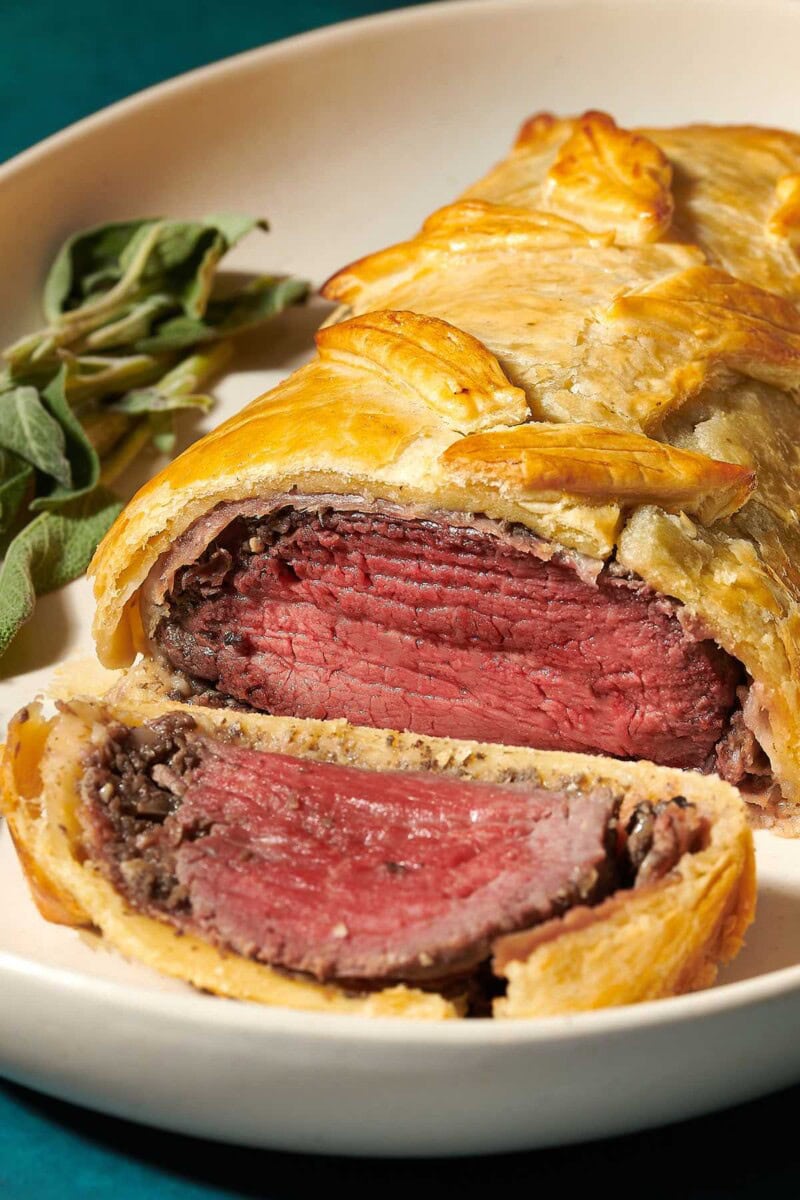
Beef Wellington
Introduction
Beef Wellington is one of the most elegant and famous beef dishes in the world. Known for its golden flaky pastry, tender beef fillet, rich mushroom filling, and luxurious presentation, this classic dish is often associated with fine dining, holiday celebrations, and gourmet cooking.
The dish combines multiple textures and flavors into one masterpiece. The beef remains juicy and tender, the mushroom duxelles add earthy richness, and the buttery puff pastry creates a crisp outer layer that makes every bite unforgettable.
Although Beef Wellington has a reputation for being sophisticated, it can also be prepared successfully at home with patience and careful technique. It is commonly served during Christmas dinners, romantic occasions, and special gatherings.
Nutritional Information (Approximate Per Serving)
Servings: 6
- Calories: 720–860 kcal
- Protein: 42g
- Carbohydrates: 28g
- Fat: 49g
- Saturated Fat: 18g
- Fiber: 2g
- Sugar: 3g
- Sodium: 640mg
- Iron: 30% Daily Value
- Calcium: 6% Daily Value
Values vary depending on pastry thickness and beef cut.
Ingredients
Main Ingredients
- 2 pounds beef tenderloin center-cut fillet
- Salt and black pepper to taste
- 2 tablespoons olive oil
- 2 tablespoons Dijon mustard
Mushroom Duxelles
- 1 pound mushrooms, finely chopped
- 2 shallots, minced
- 4 garlic cloves, minced
- 2 tablespoons butter
- Fresh thyme leaves
- Salt and pepper
Additional Layers
- 8 slices prosciutto
- 1 package puff pastry sheets
- 2 egg yolks beaten with 1 tablespoon water
Optional Ingredients
- Foie gras pâté
- Spinach
- Red wine sauce
- Rosemary garnish
Instructions
Step 1: Prepare the Beef
Season beef tenderloin generously with salt and pepper.
Heat olive oil in a skillet over high heat.
Sear the beef on all sides for approximately:
- 1–2 minutes per side
The outside should develop a rich brown crust.
Remove from heat and brush immediately with Dijon mustard.
Allow to cool completely.
Step 2: Make Mushroom Duxelles
In a food processor, finely chop mushrooms.
Heat butter in a skillet over medium heat.
Add:
- Mushrooms
- Shallots
- Garlic
- Thyme
Cook for:
- 10–15 minutes
until moisture evaporates and mixture becomes thick.
Season with salt and pepper.
Cool completely.
Step 3: Assemble the Layers
Lay plastic wrap on a work surface.
Arrange prosciutto slices slightly overlapping.
Spread mushroom duxelles evenly over the prosciutto.
Place cooled beef in the center.
Using the plastic wrap, roll tightly into a log.
Refrigerate for:
- 20–30 minutes
Step 4: Wrap in Puff Pastry
Roll out puff pastry.
Remove plastic wrap from beef roll.
Place beef in the center of the pastry.
Wrap completely and seal edges carefully.
Brush with egg wash.
Optional:
Score decorative patterns on top.
Step 5: Chill Before Baking
Refrigerate the wrapped Wellington for:
- 15–20 minutes
This helps the pastry maintain shape.
Step 6: Bake
Preheat oven to:
- 400°F (200°C)
Bake for:
- 35–45 minutes
until pastry becomes golden brown.
For medium-rare beef, internal temperature should reach:
- 125–130°F (52–54°C)
Allow resting for:
- 10–15 minutes
before slicing.
Cooking Methods
Traditional Oven Method
The classic and preferred cooking method for Beef Wellington.
Individual Wellington Method
Use smaller beef fillets to create personal-sized servings.
Reverse Sear Method
Cook beef slowly before searing and wrapping for more temperature control.
Sous Vide Method
Cook beef sous vide before pastry wrapping for precise doneness.
History
The origins of Beef Wellington remain debated. Some historians believe the dish was named after Arthur Wellesley, the British military hero who defeated Napoleon at the Battle of Waterloo.
Others believe the dish evolved from French pastry-wrapped meat recipes such as filet de bœuf en croûte. During the nineteenth and twentieth centuries, the dish became associated with luxury dining and formal British cuisine.
Today, Beef Wellington is recognized worldwide as a symbol of culinary skill and celebration cooking.
Formation of the Dish
The structure of Beef Wellington is built in layers:
Center Layer
- Tender beef fillet
Flavor Layer
- Dijon mustard enhances richness
Mushroom Layer
- Duxelles adds earthy depth
Prosciutto Layer
- Protects pastry from moisture
Outer Layer
- Puff pastry creates crisp texture
Together these components form a balanced and elegant dish.
Why Food Lovers Enjoy Beef Wellington
People love Beef Wellington because:
- The beef stays tender and juicy
- The pastry becomes flaky and buttery
- Mushroom filling adds rich flavor
- It feels luxurious and impressive
- It combines multiple textures beautifully
- It is ideal for celebrations and holidays
Extra Methods and Variations
Truffle Version
Add truffle oil or shaved truffles to the mushroom mixture.
Seafood Wellington
Replace beef with:
- Salmon
- Lobster
- Tuna
Vegetarian Wellington
Replace beef with:
- Roasted vegetables
- Lentils
- Mushrooms
- Spinach
Cheese Version
Add blue cheese or goat cheese inside the layers.
Mini Party Wellingtons
Create smaller appetizer-sized portions for gatherings.
Favorite Pairings for Beef Wellington Lovers
This elegant dish pairs beautifully with:
- Garlic mashed potatoes
- Roasted asparagus
- Honey glazed carrots
- Red wine sauce
- Creamed spinach
- Roasted Brussels sprouts
Popular beverages include:
- Red wine
- Sparkling water
- Herbal tea
Conclusion
Beef Wellington is a timeless culinary masterpiece that combines tender beef, flavorful mushroom filling, delicate pastry, and elegant presentation into one unforgettable dish. Its rich history, luxurious texture, and impressive appearance have made it a favorite for special occasions around the world. Whether prepared for holidays, celebrations, or gourmet dining at home, Beef Wellington delivers sophistication, comfort, and extraordinary flavor in every slice.