

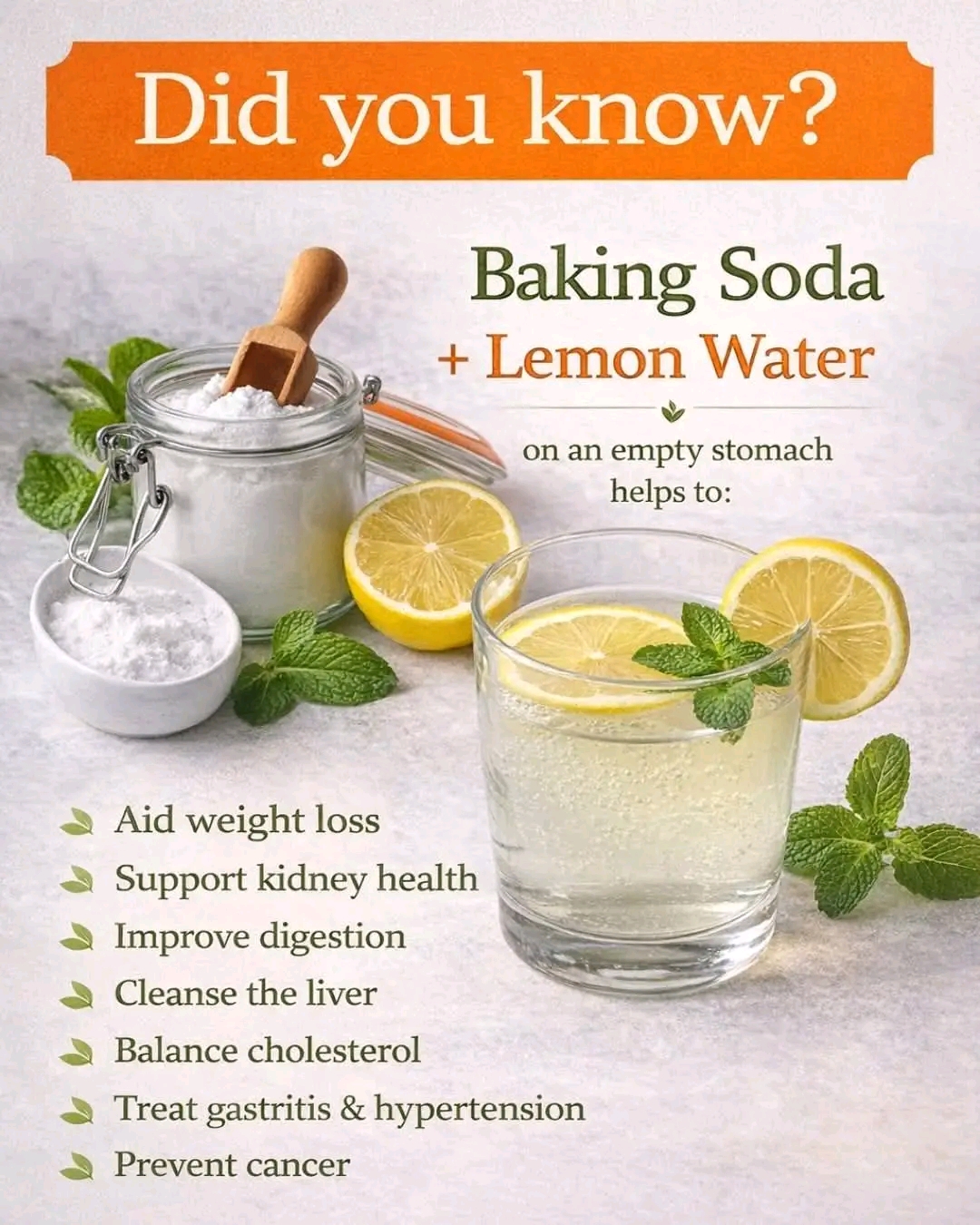
Baking Soda & Lemon Water
Introduction
Baking soda and lemon water is a simple homemade drink made by combining fresh lemon juice, water, and a small amount of baking soda. It is popular because it produces a light, fizzy drink with a refreshing lemon flavor.
The combination is also an interesting example of food chemistry: lemon juice is acidic, while baking soda is alkaline. When they meet, they react and release carbon dioxide bubbles, creating the characteristic fizz.
Important: this drink should be used as an occasional beverage, not as a “detox,” fat-burning, or disease-curing remedy. Baking soda contains a significant amount of sodium, so using too much can be harmful.
Nutritional Information
Approximate nutrition for 1 serving, assuming 1 tablespoon lemon juice and ¼ teaspoon baking soda:
- Calories: about 4–5 kcal
- Protein: 0 g
- Fat: 0 g
- Carbohydrates: about 1–2 g
- Sugar: about 1 g naturally occurring
- Sodium: approximately 300 mg from ¼ teaspoon baking soda
- Vitamin C: a small amount from lemon juice
The exact values depend on the amount of lemon juice and baking soda used.
Ingredients
For 1 refreshing glass
- 250–300 ml cold or room-temperature water
- 1 tablespoon fresh lemon juice
- ⅛ teaspoon baking soda
- 2–3 ice cubes, optional
- 1 thin lemon slice, for garnish
- Fresh mint, optional
Optional additions
For a more flavorful version, you can add:
- A few fresh mint leaves
- A small piece of grated ginger
- A little grated lemon zest
- A few drops of vanilla extract
- A calorie-free sweetener if desired
Avoid adding large amounts of baking soda. More is not better.
Instructions
Step 1: Prepare the lemon
Wash the lemon thoroughly and cut it in half.
Squeeze approximately 1 tablespoon of fresh lemon juice into a glass. Remove any seeds.
Fresh lemon juice gives the drink a brighter flavor than bottled lemon juice.
Step 2: Add the water
Pour approximately 250–300 ml of water into the glass.
Stir the lemon juice and water together.
Step 3: Add the baking soda carefully
Add ⅛ teaspoon of baking soda.
The mixture will begin to fizz immediately because the baking soda reacts with the acids in the lemon juice.
Add it slowly rather than dumping it in all at once.
Step 4: Stir gently
Give the drink a gentle stir until the reaction settles.
Don’t fill the glass completely to the top because the mixture can foam.
Step 5: Add ice
Add a few ice cubes if you prefer a cold drink.
Step 6: Garnish
Add a lemon slice and a few mint leaves for a fresh presentation.
Serve immediately.
The Method Behind the Fizz
The interesting part of this recipe is the chemical reaction.
Lemon juice contains citric acid, while baking soda is sodium bicarbonate.
When they come into contact, they react and produce:
Citric acid + sodium bicarbonate → carbon dioxide + water + sodium citrate
The carbon dioxide is responsible for the bubbles and fizz.
This is the same basic type of acid-base reaction that makes baking soda useful in baking. In cakes, muffins, and other baked goods, the carbon dioxide produced by the reaction helps create a lighter texture.
Formation and Texture
Unlike ordinary lemon water, baking-soda lemon water develops a slightly sparkling character immediately after preparation.
The drink is:
- Light
- Fizzy
- Citrusy
- Slightly salty if too much baking soda is used
- Refreshing when served cold
The key to making it pleasant is balance. Too much baking soda can overpower the lemon and give the drink an unpleasant alkaline taste.
A More Refreshing Version
For a more enjoyable everyday-style beverage, try this variation:
Lemon-Mint Fizz
Ingredients:
- 300 ml cold water
- 1 tablespoon fresh lemon juice
- ⅛ teaspoon baking soda
- 4–5 mint leaves
- Ice
- Lemon slice
Method:
Muddle the mint leaves very gently in the bottom of a glass. Add the lemon juice and water. Add the baking soda last and allow the fizz to settle. Add ice and garnish with lemon and mint.
The mint makes the drink considerably fresher without adding meaningful calories.
History
Both lemon beverages and baking soda have long histories in cooking and household use.
Lemons have been used for centuries in Mediterranean, Middle Eastern, and Asian cuisines, both as a food ingredient and as a source of acidity.
Baking soda became especially important in modern baking because of its ability to react with acidic ingredients and produce carbon dioxide. It is now a common household ingredient used in baking and food preparation.
The combination of lemon juice and baking soda became popular in homemade beverage traditions because the reaction creates a naturally fizzy drink without the need for carbonated water.
When to Drink It
There is no special scientifically established time when baking-soda lemon water provides superior benefits.
It can be prepared simply as a refreshing beverage, but plain lemon water is generally the simpler option if you just want hydration and lemon flavor.
If you enjoy the fizz, a small amount of baking soda can create an interesting texture—but it shouldn’t be treated as a necessary health drink.
Important Safety Notes
Baking soda is not harmless when consumed in large quantities.
Because it contains sodium, excessive consumption can contribute to a high sodium intake and may cause problems such as nausea, vomiting, abdominal discomfort, or electrolyte disturbances.
People with conditions requiring sodium restriction, certain kidney or heart problems, or those taking medications that can interact with sodium or acid-base balance should ask a healthcare professional before regularly consuming baking soda drinks.
Also, don’t use baking soda as a substitute for medical treatment or as a proven method for detoxification, weight loss, or changing body pH.
Tips for the Best Result
1. Use fresh lemon
Freshly squeezed lemon gives the best aroma and flavor.
2. Use very little baking soda
The goal is a gentle reaction, not maximum fizz.
3. Add baking soda last
This lets you control the reaction and prevents excessive foaming.
4. Drink it fresh
The carbonation disappears relatively quickly.
5. Don’t prepare an extremely concentrated mixture
More baking soda doesn’t make the drink healthier. It simply increases the sodium content and makes the flavor more alkaline.
Lovers of This Recipe
This drink is particularly appealing to people who enjoy:
- Fresh citrus flavors
- Simple homemade beverages
- Lightly sparkling drinks
- Lemon and mint combinations
- Low-calorie refreshments
- Easy recipes requiring only a few ingredients
For people who don’t enjoy the salty or alkaline taste of baking soda, lemon water alone or lemon sparkling water is usually a much more pleasant alternative.
Conclusion
Baking soda and lemon water is a remarkably simple recipe with an interesting bit of food chemistry behind it. The acidity of lemon juice reacts with sodium bicarbonate to produce carbon dioxide, creating the drink’s characteristic fizz.
The best version is made with fresh lemon juice, plenty of water, and only a very small amount of baking soda. Keep expectations realistic: it can be a fun, refreshing homemade drink, but it isn’t a scientifically proven detox or weight-loss solution.
For the safest everyday hydration, ordinary water remains the best choice, while lemon water provides a simple way to add flavor.