

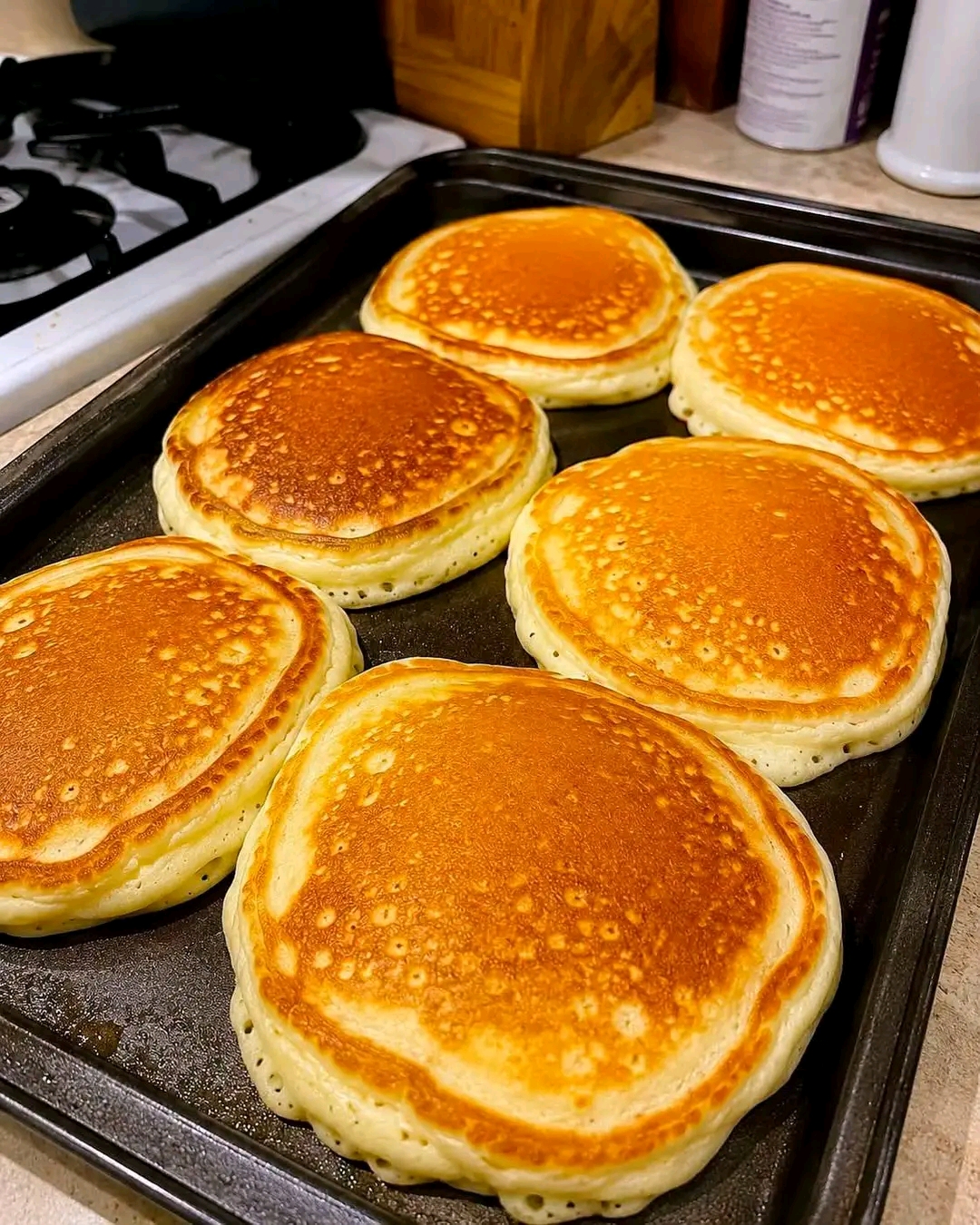
🥞 Point Fluffy Pancakes
Introduction
There is something wonderfully comforting about a tall stack of fluffy pancakes served warm from the pan. These pancakes are soft, airy, tender, and slightly golden around the edges, making them perfect for a relaxed breakfast, weekend brunch, or a sweet afternoon treat.
The secret to excellent fluffy pancakes is not simply adding more baking powder. It is about creating the right batter, avoiding overmixing, allowing the batter to rest briefly, and cooking the pancakes gently enough that they can rise properly.
These Point Fluffy Pancakes are designed to be thick and cloud-like on the inside while remaining beautifully golden on the outside. They can be served traditionally with butter and maple syrup, or customized with berries, bananas, chocolate chips, honey, yogurt, nuts, or powdered sugar.
History of Pancakes
Pancakes have a remarkably long history. Flat cakes made from mixtures of flour and liquid have appeared in many cultures for centuries. Ancient civilizations prepared simple versions using grains, eggs, and milk or water.
Over time, pancakes developed differently around the world. French crêpes became very thin and delicate, while American-style pancakes became known for being thicker and more raised.
The fluffy American pancake became especially associated with breakfast and brunch. The introduction and widespread use of chemical leavening agents such as baking powder and baking soda made it easier to produce pancakes that were light and airy without requiring yeast.
Today, pancakes are enjoyed in countless forms, from classic buttermilk pancakes to banana pancakes, protein pancakes, blueberry pancakes, and chocolate variations.
Formation of Fluffy Pancakes
The formation of these pancakes depends on several simple baking principles.
1. Flour creates structure
All-purpose flour provides the basic structure of the pancake. Its proteins form gluten when mixed with liquid.
2. Baking powder creates lift
Baking powder produces carbon dioxide bubbles when activated by moisture and heat. These bubbles expand while the pancakes cook, helping them become fluffy.
3. Eggs provide structure and tenderness
Eggs help hold the pancake together while contributing richness and softness.
4. Milk adds moisture
Milk hydrates the flour and gives the pancakes a tender texture.
5. Butter adds flavor
Melted butter contributes richness and helps create a delicious, slightly buttery flavor.
6. Gentle mixing is important
Overmixing develops too much gluten and can make pancakes dense and chewy. A few small lumps in the batter are completely fine.
Ingredients
For the Pancake Batter
- 2 cups all-purpose flour
- 2 tablespoons granulated sugar
- 1 tablespoon baking powder
- ½ teaspoon baking soda
- ½ teaspoon salt
- 2 large eggs
- 1¾ cups milk
- 2 tablespoons melted butter
- 1 teaspoon vanilla extract
For Cooking
- 1–2 tablespoons butter or neutral cooking oil
For Serving
Choose your favorite toppings:
- Maple syrup
- Fresh strawberries
- Blueberries
- Raspberries
- Sliced bananas
- Powdered sugar
- Honey
- Greek yogurt
- Whipped cream
- Chocolate chips
- Chopped walnuts or pecans
- Peanut butter
- Nutella or chocolate spread
- Cinnamon
- Extra butter
Optional Flavor Additions
You can easily transform the basic batter.
Blueberry Pancakes
Add about 1 cup fresh or frozen blueberries.
Chocolate Chip Pancakes
Add ½–¾ cup chocolate chips.
Banana Pancakes
Mash 1 ripe banana and gently fold it into the batter.
Cinnamon Pancakes
Add 1 teaspoon cinnamon and a small pinch of nutmeg.
Lemon Berry Pancakes
Add 1 teaspoon finely grated lemon zest and serve with berries.
Vanilla Pancakes
Increase the vanilla extract to 1½ teaspoons for a stronger vanilla flavor.
Instructions
Step 1: Prepare the Dry Ingredients
In a large mixing bowl, combine:
- Flour
- Sugar
- Baking powder
- Baking soda
- Salt
Whisk everything together until evenly distributed.
This is important because you want the leavening agents to be spread throughout the flour.
Step 2: Prepare the Wet Ingredients
In a second bowl, whisk together:
- Eggs
- Milk
- Melted butter
- Vanilla extract
Make sure the melted butter has cooled slightly before adding it to the eggs.
If the butter is extremely hot, it can partially cook the eggs.
Step 3: Combine Wet and Dry Ingredients
Pour the wet ingredients into the bowl containing the dry ingredients.
Using a whisk or spatula, gently mix until just combined.
Do not overmix.
The batter should look thick and slightly lumpy.
Small lumps are perfectly acceptable and can actually help you avoid overworking the batter.
Step 4: Let the Batter Rest
Allow the batter to rest for approximately 5–10 minutes.
This short resting period allows the flour to hydrate and the gluten to relax.
The batter may become slightly thicker while resting.
Step 5: Heat the Pan
Place a nonstick skillet or griddle over medium-low to medium heat.
Allow it to warm for a few minutes.
Lightly grease the surface with butter or a small amount of neutral oil.
Avoid using too much butter because excessive butter can make the pancakes brown too quickly.
Step 6: Form the Pancakes
Pour approximately ¼ cup of batter onto the heated pan for each pancake.
For thicker pancakes, you can use slightly more batter.
Allow the batter to spread naturally rather than aggressively spreading it with a spoon.
Leave enough space between pancakes so you can flip them comfortably.
Step 7: Cook the First Side
Cook the pancake until you see:
- Small bubbles forming on the surface
- The edges becoming slightly dry
- The bottom turning golden brown
- The pancake becoming visibly thicker
This usually takes around 2–3 minutes, depending on your pan and heat.
Step 8: Flip Carefully
Once the surface shows bubbles and the edges look set, slide a spatula underneath the pancake.
Flip it gently in one confident motion.
Avoid pressing down on the pancake after flipping.
Pressing the pancake can force out the air that makes it fluffy.
Step 9: Cook the Second Side
Cook the second side for another 1–2 minutes, or until golden brown and cooked through.
The pancake should feel soft and springy when lightly touched.
Step 10: Repeat
Continue cooking the remaining batter.
If necessary, lightly grease the pan between batches.
Keep the heat moderate. If the pancakes become dark before the center is cooked, reduce the heat.
The Best Method for Extra-Fluffy Pancakes
For the fluffiest result, follow these important techniques.
Don’t overmix
This is one of the most important rules.
Mix only until the flour disappears.
A perfectly smooth batter is not necessary.
Keep the batter thick
Very thin batter tends to create flatter pancakes.
A thick, spoonable batter produces taller pancakes.
Don’t flatten them
Never press down on your pancakes while cooking.
Let the heat and leavening agents do their work.
Control the heat
High heat can burn the outside before the middle has finished cooking.
Medium-low to medium heat is generally better.
Don’t flip repeatedly
Ideally, flip the pancake only once.
Repeated flipping can interfere with its structure.
Nutritional Information
The following is an approximate estimate for one pancake when the recipe produces about 10 pancakes, before toppings:
| Nutrient | Approx. per pancake |
|---|---|
| Calories | 145–160 kcal |
| Protein | 4–5 g |
| Carbohydrates | 20–23 g |
| Fat | 5–6 g |
| Fiber | 0.5–1 g |
| Sugar | 3–4 g |
| Sodium | 200–250 mg |
The nutritional values will vary depending on the exact milk, flour, butter, pancake size, and toppings used.
Adding maple syrup, whipped cream, chocolate, butter, or Nutella will significantly increase the calories and sugar.
Serving Suggestions
The classic combination is simple:
Warm pancakes + butter + maple syrup.
But there are many other delicious options.
Classic Breakfast Stack
Layer 3–4 pancakes and top with:
- A small pat of butter
- Warm maple syrup
- Fresh berries
Berry & Yogurt
Serve with:
- Greek yogurt
- Strawberries
- Blueberries
- Honey
- A few chopped nuts
Chocolate Lover’s Stack
Top with:
- Chocolate chips
- Chocolate sauce
- Banana slices
- Whipped cream
Banana Nut Pancakes
Add banana slices and chopped walnuts, then drizzle with maple syrup.
Peanut Butter Pancakes
Spread a little peanut butter between the pancakes and finish with sliced banana and maple syrup.
Tips for Perfect Results
Use fresh baking powder
Old baking powder may not provide enough lift.
Don’t make the pan too hot
If the first pancake becomes dark very quickly, lower the temperature.
Use a nonstick pan
A good nonstick skillet makes flipping much easier.
Make similar-sized pancakes
Using approximately ¼ cup of batter for each pancake helps them cook evenly.
Keep finished pancakes warm
Place cooked pancakes on a plate and cover them loosely with foil while you finish the batch.
For larger quantities, you can keep them warm in a low oven.
Common Mistakes
Mistake 1: Overmixing
Problem: Dense, chewy pancakes.
Solution: Mix only until the ingredients are combined.
Mistake 2: Too much liquid
Problem: Thin, spreading pancakes.
Solution: The batter should be thick but still pourable.
Mistake 3: Excessive heat
Problem: Burnt outside and raw center.
Solution: Use medium-low to medium heat.
Mistake 4: Pressing the pancakes
Problem: Flat, less fluffy pancakes.
Solution: Never press them with your spatula.
Mistake 5: Flipping too early
Problem: The pancake breaks apart.
Solution: Wait until bubbles appear and the edges look set.
Make-Ahead Method
You can prepare the dry ingredients ahead of time.
Mix together:
- Flour
- Sugar
- Baking powder
- Baking soda
- Salt
Store the mixture in an airtight container.
When you’re ready to make pancakes, simply add the wet ingredients.
For the best texture, freshly prepared batter is preferable.
Storage
Allow leftover pancakes to cool completely.
Place them in an airtight container and refrigerate for up to 3–4 days.
For longer storage, pancakes can be frozen.
Place parchment paper between pancakes to prevent them from sticking together, then store them in a freezer-safe bag or container.
Reheating
Microwave
Place one or two pancakes on a plate and microwave for approximately 20–40 seconds, depending on your microwave.
Skillet
Warm them gently in a skillet over low heat.
Toaster
For slightly crisp edges, pancakes can be reheated in a toaster if they fit safely.
Formation and Presentation
For a beautiful presentation, stack 3–5 pancakes neatly in the center of a plate.
Place a small piece of butter on top and allow it to slowly melt down the sides.
Pour maple syrup over the stack just before serving.
Add fresh berries around the pancakes for color and freshness.
For a more elegant finish, lightly dust the top with powdered sugar.
Lovers of Fluffy Pancakes
These pancakes are especially loved by people who enjoy:
- Soft and airy breakfasts
- Classic American-style pancakes
- Sweet brunch dishes
- Homemade comfort food
- Easy family breakfasts
- Weekend cooking
- Pancakes with lots of toppings
- Warm buttery desserts
They are also easy to customize, which makes them perfect for families where everyone has different preferences.
One person can have blueberries, another can have chocolate chips, and another can keep the pancakes completely classic.
A Simple Homemade Pancake Method
If you want to remember the recipe easily, think of it as:
Mix → Rest → Heat → Pour → Bubble → Flip → Finish → Serve.
- Mix the dry ingredients.
- Whisk the wet ingredients.
- Combine gently.
- Rest the batter for 5–10 minutes.
- Heat a lightly greased pan.
- Pour about ¼ cup batter.
- Cook until bubbles appear.
- Flip once.
- Cook until golden.
- Serve immediately.
Conclusion
These Point Fluffy Pancakes are everything a homemade pancake should be: thick, tender, airy, golden, buttery, and comforting.
The most important secrets are surprisingly simple: use fresh leavening agents, keep the batter thick, avoid overmixing, let it rest briefly, cook over moderate heat, and resist the temptation to press the pancakes while they’re cooking.
Whether you serve them with classic maple syrup and butter, fresh fruit and yogurt, or a decadent combination of chocolate and whipped cream, this recipe provides a wonderful base for creating your perfect pancake breakfast.
A tall stack of warm homemade pancakes is more than just breakfast—it is a comforting homemade tradition that can bring people together around the table. 🥞