

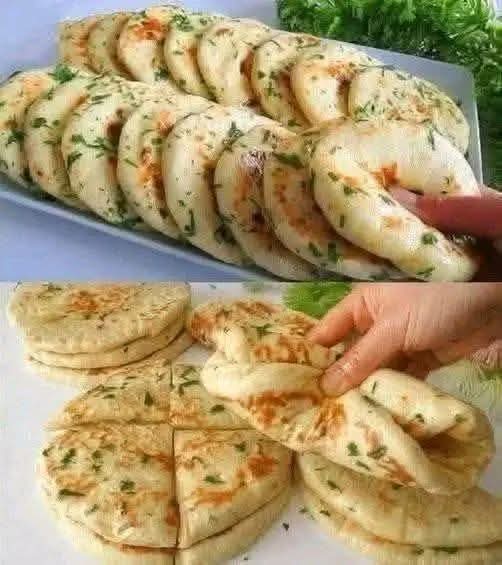
🍞 Low-Carb Flourless-Style Skillet Bread
Introduction
This Low-Carb Flourless-Style Skillet Bread is a simple, hearty bread alternative made without traditional wheat flour. Instead of relying on flour and yeast, it uses eggs, almond flour, psyllium husk, and baking powder to create structure, moisture, and a bread-like texture.
Psyllium husk is particularly useful in low-carb breads because it absorbs liquid and helps create a flexible, cohesive crumb. Similar skillet-bread recipes use combinations of almond flour, eggs, psyllium, and baking powder for this purpose.
The result is a soft, slightly chewy center with a lightly golden exterior, prepared entirely in a skillet. It is excellent for breakfast sandwiches, burgers, avocado toast, grilled sandwiches, or simply serving warm with butter.
Important note: Despite the name “flourless-style,” this version uses a small amount of almond flour. If you want it completely flour-free, I provide a variation below.
🥘 Recipe Overview
Recipe: Low-Carb Flourless-Style Skillet Bread
Style: Keto-friendly / low-carb / gluten-free
Preparation: 10 minutes
Resting: 5–10 minutes
Cooking: 12–16 minutes
Total: About 30 minutes
Yield: 6 small slices or 4 larger portions
Equipment: 20–22 cm nonstick or cast-iron skillet
🥑 Nutritional Information
Approximate values for the entire recipe, depending on the brands and exact quantities used:
| Nutrient | Entire Recipe | Per 1/6 |
|---|---|---|
| Calories | ~900 kcal | ~150 kcal |
| Protein | ~39 g | ~6.5 g |
| Fat | ~78 g | ~13 g |
| Total carbohydrates | ~30 g | ~5 g |
| Fiber | ~14 g | ~2.3 g |
| Net carbohydrates | ~16 g | ~2.7 g |
| Sugar | ~4 g | ~0.7 g |
These are estimates rather than laboratory measurements. Almond flour is relatively calorie-dense, so although the bread is low in carbohydrates, it isn’t necessarily low in calories.
🛒 Ingredients
Main Bread
- 3 large eggs
- ½ cup (about 55 g) finely ground almond flour
- 1½ tablespoons psyllium husk powder
- 1 teaspoon baking powder
- ½ teaspoon salt
- 2 tablespoons unsweetened almond milk or water
- 1 tablespoon extra-virgin olive oil
- ½ teaspoon apple cider vinegar
- ½ teaspoon garlic powder, optional
- ½ teaspoon dried oregano, optional
- ¼ teaspoon black pepper
For the Skillet
- 1 teaspoon butter, olive oil, or avocado oil
Optional Toppings
- Sesame seeds
- Everything-bagel seasoning
- Dried rosemary
- Chia seeds
- Flaxseed
- Sunflower seeds
- Pumpkin seeds
- Grated Parmesan
- Chopped fresh parsley
🌾 Why These Ingredients Work
🥚 Eggs
Eggs provide protein and help bind the ingredients together. They also contribute to the bread’s structure as it cooks.
🌰 Almond Flour
Almond flour provides body, richness, and a slightly nutty flavor. It is commonly used in low-carb breads because it contains considerably fewer digestible carbohydrates than conventional wheat flour.
🌿 Psyllium Husk
This is the important structural ingredient. Psyllium absorbs liquid and swells, helping the batter become cohesive instead of falling apart. Low-carb bread recipes frequently use psyllium specifically because traditional gluten isn’t present.
🥄 Baking Powder
Baking powder gives the bread some lift and prevents it from becoming excessively dense.
🍎 Apple Cider Vinegar
A small amount adds acidity and can contribute to a lighter texture when combined with the leavening agent.
🫒 Olive Oil
Oil adds moisture and prevents the finished bread from becoming dry or crumbly.
👩🍳 Instructions
Step 1 — Prepare the Eggs
Crack the eggs into a medium mixing bowl.
Whisk vigorously for approximately 30–60 seconds.
You want the eggs to become completely blended and slightly frothy.
Step 2 — Add the Liquid Ingredients
Add:
- almond milk or water
- olive oil
- apple cider vinegar
Whisk everything together.
The mixture should be smooth.
Step 3 — Add the Dry Ingredients
Add:
- almond flour
- psyllium husk powder
- baking powder
- salt
- garlic powder
- oregano
- black pepper
Stir thoroughly with a spatula or whisk.
Initially, the mixture will look somewhat loose.
Don’t worry.
The psyllium needs time to absorb the liquid.
⏳ Step 4 — Let the Batter Rest
Allow the mixture to sit for approximately 5–10 minutes.
During this time, the psyllium hydrates and the batter becomes noticeably thicker. This resting principle is also used in other psyllium-based skillet and low-carb breads.
After resting, you should have a thick, spreadable batter.
If it becomes extremely stiff, add 1 tablespoon of water and mix again.
🔥 Step 5 — Heat the Skillet
Place a 20–22 cm skillet over low to medium-low heat.
Add approximately 1 teaspoon of butter or olive oil.
Spread the fat across the bottom.
Important:
Don’t use high heat.
The outside can brown too quickly while the middle remains undercooked.
Low and steady heat is the secret to this recipe.
🍞 Step 6 — Add the Bread Batter
Pour the mixture into the skillet.
Using a spatula, gently spread it into an even round approximately 1–1½ cm thick.
You can also make it slightly thicker if you want a more substantial sandwich bread.
🫕 Step 7 — Cover and Cook
Cover the skillet with a lid.
Cook over low heat for approximately 7–9 minutes.
The steam trapped under the lid helps cook the center.
The bottom should become lightly golden.
The top should look mostly set rather than wet.
🔄 Step 8 — Flip the Bread
Carefully slide a wide spatula underneath the bread.
Flip it in one confident movement.
If the bread feels fragile, place a plate over the skillet, invert the bread onto the plate, then slide it back into the skillet.
Cook the second side for approximately 4–6 minutes.
🔥 Step 9 — Crisp the Exterior
Once the bread is completely cooked, remove the lid.
Cook for another 1–2 minutes per side if you want a slightly crispier exterior.
Don’t overcook it or the center can become dry.
❄️ Step 10 — Rest Before Cutting
Transfer the bread to a wire rack or plate.
Allow it to cool for approximately 5–10 minutes.
This is important because the interior continues to set as it cools.
Slice into:
- 4 large pieces for sandwiches, or
- 6 smaller slices for breakfast/snacking.
🧑🍳 The Best Cooking Method
For the best result, follow this sequence:
Whisk eggs → add liquids → add dry ingredients → rest → low-temperature skillet → cover → flip → uncover → finish cooking → rest → slice.
The most important stages are the resting period and gentle skillet cooking.
Psyllium-based breads can become much thicker after resting because the fiber absorbs the available liquid.
🧀 Cheesy Version
For a richer, more indulgent bread, add:
- ½ cup shredded mozzarella
- 2 tablespoons Parmesan
- ½ teaspoon garlic powder
- ½ teaspoon Italian seasoning
Fold the cheese into the batter before cooking.
Cheese-based keto skillet breads are another established variation and can work particularly well as sandwich bread.
🌿 Mediterranean Version
Add:
- ½ teaspoon oregano
- ½ teaspoon thyme
- 1 tablespoon chopped parsley
- 1 tablespoon chopped olives
- 1 tablespoon crumbled feta
Serve with grilled chicken, tomatoes, cucumber and a little olive oil.
🧄 Garlic-Herb Version
Add:
- 1 teaspoon garlic powder
- 1 teaspoon dried parsley
- ½ teaspoon oregano
- ½ teaspoon rosemary
- pinch of black pepper
After cooking, brush the surface with a tiny amount of melted butter mixed with garlic and parsley.
🥑 Avocado Breakfast Version
Cut the bread in half and toast it lightly.
Top with:
- mashed avocado
- boiled or fried egg
- black pepper
- chili flakes
- sesame seeds
For extra protein, add smoked salmon or sliced turkey.
🍔 Burger Bun Version
Instead of making one large skillet bread, divide the batter into 4 smaller rounds.
Cook each one over low heat with the lid on.
Once cooled, use them as:
- burger buns
- breakfast sandwich buns
- chicken sandwich buns
- mini sliders
🌾 Completely Flour-Free Variation
If by “flourless” you mean no almond flour at all, try this version:
Ingredients
- 3 eggs
- 2 tablespoons psyllium husk powder
- 1 tablespoon ground flaxseed
- ½ teaspoon baking powder
- 2 tablespoons water
- 1 tablespoon olive oil
- ½ teaspoon salt
- herbs and spices
Whisk the eggs, add the liquid ingredients, then incorporate the psyllium, flaxseed and baking powder.
Rest for 5–8 minutes, then cook covered in a lightly greased skillet over low heat.
The texture will be more egg-based and chewy than almond-flour bread, but it can still make a useful low-carb bread substitute.
💡 Troubleshooting
Bread is too wet inside
Cook it longer over low heat with the lid removed for the final few minutes.
Bread is falling apart
The mixture may need more psyllium or a longer resting period.
Add approximately ½ teaspoon psyllium, mix, and wait several minutes.
Bread is too dry
You probably cooked it at too high a temperature or for too long.
Next time, reduce the heat and keep the skillet covered during most of the cooking.
Bread tastes too eggy
Add:
- garlic powder
- oregano
- Parmesan
- rosemary
- black pepper
You can also separate the eggs and whip the whites before gently folding them into the batter for a lighter texture; whipped egg whites are used in some flourless/low-carb bread methods specifically to improve lift.
Bread sticks to the skillet
Use a well-seasoned cast-iron skillet or good-quality nonstick skillet and lightly grease it before adding the batter.
🥪 Serving Ideas
This bread works beautifully with:
Breakfast
- eggs + avocado
- turkey + cheese
- scrambled eggs + spinach
- cottage cheese + tomato
Lunch
- grilled chicken sandwich
- tuna salad
- turkey and cheese
- beef burger
- chicken salad
Light Snack
- butter
- cream cheese
- avocado
- hummus in a moderate portion
- cheese and cucumber
Dinner
Serve it alongside:
- soup
- grilled meat
- roasted vegetables
- salad
- eggs
- chicken
📜 History and Formation
Traditional breadmaking depends heavily on wheat flour and gluten, which create the elastic network responsible for the familiar stretch and structure of conventional bread.
Low-carbohydrate bread developed as cooks began experimenting with alternative ingredients such as almond flour, eggs, seeds, psyllium husk and other fiber-rich binders.
Skillet versions are especially practical because they eliminate the need for a conventional loaf pan and can be prepared relatively quickly. Modern low-carb skillet recipes commonly use almond flour, eggs and psyllium, while some versions omit flour entirely.
The “formation” of this particular bread comes from the interaction between egg proteins, almond flour, psyllium and baking powder:
Eggs → protein structure
Almond flour → body + richness
Psyllium → binding + elasticity
Baking powder → lift
Heat → sets the structure
Together, they create something that behaves much more like bread than a simple omelet.
❤️ Why Bread Lovers Will Love It
This recipe is particularly appealing to people who love bread but want something different from traditional wheat-based loaves.
It is:
- 🍞 Bread-like
- 🥑 Low-carb
- 🌾 Gluten-free
- 🍳 Protein-containing
- 🥜 Rich and satisfying
- 🔥 Made in one skillet
- ⏱️ Relatively quick
- 🥪 Excellent for sandwiches
- 🧄 Easy to customize
- 🧀 Delicious with cheese
- 🌿 Great with herbs
And perhaps best of all, you don’t need an oven.
⭐ Chef’s Method for the Best Texture
If you want the best possible version, remember these seven rules:
- Use finely ground almond flour.
- Don’t skip the psyllium resting period.
- Don’t make the batter excessively thick.
- Use low to medium-low heat.
- Keep the skillet covered during the first stage.
- Flip only when the first side is properly set.
- Let the bread rest before slicing.
The combination of hydration and psyllium is particularly important because psyllium can absorb substantial amounts of liquid and helps give low-carb bread its characteristic cohesive texture.
🧊 Storage
Allow the bread to cool completely.
Store it in an airtight container in the refrigerator for approximately 3–4 days.
To reheat:
Skillet: 1–2 minutes per side
Toaster: until lightly crisp
Air fryer: 2–3 minutes at about 160°C
You can also freeze individual slices separated by parchment paper.
🏆 Conclusion
This Low-Carb Flourless-Style Skillet Bread is a fantastic alternative when you want something bread-like without relying on traditional wheat flour.
The combination of eggs, almond flour, psyllium and baking powder creates a surprisingly satisfying structure, while skillet cooking makes the recipe accessible even when you don’t want to turn on the oven.
Whether you use it for an avocado breakfast, burger, chicken sandwich, grilled cheese, soup accompaniment, or simple buttered toast, it is an extremely versatile foundation.
The beauty of the recipe is that the basic bread can become almost anything: garlic bread, cheesy bread, herb bread, breakfast bread, burger buns or sandwich slices.