

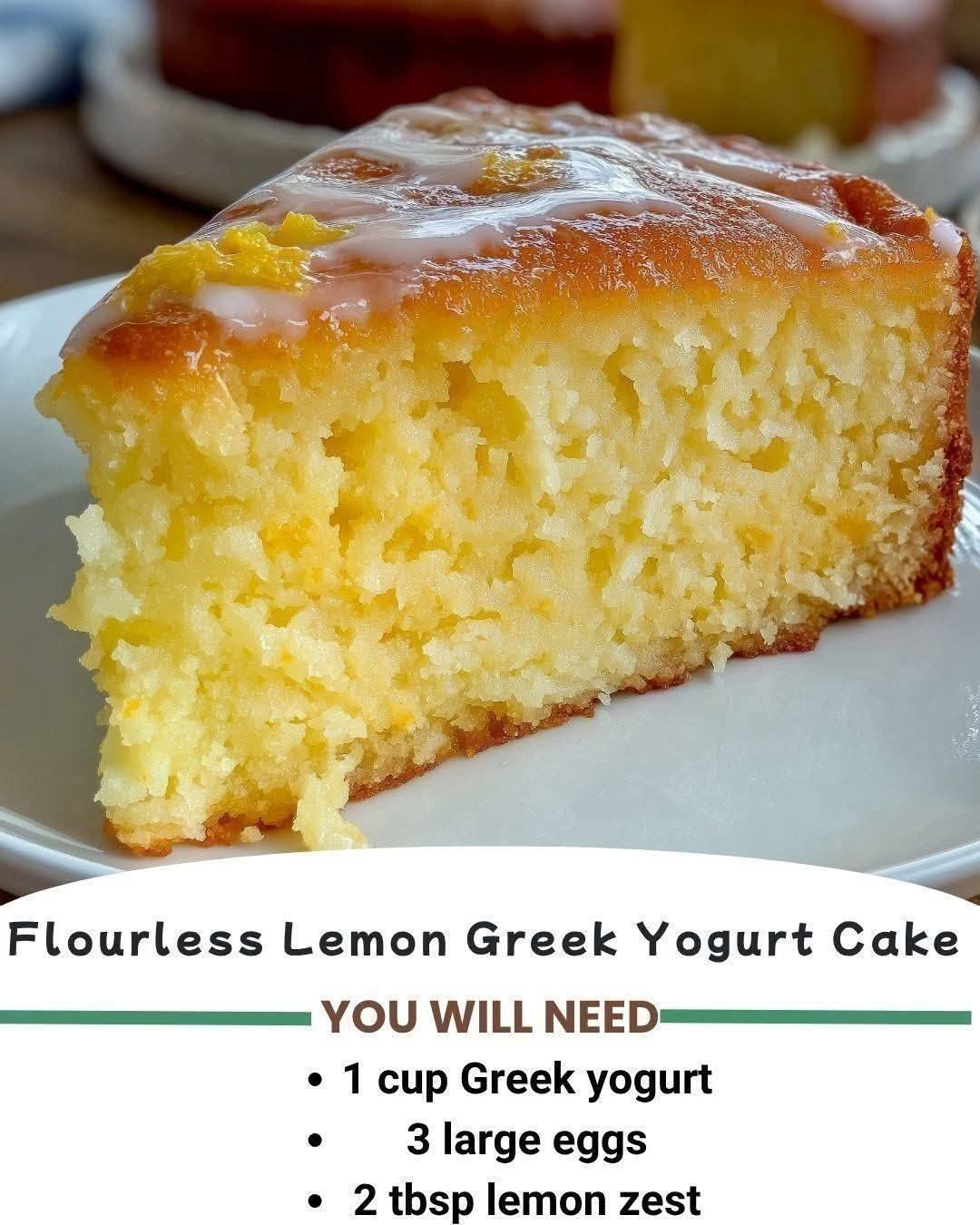
Flourless Lemon Greek Yogurt Cake.
Introduction
Flourless Lemon Greek Yogurt Cake is a wonderfully soft, moist, creamy dessert made without traditional wheat flour. Instead of flour, the cake gets much of its structure from Greek yogurt, eggs, almond flour, cornstarch, and a little baking powder.
The result is a cake with a delicate, almost cheesecake-like crumb, combined with the bright freshness of lemon.
Greek yogurt gives the cake a rich, tangy character while lemon zest and juice provide a clean citrus aroma. A dusting of powdered sugar or a simple lemon glaze makes the finished cake especially beautiful.
This is an excellent dessert for afternoon tea, brunch, birthdays, family gatherings, holidays, or whenever you want something lighter and more delicate than a traditional layer cake.
Recipe Overview
Recipe: Flourless Lemon Greek Yogurt Cake
Category: Dessert / Cake
Style: Mediterranean-inspired
Preparation time: 20 minutes
Baking time: 40–50 minutes
Cooling time: 30–60 minutes
Total time: Approximately 1½ hours
Servings: 10–12
Difficulty: Easy to moderate
Nutritional Information
Approximate nutrition per slice, assuming 12 slices and no glaze:
| Nutrient | Approximate amount |
|---|---|
| Calories | 190–220 kcal |
| Protein | 7–9 g |
| Carbohydrates | 18–22 g |
| Fat | 10–12 g |
| Saturated fat | 3–4 g |
| Fiber | 1–2 g |
| Sugar | 12–15 g |
| Sodium | 100–150 mg |
The actual nutrition will vary according to the Greek yogurt, almond flour, sugar, and toppings used.
Ingredients
For the Cake
- 1½ cups (360 g) full-fat or 2% Greek yogurt
- 4 large eggs, room temperature
- ¾ cup (150 g) granulated sugar
- 1½ cups (150 g) finely ground almond flour
- ¼ cup (30 g) cornstarch
- 2 teaspoons baking powder
- ¼ teaspoon baking soda
- ¼ teaspoon salt
- 2 tablespoons melted unsalted butter or neutral oil
- 2 tablespoons fresh lemon juice
- Zest of 2 large lemons
- 2 teaspoons pure vanilla extract
- ½ teaspoon almond extract, optional
Optional Lemon Glaze
- 1 cup (120 g) powdered sugar
- 2–3 tablespoons fresh lemon juice
- 1 teaspoon finely grated lemon zest
Optional Garnishes
- Powdered sugar
- Fresh lemon slices
- Lemon zest
- Fresh berries
- Blueberries
- Raspberries
- Strawberries
- Greek yogurt
- Whipped cream
- Chopped pistachios
- Toasted sliced almonds
- Fresh mint
Ingredient Roles
Greek Yogurt
Greek yogurt is the star of the recipe.
It provides:
- Moisture
- Tanginess
- Protein
- Creaminess
- A soft texture
Because Greek yogurt is thick, it gives the cake a richer structure than ordinary thin yogurt.
Lemon
Lemon provides two important components.
Lemon zest
The zest contains intensely aromatic citrus oils and gives the cake a strong lemon fragrance.
Lemon juice
The juice contributes acidity and brightness.
The combination creates a much more vibrant lemon flavor than using juice alone.
Almond Flour
Almond flour replaces much of the structure normally supplied by wheat flour.
It also provides:
- Nutty flavor
- Moisture
- Tenderness
- Richness
Eggs
Eggs provide structure and help the cake set as it bakes.
They also contribute to the cake’s delicate, custard-like texture.
History and Inspiration
Flourless cakes have existed in many forms across different culinary traditions.
Some flourless desserts rely on ground nuts, chocolate, eggs, or dairy products to create structure instead of wheat flour.
Greek yogurt has long been an important ingredient in Mediterranean and Greek-style cooking. It is traditionally thick, tangy, and rich, making it useful for both savory and sweet preparations.
Lemon is also deeply associated with Mediterranean cuisine, where citrus is commonly used to brighten desserts, yogurt dishes, pastries, and drinks.
This particular cake is best understood as a modern Mediterranean-inspired dessert rather than one single ancient traditional Greek recipe.
It combines familiar ingredients — Greek yogurt, lemon, almonds, and eggs — into a modern flourless cake.
Formation of the Cake
The structure of this cake develops through several stages.
Eggs
The eggs provide the primary framework.
Greek Yogurt
Yogurt contributes moisture and a creamy texture.
Almond Flour
Almond flour adds body and gives the cake its tender crumb.
Cornstarch
Cornstarch helps create a softer, lighter texture.
Baking Powder and Baking Soda
These help the cake rise slightly.
Lemon
Lemon juice adds acidity while lemon zest provides aromatic citrus flavor.
The finished cake should be:
Moist + tender + lightly dense + creamy + lemony.
It isn’t supposed to have the fluffy, airy texture of a traditional sponge cake.
Instructions
Step 1: Prepare the Oven
Preheat the oven to:
350°F (175°C).
Grease a 9-inch (23 cm) round cake pan.
Line the bottom with parchment paper.
For easier removal, lightly grease the parchment as well.
Step 2: Prepare the Lemon
Wash and dry the lemons.
Finely grate the zest of two lemons.
Be careful not to grate too deeply into the white pith.
The white portion can be bitter.
Juice the lemons.
Measure approximately:
2 tablespoons fresh lemon juice.
Step 3: Combine the Dry Ingredients
In a medium bowl, whisk together:
- Almond flour
- Cornstarch
- Baking powder
- Baking soda
- Salt
Mix thoroughly.
Set aside.
Step 4: Combine Sugar and Lemon Zest
Place the sugar into a large mixing bowl.
Add the lemon zest.
Rub the zest into the sugar using your fingertips for about 30–60 seconds.
This releases the lemon oils and distributes them throughout the sugar.
You’ll immediately notice a stronger lemon aroma.
Step 5: Add the Eggs
Add the eggs to the lemon sugar.
Beat for approximately 2–3 minutes.
The mixture should become slightly lighter and smoother.
You don’t need to whip it to stiff peaks.
Step 6: Add Greek Yogurt
Add:
- Greek yogurt
- Melted butter or oil
- Lemon juice
- Vanilla extract
- Almond extract, if using
Mix until smooth.
Don’t worry if the batter looks somewhat thick.
That’s exactly what you want.
Step 7: Add the Dry Ingredients
Gradually add the almond flour mixture.
Use a spatula or whisk to gently incorporate it.
Mix only until there are no obvious dry pockets.
Don’t overmix.
Step 8: Check the Batter
The batter should be:
- Thick
- Smooth
- Creamy
- Easily spreadable
It will be considerably thicker than ordinary cake batter.
Step 9: Pour Into the Pan
Transfer the batter into the prepared cake pan.
Use a spatula to smooth the surface.
Gently tap the pan on the counter once or twice to remove any large air pockets.
Don’t repeatedly bang the pan.
Step 10: Bake
Place the cake in the center of the preheated oven.
Bake for approximately:
40–50 minutes.
Start checking at 40 minutes.
The cake should be:
- Golden around the edges
- Set in the center
- Slightly springy when gently pressed
- Beginning to pull away from the sides
Insert a toothpick into the center.
It should come out mostly clean, with perhaps a few moist crumbs.
Step 11: Cool
Remove the cake from the oven.
Place the pan on a cooling rack.
Allow it to cool for approximately 15–20 minutes.
Run a thin knife carefully around the edges.
Then remove the cake from the pan.
Allow it to cool completely.
Step 12: Dust With Powdered Sugar
Once completely cool, dust the top lightly with powdered sugar.
You can stop here for a simple, elegant finish.
Lemon Glaze Method
For a more intensely lemony dessert, prepare the glaze.
Combine:
- Powdered sugar
- Lemon juice
- Lemon zest
Mix until smooth.
If too thick, add a few drops of lemon juice.
If too thin, add a little more powdered sugar.
Pour or drizzle over the cooled cake.
Allow the glaze to set for approximately 15–20 minutes.
Best Baking Method
For the most reliable results:
1. Use room-temperature eggs.
They incorporate more easily.
2. Use thick Greek yogurt.
Thin yogurt adds excess liquid.
3. Measure almond flour carefully.
Too much can make the cake heavy.
4. Don’t overmix.
Mix just until combined.
5. Bake in the center of the oven.
This promotes even cooking.
6. Let the cake cool.
The crumb continues to set as it cools.
Important Method: Room-Temperature Ingredients
Take the eggs and Greek yogurt out of the refrigerator approximately 30 minutes before baking.
Cold ingredients can make the melted butter seize and can result in a less uniform batter.
Room-temperature ingredients generally produce a smoother mixture.
Method for Extra Lemon Flavor
If you’re a serious lemon lover, use:
- Zest of 3 lemons
- 3 tablespoons lemon juice
- Lemon glaze
- Lemon zest on top
For an especially fragrant cake, rub the extra zest into the sugar before adding the eggs.
Method for a More Cheesecake-Like Texture
For a denser, creamier cake:
- Use full-fat Greek yogurt.
- Bake at 340°F (170°C).
- Bake slightly longer.
- Don’t overbeat the eggs.
This produces a cake with a richer, almost cheesecake-like texture.
Method for a Lighter Texture
For a lighter cake:
- Use 2% Greek yogurt.
- Beat the eggs and sugar for 3–4 minutes.
- Fold the dry ingredients in gently.
- Avoid overbaking.
The result will be softer and somewhat airier.
Flourless Does Not Mean Gluten-Free Automatically
This recipe contains no traditional wheat flour, but if you need the cake to be strictly gluten-free, check the labels of ingredients such as baking powder, cornstarch, almond flour, and flavorings to make sure they are certified or produced appropriately for your needs.
Variations
Lemon Blueberry Greek Yogurt Cake
Add:
¾ cup fresh or frozen blueberries.
Gently fold them into the batter at the very end.
The combination of lemon and blueberries is fantastic.
Lemon Raspberry Cake
Fold in:
½–¾ cup raspberries.
Fresh raspberries are delicate, so fold them in very gently.
Lemon Pistachio Cake
Add:
- ½ cup finely chopped pistachios
- 2 tablespoons pistachios for garnish
The pistachios provide beautiful color and a slightly salty, nutty contrast.
Lemon Coconut Cake
Add:
½ cup unsweetened shredded coconut.
You can also sprinkle toasted coconut on top.
Lemon Poppy Seed Cake
Add:
1½ tablespoons poppy seeds.
The tiny seeds provide a pleasant crunch and classic lemon-cake flavor.
Honey Lemon Version
Replace part of the sugar with honey.
For example:
- ½ cup sugar
- ¼ cup honey
The cake will have a slightly deeper sweetness and softer texture.
Orange-Lemon Version
Replace half of the lemon zest with orange zest.
Use:
- Zest of 1 lemon
- Zest of 1 orange
This produces a softer citrus flavor.
Serving Suggestions
Serve slices with:
- Fresh berries
- Greek yogurt
- Whipped cream
- Lemon glaze
- Powdered sugar
- Vanilla ice cream
- Fresh mint
- Pistachios
- Toasted almonds
A spoonful of thick Greek yogurt alongside the cake makes an especially nice pairing.
Breakfast or Dessert?
This cake is versatile enough to work in both situations.
For breakfast or brunch
Serve it with:
- Greek yogurt
- Fresh berries
- Coffee
- Tea
- Fresh fruit
For dessert
Add:
- Lemon glaze
- Whipped cream
- Berries
- Ice cream
- Powdered sugar
Storage
Store the cake in an airtight container.
At room temperature, it is best enjoyed within approximately 1–2 days.
Because it contains Greek yogurt, refrigeration is preferable for longer storage.
Refrigerated, it should generally remain good for approximately 4–5 days when properly stored.
Bring individual slices closer to room temperature before serving for the best texture.
Freezing Method
This cake freezes well.
Allow it to cool completely.
Wrap individual slices tightly.
Place them in a freezer-safe container or bag.
Freeze for up to approximately 2–3 months for best quality.
Thaw overnight in the refrigerator.
Allow the slice to sit at room temperature before serving.
If using glaze, you may prefer to add it after thawing.
Common Problems and Solutions
Cake Is Too Dense
Possible causes:
- Too much almond flour
- Overmixing
- Overbaking
- Cold or overly thick ingredients
Make sure measurements are accurate.
Cake Is Wet in the Center
Possible causes:
- Underbaking
- Pan too small
- Excessively watery yogurt
- Oven temperature too low
Continue baking until the center is properly set.
Cake Cracks on Top
Don’t worry.
A small crack is perfectly normal with yogurt-based cakes.
You can hide it with:
- Powdered sugar
- Lemon glaze
- Whipped cream
- Berries
Cake Falls After Baking
A slight settling is normal.
If it collapses dramatically, it may have been underbaked or the eggs may have been overbeaten.
Formation of the Perfect Slice
Once the cake is completely cool, use a sharp knife.
For especially clean slices:
- Dip the knife into warm water.
- Wipe it dry.
- Slice.
- Clean the knife.
- Repeat.
This creates beautiful, smooth slices.
Presentation
For a bakery-style presentation, place the cake on a serving plate.
Dust lightly with powdered sugar.
Arrange fresh berries around the edges.
Add thin lemon slices.
Sprinkle a few chopped pistachios over the top.
Finish with a delicate drizzle of lemon glaze.
The result is simple, elegant, and colorful.
Flourless Lemon Cake Lovers
This recipe is especially good for lemon lovers because the citrus flavor is present throughout the cake rather than only in the topping.
Greek yogurt lovers will appreciate its creamy, tangy character.
Almond lovers will enjoy the subtle nutty flavor from almond flour.
And flourless dessert lovers will love the fact that you can create a beautiful, tender cake without traditional wheat flour.
Methods for Different Occasions
Afternoon Tea Method
Keep the cake simple.
Dust with powdered sugar and serve with black tea.
Dinner Party Method
Use lemon glaze.
Garnish with berries and pistachios.
Serve with lightly sweetened whipped cream.
Birthday Method
Top with:
- Whipped cream
- Fresh berries
- Lemon curd
- White chocolate curls
Holiday Method
Add:
- Lemon glaze
- Pistachios
- Candied lemon peel
- Powdered sugar
The combination looks especially elegant on a dessert table.
The Perfect Flavor Balance
The best version of this cake has several layers of flavor.
First: You notice the fresh lemon aroma.
Next: The Greek yogurt provides gentle tanginess.
Then: Almond flour contributes a subtle nutty richness.
Finally: The sweetness and buttery richness round everything out.
The result isn’t simply a sweet cake.
It’s:
Lemony + creamy + moist + nutty + tender + lightly tangy.
Conclusion
Flourless Lemon Greek Yogurt Cake is a beautiful dessert for anyone who loves bright citrus flavor and a soft, moist crumb.
Greek yogurt provides richness and tanginess, almond flour gives the cake body and a delicate nuttiness, while fresh lemon zest and juice create a vibrant citrus flavor.
The cake is simple enough for an ordinary afternoon but elegant enough for a dinner party or celebration.
For the ultimate lemon cake lovers, serve it slightly chilled or at room temperature with a little lemon glaze, fresh berries, and a spoonful of Greek yogurt.
Moist, tender, creamy, citrusy, and wonderfully fragrant — this flourless lemon cake is a dessert worth making again and again.