

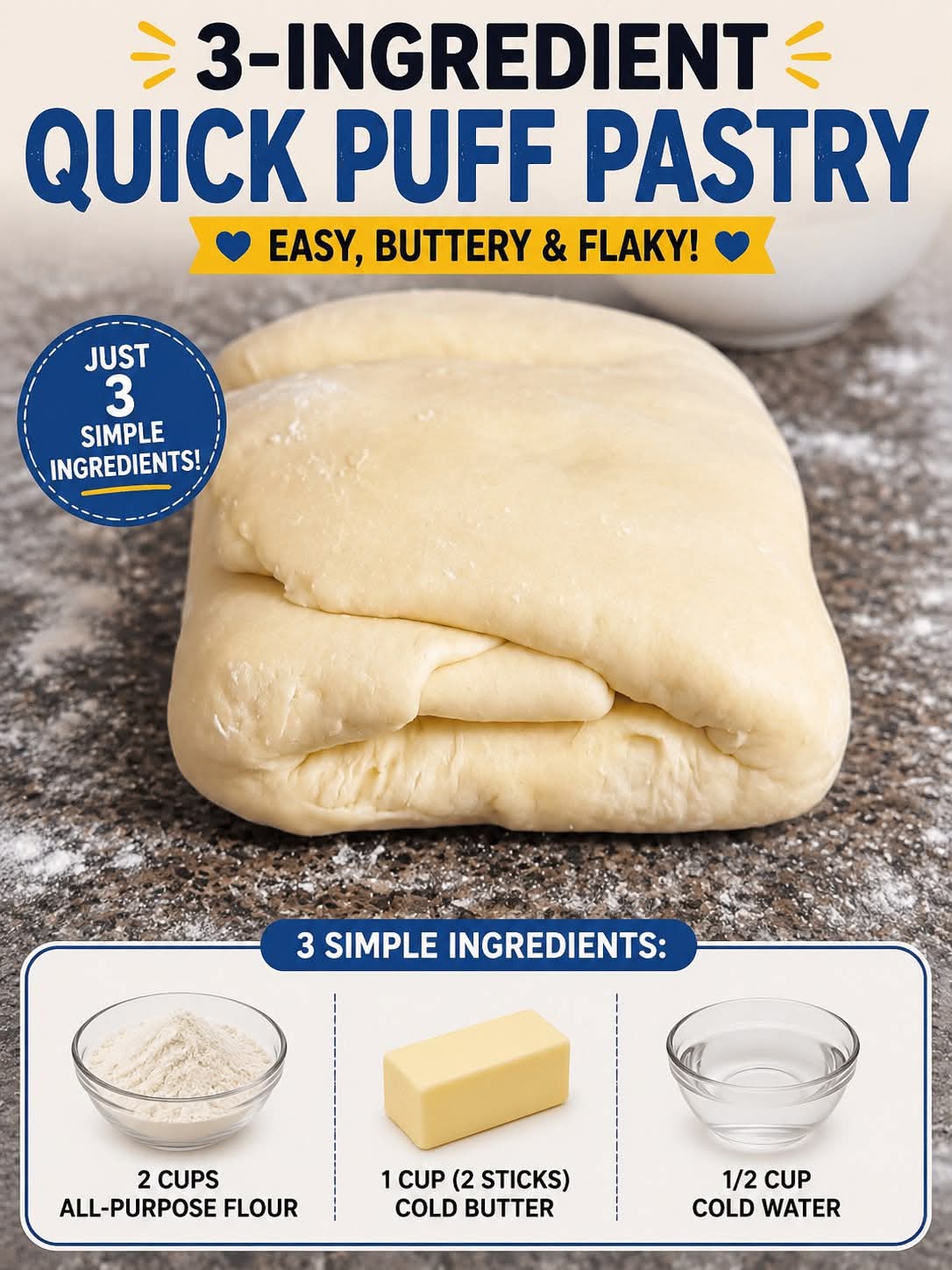
Homemade Puff Pastry (From Scratch)
Introduction
There is something incredibly satisfying about making puff pastry from scratch. While it has a reputation for being difficult, this homemade version is much more approachable than many people think. With a little patience and careful folding, you’ll create dozens of delicate, buttery layers that bake into a light, flaky pastry perfect for both sweet and savory recipes.
Homemade puff pastry has a rich buttery flavor and a crisp texture that is difficult to match with store-bought versions. Whether you’re preparing elegant desserts, breakfast pastries, appetizers, or savory pies, this versatile dough will quickly become one of your favorite baking projects.
History of Puff Pastry
Puff pastry has a fascinating history dating back hundreds of years in European cuisine. Historians believe laminated dough techniques evolved in Spain and the Middle East before becoming highly refined in France during the 17th century. French pastry chefs perfected the repeated folding and rolling process, creating the beautifully layered dough known today as pâte feuilletée.
Over the centuries, puff pastry became a staple in bakeries worldwide and is now used for everything from croissants and turnovers to vol-au-vents, mille-feuille, sausage rolls, and fruit tarts.
Ingredients
For the Dough
- 500 g (4 cups) all-purpose flour
- 10 g (2 teaspoons) salt
- 30 g (2 tablespoons) granulated sugar (optional, for sweeter pastries)
- 250 ml (1 cup) ice-cold water
- 60 g (¼ cup) unsalted butter, melted and cooled
Butter Block
- 340 g (1½ cups) cold unsalted butter
- 2 tablespoons flour (optional, helps stabilize the butter)
Equipment
- Rolling pin
- Mixing bowl
- Plastic wrap
- Pastry scraper
- Measuring cups and spoons
- Baking tray
- Parchment paper
Instructions
Step 1: Prepare the Dough
Mix the flour, salt, and sugar in a large bowl.
Add the melted butter and cold water.
Mix until a shaggy dough forms.
Knead gently for about 5 minutes until smooth.
Wrap the dough and refrigerate for 30 minutes.
Step 2: Make the Butter Block
Place the cold butter between two sheets of parchment paper.
Flatten into a square approximately 15 cm (6 inches).
Chill until firm but still pliable.
Step 3: Enclose the Butter
Roll the chilled dough into a square larger than the butter block.
Place the butter diagonally in the center.
Fold each corner over the butter to completely seal it.
Pinch all seams closed.
Step 4: First Fold
Roll into a long rectangle.
Fold the bottom third toward the center.
Fold the top third over it like a business letter.
Wrap and chill for 30 minutes.
Step 5: Repeat Folding
Repeat the rolling and folding process five more times.
Rotate the dough 90 degrees before each fold.
Refrigerate for 30 minutes between folds to keep the butter cold.
Step 6: Final Chill
After the final fold, refrigerate the dough for at least 2 hours or overnight.
Step 7: Shape
Roll the pastry to about 3–4 mm thick.
Cut into desired shapes for pastries, pies, tarts, or appetizers.
Step 8: Bake
Preheat oven to 220°C (425°F).
Place pastries on a parchment-lined baking tray.
Brush with egg wash if desired.
Bake for 18–25 minutes until deeply golden and puffed.
Cool slightly before serving.
Preparation Method
Laminating dough is the secret behind puff pastry. Thin sheets of butter become trapped between layers of dough during repeated folds. As the pastry bakes, the butter releases steam, forcing the layers apart and creating the signature flaky texture.
Keeping both the dough and butter cold throughout the process ensures distinct layers and prevents the butter from melting into the dough.
Tips for Success
- Always use cold ingredients.
- Chill the dough whenever it becomes soft.
- Roll gently to avoid tearing.
- Avoid adding too much flour during rolling.
- Trim edges cleanly for better rising.
- Bake in a fully preheated oven.
- Don’t open the oven door during the first 15 minutes.
Delicious Variations
- Apple turnovers
- Chocolate-filled pastries
- Cheese and spinach pockets
- Sausage rolls
- Berry Danish pastries
- Cream horns
- Mushroom and cheese puffs
- Ham and Swiss pinwheels
- Cinnamon sugar twists
- Mini fruit tarts
Serving Suggestions
Serve warm with:
- Fresh berries
- Whipped cream
- Vanilla custard
- Chocolate sauce
- Fruit preserves
- Honey
- Powdered sugar
- Coffee
- Tea
- Hot chocolate
Storage
- Refrigerate raw dough for up to 3 days.
- Freeze for up to 3 months.
- Baked pastries stay fresh for 2 days at room temperature.
- Reheat in the oven to restore crispness.
Nutritional Information (Approximate Per Serving)
- Calories: 280
- Protein: 5 g
- Carbohydrates: 24 g
- Fat: 18 g
- Saturated Fat: 11 g
- Fiber: 1 g
- Sugar: 2 g
- Sodium: 180 mg
Why People Love Homemade Puff Pastry
Bakers love homemade puff pastry because every bite delivers incredibly light, crisp, buttery layers that melt in your mouth. The satisfaction of creating beautiful laminated dough from simple pantry ingredients makes it a rewarding baking experience. Homemade pastry also allows complete control over the ingredients, ensuring exceptional flavor and freshness for every recipe.
Conclusion
Making puff pastry from scratch is a rewarding skill that transforms simple ingredients into an elegant, versatile dough. With patience, careful folding, and proper chilling, you’ll be rewarded with beautifully flaky layers that elevate everything from sweet desserts to savory appetizers. Once you’ve mastered this classic technique, you’ll discover endless possibilities for creating impressive homemade pastries that family and friends will love.