

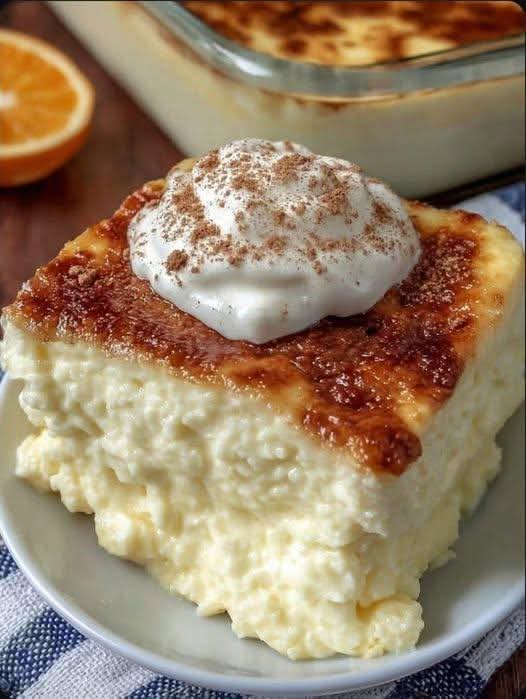
Amish Baked Custard
Introduction
Amish Baked Custard is a timeless, old-fashioned dessert cherished for its silky texture, comforting flavor, and simple ingredients. Passed down through generations in Amish communities, this dessert reflects the Amish philosophy of creating wholesome, satisfying meals using fresh dairy, eggs, and pantry staples. Unlike elaborate modern desserts, Amish baked custard celebrates simplicity, allowing the rich flavor of cream, milk, eggs, vanilla, and nutmeg to shine.
Whether served warm on a chilly evening or chilled on a summer afternoon, this creamy dessert is perfect for family dinners, holiday gatherings, church suppers, or whenever you crave a nostalgic homemade treat.
History
The origins of baked custard date back to medieval Europe, where egg-thickened milk desserts became popular among households. As immigrants settled in North America, recipes evolved using locally available ingredients.
The Amish, descendants of Swiss and German Anabaptists who settled in Pennsylvania and the American Midwest during the 18th century, embraced baked custard because it required only a handful of farm-fresh ingredients:
- Fresh eggs
- Whole milk
- Heavy cream
- Sugar
- Vanilla
- Nutmeg
Since many Amish families keep dairy cows and chickens, baked custard became one of the easiest desserts to prepare without requiring expensive ingredients.
Today it remains a favorite comfort dessert throughout Amish country.
Why People Love Amish Baked Custard
People adore this dessert because it is:
- Smooth and creamy
- Naturally gluten-free
- Budget-friendly
- Easy for beginners
- Rich without being overly sweet
- Perfect served warm or chilled
- Elegant despite simple ingredients
- Great for holidays and Sunday dinners
Nutritional Information
Per serving (based on 8 servings):
- Calories: 240
- Protein: 8 g
- Fat: 15 g
- Saturated Fat: 8 g
- Carbohydrates: 19 g
- Sugar: 18 g
- Fiber: 0 g
- Cholesterol: 170 mg
- Sodium: 90 mg
- Calcium: 18% Daily Value
- Vitamin A: 15% Daily Value
Values are approximate.
Ingredients
- 4 large eggs
- ½ cup granulated sugar
- 2 cups whole milk
- 1 cup heavy cream
- 1 tablespoon pure vanilla extract
- ¼ teaspoon salt
- Ground nutmeg for topping
- Butter for greasing ramekins or baking dish
Equipment
- Mixing bowl
- Whisk
- Measuring cups
- Measuring spoons
- Fine mesh strainer (optional)
- 6–8 ramekins or one 2-quart baking dish
- Large roasting pan
- Kettle for hot water
- Oven
Instructions
Step 1
Preheat the oven to 325°F (163°C).
Grease ramekins or your baking dish lightly with butter.
Step 2
Whisk the eggs gently until blended.
Avoid creating too much foam.
Step 3
Add the sugar and salt.
Whisk until dissolved.
Step 4
Mix in the vanilla.
Step 5
Slowly pour in the milk and cream while whisking continuously.
Step 6
For an ultra-smooth custard, strain the mixture through a fine mesh sieve.
Step 7
Pour the custard evenly into ramekins.
Sprinkle the tops with freshly grated nutmeg.
Step 8
Place ramekins inside a roasting pan.
Pour hot water into the roasting pan until it reaches halfway up the sides of the ramekins.
This water bath prevents curdling.
Step 9
Bake for 40–50 minutes, or until the centers are just set but still slightly jiggly.
Step 10
Remove from the water bath.
Cool for 30 minutes.
Serve warm or refrigerate for several hours before serving cold.
Cooking Methods
Traditional Oven Method
The authentic Amish technique using a water bath for exceptionally smooth custard.
Water Bath Method
The gentle heat keeps the eggs from scrambling and creates a silky texture.
Individual Ramekin Method
Perfect for elegant single servings.
Family Baking Dish Method
Bake in one large dish and spoon into serving bowls.
Tips for Perfect Custard
- Use room-temperature eggs.
- Heat the milk slightly for a smoother mixture (do not boil).
- Whisk gently to avoid bubbles.
- Always bake using a water bath.
- Don’t overbake.
- The custard continues setting as it cools.
- Freshly grated nutmeg provides the best flavor.
Delicious Variations
Cinnamon Custard
Replace nutmeg with cinnamon.
Maple Custard
Substitute maple syrup for part of the sugar.
Honey Custard
Sweeten with local honey.
Lemon Custard
Add fresh lemon zest.
Coconut Custard
Mix in shredded coconut.
Caramel Custard
Pour caramel sauce into the ramekins before adding the custard.
Pumpkin Custard
Blend in pumpkin purée and pumpkin pie spice.
Serving Suggestions
Serve with:
- Fresh berries
- Whipped cream
- Cinnamon
- Caramel sauce
- Maple syrup
- Butter cookies
- Toasted almonds
- Shortbread cookies
- Coffee
- Tea
Storage
- Refrigerate for up to 4 days.
- Cover tightly with plastic wrap or a lid.
- Do not leave at room temperature for more than 2 hours.
- Freezing is not recommended, as the texture may become grainy after thawing.
Formation of the Custard
The smooth texture forms through the gentle coagulation of egg proteins as they are heated. The water bath distributes heat evenly, preventing the eggs from overcooking while allowing the milk and cream to create a rich, velvety consistency. Proper baking results in a custard that is firm enough to hold its shape yet soft enough to melt in your mouth.
Why Dessert Lovers Enjoy It
Amish Baked Custard is loved because it offers:
- A silky, creamy texture
- Classic vanilla flavor
- Comforting homemade appeal
- Simple ingredients
- Rich dairy goodness
- A naturally gluten-free dessert option
- Versatility for any season
- Nostalgic family memories
Conclusion
Amish Baked Custard is a beautiful example of how simple ingredients can create an elegant and comforting dessert. With its creamy texture, delicate sweetness, and rich history, it continues to be a beloved favorite across generations. Whether served warm with a sprinkle of nutmeg or chilled with fresh fruit, this classic recipe brings warmth, tradition, and homemade goodness to every table.