

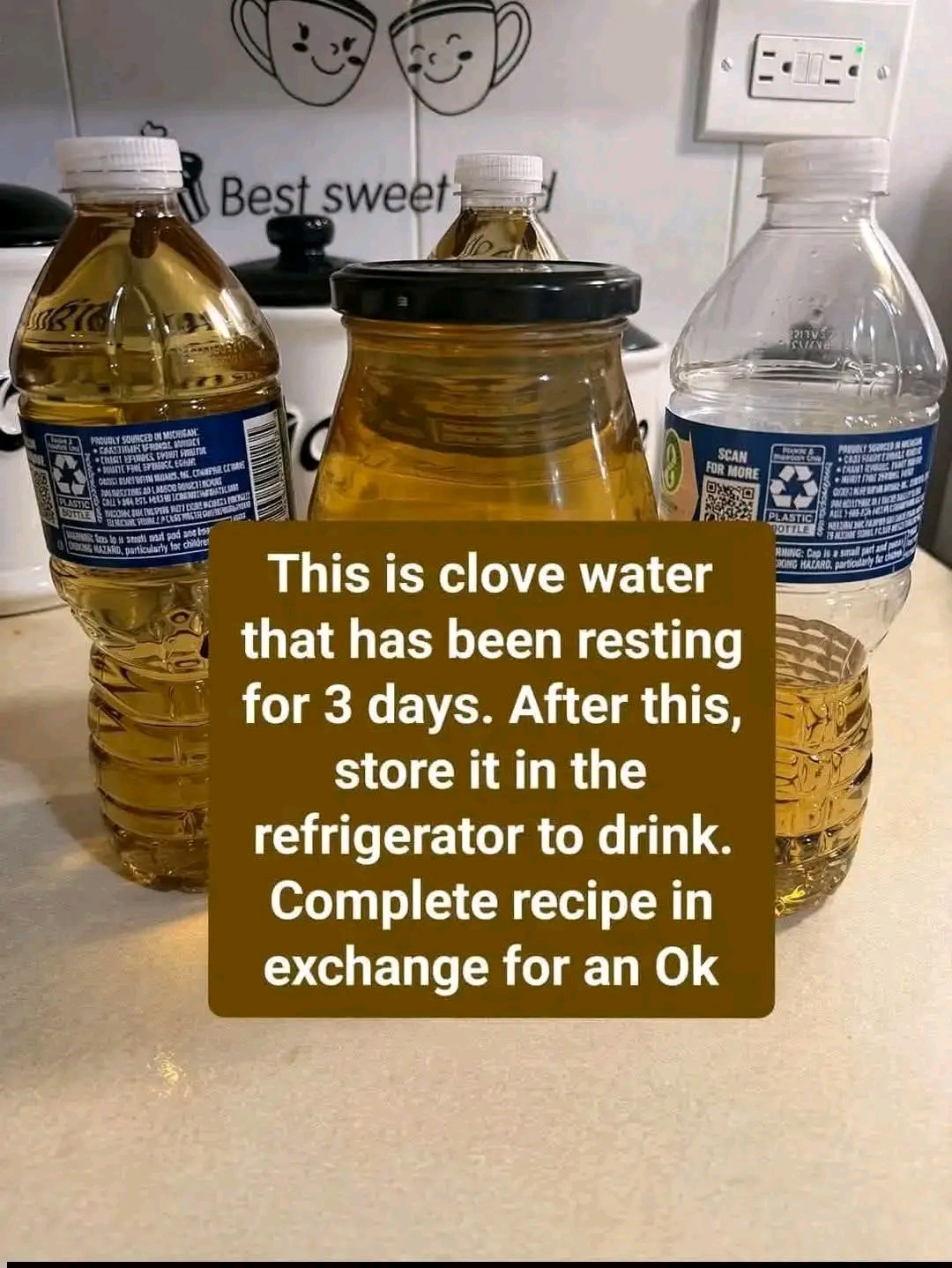
Clove Water (After 3 Days of Resting) 🌿💧
Introduction
Clove water is a traditional herbal infusion made by soaking dried cloves in water for an extended period, usually 24 hours to 3 days. After 3 days of resting, the water becomes highly concentrated with clove’s natural compounds, giving it a strong aroma and powerful flavor.
Cloves have been used for centuries in natural wellness traditions for digestion, oral health, and immune support. This long-soak version is more potent than a quick infusion, making it a popular natural drink for people who prefer herbal remedies and detox-style beverages.
Nutritional Information (per 250 ml glass – approximate)
- Calories: 0–5 kcal
- Carbohydrates: 0–1 g
- Protein: 0 g
- Fat: 0 g
- Sugars: 0 g
- Key compounds: eugenol, antioxidants, trace minerals
(Nutritional values are minimal because this is an herbal infusion, not a food.)
Ingredients
- 8–12 whole dried cloves
- 1 liter clean drinking water
- Optional:
- 1 tsp honey (for taste, added after soaking)
- 1 slice lemon (for freshness)
- 1 cinnamon stick (for stronger spice blend)
Instructions
- Prepare the jar
Use a clean glass jar or bottle. Make sure it is fully sterilized to avoid contamination during the 3-day soak. - Add cloves
Place the cloves into the jar. - Add water
Pour 1 liter of clean, room-temperature water over the cloves. - Seal and rest
Close the jar tightly and store it in a cool, dark place for 72 hours (3 days). - Shake daily
Gently shake the jar once or twice per day to help release clove compounds. - Strain
After 3 days, strain the water to remove cloves. - Serve
Drink chilled or at room temperature. You may add honey or lemon after infusion.
Methods Explained
1. Cold Maceration Method
This method uses time instead of heat. Cloves slowly release essential oils like eugenol into the water over 72 hours, creating a strong herbal infusion.
2. Extraction Method
The prolonged soaking allows water-soluble and fat-soluble compounds to diffuse, making the drink more concentrated than a quick boil.
3. Natural Fermentation Prevention Method
Because cloves have antimicrobial properties, they help prevent spoilage during the soaking period if stored properly in a clean container.
History of Clove Water
Cloves originate from the Maluku Islands in Indonesia and have been used for over 2,000 years in traditional medicine systems such as Ayurveda and Chinese herbal practices. Historically, cloves were valued for digestion, breath freshness, and as a warming spice in cold climates.
Clove-infused water became popular in modern wellness culture as people began rediscovering herbal drinks as natural alternatives to sugary beverages and synthetic supplements.
Formation (How the Infusion Develops)
Over 3 days:
- Water slowly extracts eugenol (main active compound)
- Aromatic oils dissolve into the liquid
- The flavor becomes stronger and slightly spicy
- Antioxidants diffuse into the water
The result is a deep, amber-colored herbal water with a warm, aromatic taste.
Serving Suggestions (“For Lovers” ❤️)
Clove water can be enjoyed in simple and relaxing ways:
- Morning wellness drink for couples
- After-dinner digestive tonic together
- Warm romantic herbal tea alternative
- Spa-style detox drink at home
Enhance the experience with:
- A slice of lemon for brightness
- A drizzle of honey for sweetness
- Served in glass cups for a calming ritual feel
- Paired with quiet evening conversations
Conclusion
Clove water after 3 days of resting is a simple but powerful herbal infusion. It transforms basic water into a concentrated natural drink rich in aroma and plant compounds. While it is not a miracle cure, it can be a refreshing and traditional wellness beverage when consumed mindfully.
Its strength lies in simplicity: just cloves, water, and time.