

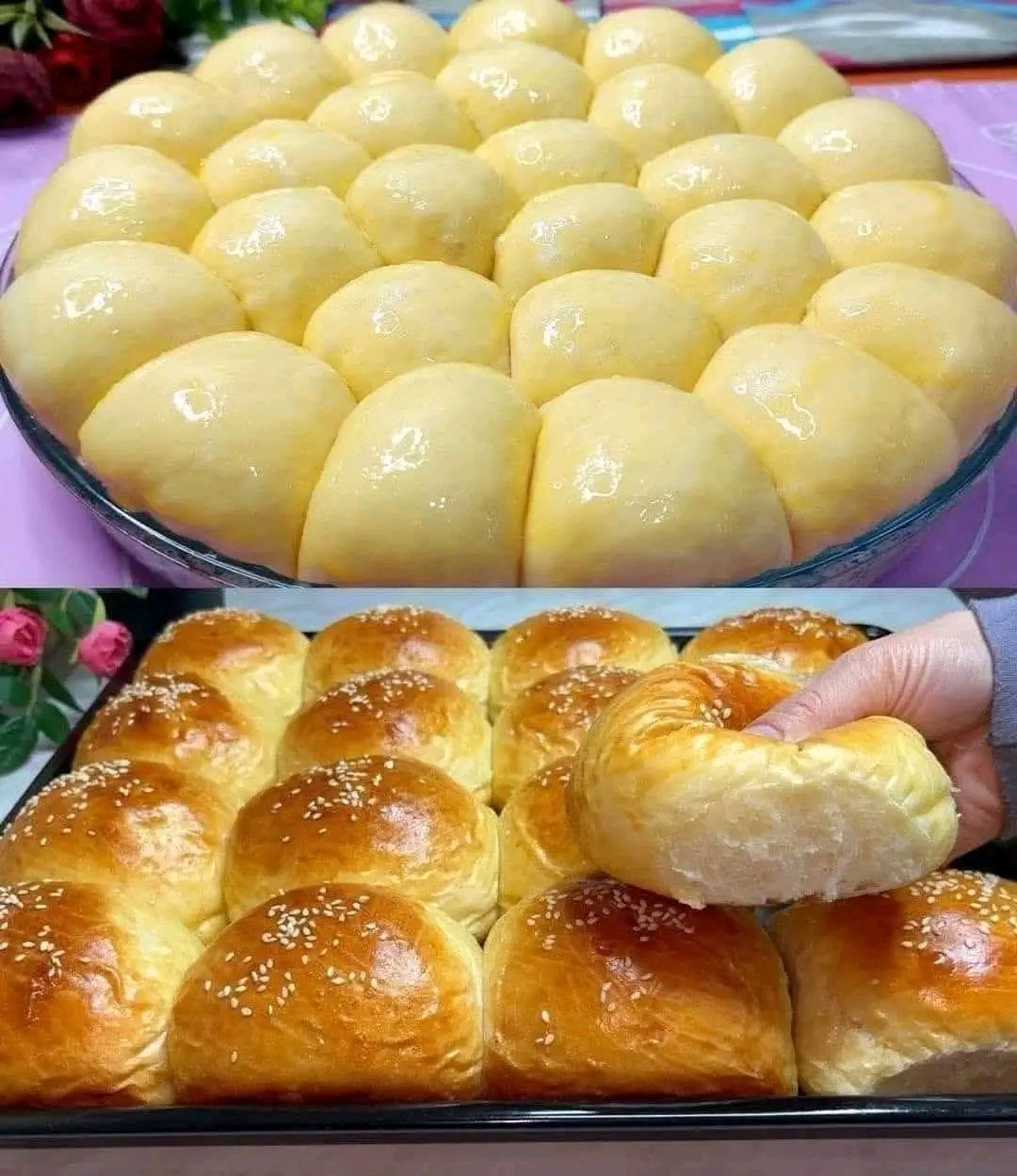
Milk Brioche Rolls
Introduction
Milk brioche rolls are one of the most beloved enriched breads in the world. Thanks to the combination of milk, butter, and eggs, they have a rich flavor and an incredibly tender texture. These rolls are lighter than cake but richer than standard bread, making them ideal for both sweet and savory uses. Whether paired with jam, honey, cheese, or even used as burger buns, they deliver a luxurious homemade bakery experience.
Nutritional Information (Approx. per roll – based on 12 rolls)
- Calories: 200–230 kcal
- Protein: 5–6 g
- Carbohydrates: 26–30 g
- Fat: 7–9 g
- Sugar: 4–6 g
- Fiber: 1 g
Ingredients
Dough
- 500 g all-purpose flour
- 250 ml warm milk
- 2 large eggs (room temperature)
- 70–80 g sugar
- 10 g salt
- 10 g instant yeast (or 20 g fresh yeast)
- 80 g unsalted butter (softened)
Egg Wash
- 1 egg
- 1 tbsp milk
Instructions
Step 1: Activate the Yeast
- In a bowl, mix warm milk, sugar, and yeast.
- Let sit for 5–10 minutes until foamy.
Step 2: Prepare the Dough
- Add eggs to the yeast mixture.
- Gradually mix in flour and salt.
- Knead until a rough dough forms.
Step 3: Add Butter
- Incorporate softened butter little by little.
- Knead for 10–15 minutes until smooth, elastic, and slightly sticky.
Step 4: First Rise
- Cover and let the dough rise in a warm place for 1–2 hours until doubled.
Step 5: Shape
- Divide dough into equal portions (10–12 pieces).
- Shape into tight, smooth balls.
- Place in a baking tray slightly touching each other.
Step 6: Second Rise
- Let rise again for 45–60 minutes until puffy and airy.
Step 7: Bake
- Preheat oven to 180°C (350°F).
- Brush rolls with egg wash.
- Bake for 15–18 minutes until golden brown.
Methods & Pro Tips
- Kneading method: Use the stretch-and-fold technique if dough feels sticky.
- Windowpane test: Dough should stretch thin without tearing.
- Cold proofing: Refrigerate overnight for deeper flavor.
- Steam tip: Place a small tray of water in the oven for a softer crust.
- Post-bake softness: Cover with a cloth while cooling.
History & Origin
Brioche originates from France, where it has been enjoyed since the Middle Ages. Historically, it was considered a luxury bread because butter and eggs were expensive. Over centuries, brioche became a symbol of French baking excellence and spread globally, inspiring many variations like loaves, buns, and filled pastries.
Formation (Texture & Structure)
- Crust: Thin, shiny, golden
- Crumb: Light, airy, and feathery
- Flavor: Buttery, milky, slightly sweet
- Structure: Enriched dough with high fat content, giving softness and elasticity
Why People Love Milk Brioche Rolls
- Extremely soft and fluffy texture
- Rich buttery taste
- Perfect for both sweet and savory dishes
- Feels like bakery-quality bread at home
- Freezes well and reheats beautifully
Variations & Methods for Lovers
Sweet Lovers
- Fill with chocolate, custard, or jam
- Add vanilla or orange zest
- Top with sugar glaze or honey butter
Savory Lovers
- Reduce sugar slightly
- Add cheese, herbs, or olives
- Use as burger buns or sandwich rolls
Advanced Methods
- Tangzhong method: Cook a small portion of flour and milk to make rolls even softer
- Sourdough brioche: Replace yeast with sourdough starter
- Braided brioche: Shape into elegant bakery-style braids
Conclusion
Milk brioche rolls are the perfect combination of simplicity and indulgence. With their soft crumb and rich flavor, they elevate any meal—from breakfast to dinner. Once you master this recipe, you’ll have a versatile dough that you can adapt into countless delicious creations.