

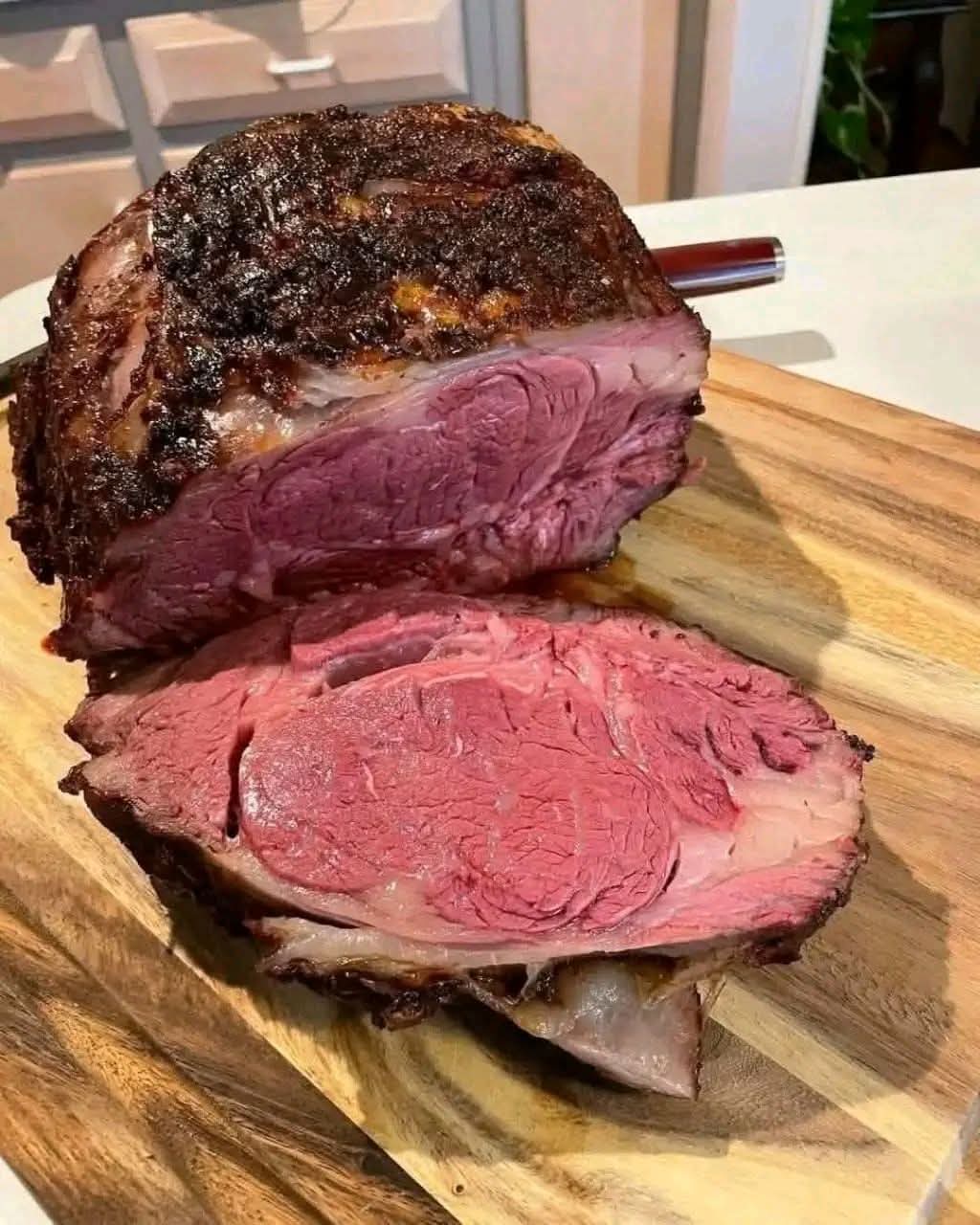
🥩 Perfect Prime Rib Roast
🍽️ Introduction
Prime rib roast—also known as a standing rib roast—is one of the most luxurious and flavorful cuts of beef. Known for its tender texture, rich marbling, and deep beefy flavor, it’s often the centerpiece of special occasions like holidays and celebrations. When cooked properly, it delivers a crisp, seasoned crust on the outside and a perfectly pink, juicy interior.
📊 Nutritional Information (per serving, approx.)
- Calories: 650–800 kcal
- Protein: 45–55 g
- Fat: 50–60 g
- Saturated Fat: 20–25 g
- Iron: ~20% daily value
- Cholesterol: 140–170 mg
(Values vary depending on portion size and fat content.)
🧾 Ingredients
Main:
- 1 prime rib roast (2.5–4 kg, bone-in preferred)
- 2–3 tbsp olive oil or softened butter
Seasoning:
- 4–6 cloves garlic (minced)
- 2 tbsp kosher salt
- 1 tbsp black pepper
- 1 tbsp fresh rosemary (chopped)
- 1 tbsp fresh thyme (chopped)
Optional additions:
- 1 tbsp Dijon mustard (for crust)
- Onion, carrots, celery (for roasting base)
🔪 Preparation (Formation)
- Remove the roast from the fridge at least 2–3 hours before cooking to bring it to room temperature.
- Pat it dry with paper towels (this helps create a crust).
- Mix olive oil/butter, garlic, herbs, salt, and pepper into a paste.
- Rub the mixture all over the roast, including the sides.
- Place the roast bone-side down on a rack in a roasting pan.
🔥 Cooking Instructions
Method 1: Reverse Sear (Recommended for perfection)
- Preheat oven to 120°C (250°F).
- Roast slowly until internal temperature reaches:
- 48–50°C for rare
- 52–54°C for medium-rare
- 57–60°C for medium
- Remove roast and rest for 20–30 minutes.
- Increase oven to 260°C (500°F).
- Return roast and sear for 5–10 minutes until crust forms.
Method 2: Traditional High-Heat Start
- Preheat oven to 230°C (450°F).
- Roast for 20 minutes.
- Reduce heat to 160°C (325°F).
- Continue roasting until desired internal temperature is reached.
- Rest before slicing.
🌡️ Internal Temperature Guide
- Rare: 50°C (122°F)
- Medium-rare: 54°C (130°F) ✅ best balance
- Medium: 60°C (140°F)
- Well-done: not recommended (loses tenderness)
🕰️ History
Prime rib has roots in classic European roasting traditions, particularly in Britain, where it was known as a “standing rib roast.” It became a staple in American steakhouses in the 19th and 20th centuries, symbolizing indulgence and celebration. Its popularity continues due to its unmatched flavor and impressive presentation.
🍳 Cooking Methods Overview
- Oven roasting (classic & most common)
- Reverse sear (best for even cooking)
- Grill roasting (adds smoky flavor)
- Sous vide + sear (ultra-precise, modern method)
❤️ Why People Love Prime Rib
- Extremely tender and juicy
- Rich, buttery flavor from marbling
- Perfect for family gatherings and holidays
- Feels like a restaurant-quality meal at home
🍽️ Serving Suggestions
- Serve with au jus or horseradish sauce
- Pair with:
- Roasted potatoes
- Creamed spinach
- Yorkshire pudding
- Gravy
🧠 Tips for Perfection
- Always use a meat thermometer
- Let it rest before slicing (crucial!)
- Slice against the grain for tenderness
- Don’t skip drying the surface—it helps the crust
🏁 Conclusion
A perfect prime rib roast is all about patience, temperature control, and quality ingredients. Whether you’re cooking for a holiday or just want to impress, mastering this dish guarantees a memorable, mouthwatering experience.